Fasting Rules
 Meat
Allowed
Meat
Allowed
 Fish
Allowed
Fish
Allowed
 Dairy
Allowed
Dairy
Allowed
 Oil
Allowed
Oil
Allowed
 Wine
Allowed
Wine
Allowed
Saints & Commemorations
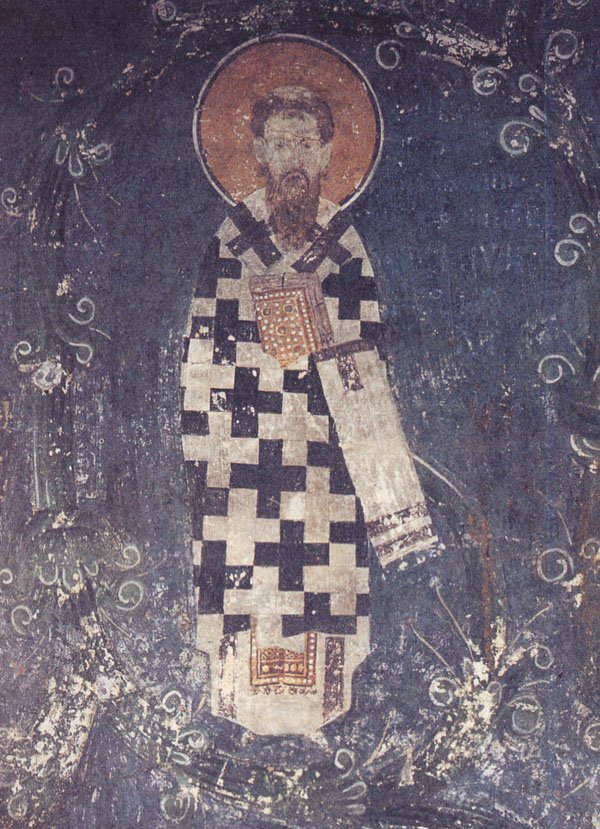
St Sava, Archbishop of Serbia
Born Predislav Nemanjic, the son of Saint-King Stephen Prvovencani the First-Crowned (September 24) and the nephew of Saint Savva I, the first Archbishop of Serbia (January 14), Saint Savva II distinguished himself in monastic life by his ascetic practices, in imitation of his sainted uncle.
He succeeded Saint Arsenius (October 28) as Archbishop of Serbia in 1266.
Born Predislav Nemanjic, the son of Saint-King Stephen Prvovencani the First-Crowned (September 24) and the nephew of Saint Savva I, the first Archbishop of Serbia (January 14), Saint Savva II distinguished himself in monastic life by his ascetic practices, in imitation of his sainted uncle.
He succeeded Saint Arsenius (October 28) as Archbishop of Serbia in 1266. He guided the Church with great love and dedication until his repose, variously dated as 1268, 1269 and 1271. His holy relics are at Pec, the site of the ancient Serbian Patriarchate.
Troparion - Tone 4
In truth you were revealed to your flock as a rule of faith, / an image of humility and a teacher of abstinence; / your humility exalted you; / your poverty enriched you. / Hierarch Father Savva, / entreat Christ our God / that our souls may be saved.
Holy Martyr Tatiana (ca. 230)
She was the daughter of a wealthy Roman consul. She became a deaconess in Rome, and was seized as a Christian during the reign of Alexander Severus. Before the tribunal she fearlessly confessed Christ and, when she was taken to the temple in an effort to force her to make sacrifice, she cast down the idols by the power of her prayer.
She was the daughter of a wealthy Roman consul. She became a deaconess in Rome, and was seized as a Christian during the reign of Alexander Severus. Before the tribunal she fearlessly confessed Christ and, when she was taken to the temple in an effort to force her to make sacrifice, she cast down the idols by the power of her prayer. At this, the soldiers seized her and subjected her to many indignities and tortures, finally throwing her into a raging furnace. When this did not harm her, she was thrown to the wild beasts, but they refused to harm her. At last she was beheaded and thus gained her crown.
Venerable Benedict Biscop, Abbot of Wearmouth (689-690)
He came from a noble Northumbrian family in Britain, and was tonsured a monk in 653 at Lerins in Gaul. In 669 he was made Abbot of the Monastery of Saints Peter and Paul in Canterbury. He traveled to Rome in 671 to be instructed in monastic practice according to the Rule of Saint Benedict (of Nursia).
He came from a noble Northumbrian family in Britain, and was tonsured a monk in 653 at Lerins in Gaul. In 669 he was made Abbot of the Monastery of Saints Peter and Paul in Canterbury. He traveled to Rome in 671 to be instructed in monastic practice according to the Rule of Saint Benedict (of Nursia). Returning to Northumbria he established two new monasteries, the first to follow St Benedict’s Rule in the British Isles. He went to Rome once again in 678-679, this time bringing back the archcantor of St Peter’s, who taught the monks of St Benedict’s monasteries the chant and liturgical practices used in Rome.
Under the holy abbot’s guidance, these monasteries became flourishing centers of Christian worship, scholarship and art. The Venerable Bede (May 26) was one of his disciples. Saint Benedict reposed in peace in 689 or 690, having greatly strengthened the Church and the Christian faith in Britain.
Scripture Readings
☩Epistle
James 2:14-26
14
What doth it profit, my brethren, though a man say he hath faith, and have not works? can faith save him?
15
If a brother or sister be naked, and destitute of daily food,
16
And one of you say unto them, Depart in peace, be ye warmed and filled; notwithstanding ye give them not those things which are needful to the body; what doth it profit?
17
Even so faith, if it hath not works, is dead, being alone.
18
Yea, a man may say, Thou hast faith, and I have works: shew me thy faith without thy works, and I will shew thee my faith by my works.
19
Thou believest that there is one God; thou doest well: the devils also believe, and tremble.
20
But wilt thou know, O vain man, that faith without works is dead?
21
Was not Abraham our father justified by works, when he had offered Isaac his son upon the altar?
22
Seest thou how faith wrought with his works, and by works was faith made perfect?
23
And the scripture was fulfilled which saith, Abraham believed God, and it was imputed unto him for righteousness: and he was called the Friend of God.
24
Ye see then how that by works a man is justified, and not by faith only.
25
Likewise also was not Rahab the harlot justified by works, when she had received the messengers, and had sent them out another way?
26
For as the body without the spirit is dead, so faith without works is dead also.
☩Gospel
Mark 9:42-10:1
42
And whosoever shall offend one of these little ones that believe in me, it is better for him that a millstone were hanged about his neck, and he were cast into the sea.
43
And if thy hand offend thee, cut it off: it is better for thee to enter into life maimed, than having two hands to go into hell, into the fire that never shall be quenched:
44
Where their worm dieth not, and the fire is not quenched.
45
And if thy foot offend thee, cut it off: it is better for thee to enter halt into life, than having two feet to be cast into hell, into the fire that never shall be quenched:
46
Where their worm dieth not, and the fire is not quenched.
47
And if thine eye offend thee, pluck it out: it is better for thee to enter into the kingdom of God with one eye, than having two eyes to be cast into hell fire:
48
Where their worm dieth not, and the fire is not quenched.
49
For every one shall be salted with fire, and every sacrifice shall be salted with salt.
50
Salt is good: but if the salt have lost his saltness, wherewith will ye season it? Have salt in yourselves, and have peace one with another.
1
And he arose from thence, and cometh into the coasts of Judea by the farther side of Jordan: and the people resort unto him again; and, as he was wont, he taught them again.
Liturgical data sourced from OCA.org and orthocal.info