Fasting Rules

Meat allowed Meat Allowed
Fish allowed Fish Allowed
Dairy allowed Dairy Allowed
Oil allowed Oil Allowed
Wine allowed Wine Allowed

Saints & Commemorations

Leavetaking of Meeting
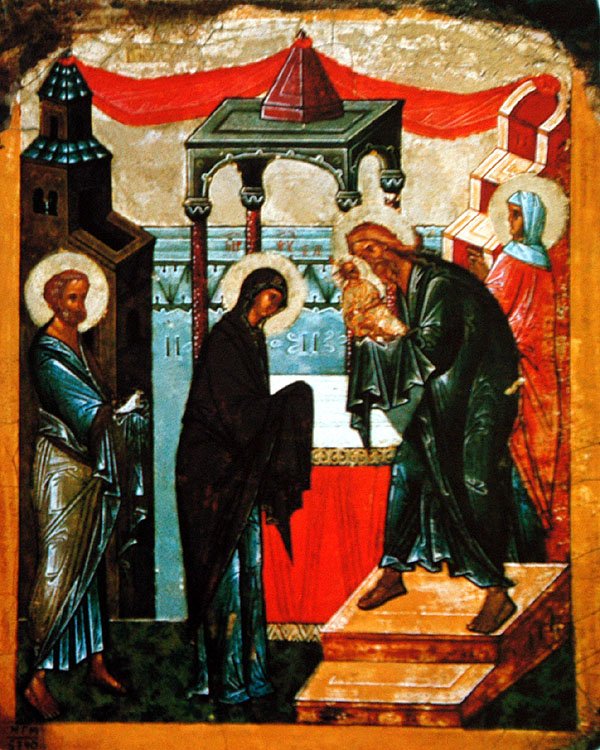
Leavetaking of the Meeting of our Lord in the Temple

Leavetaking of the Meeting of our Lord in the Temple

The Leavetaking of the Meeting of the Lord usually falls on February 9, but may be moved if the Feast falls during the period of the Triodion. In that case, the Typikon must be consulted for information on the Leavetaking. Usually, the entire office of the Feast is repeated except for the Entrance, festal readings, and Litya at Vespers, and the Polyeleos and festal Gospel at Matins. The Leavetaking of the Meeting of the Lord usually falls on February 9, but may be moved if the Feast falls during the period of the Triodion. In that case, the Typikon must be consulted for information on the Leavetaking. Usually, the entire office of the Feast is repeated except for the Entrance, festal readings, and Litya at Vespers, and the Polyeleos and festal Gospel at Matins. The festal Antiphons are not sung at Liturgy, and the Epistle and Gospel of the day are read.

Troparion - Tone 1

Hail, Virgin Theotokos, full of grace; / for from you has shone forth the Sun of Righteousness, Christ our God, / giving light to those in darkness. / Be glad, O righteous Elder; / for you received in your arms the Redeemer of our souls, / Who bestows upon us the resurrection.

Kontakion - Tone 1

By Your birth, You sanctified a virginal womb, / and fittingly You blessed Simeon’s hands, O Christ God; / even now You have saved us by anticipation. / Grant peace to Your faithful people whom You have loved, O only Lover of mankind.
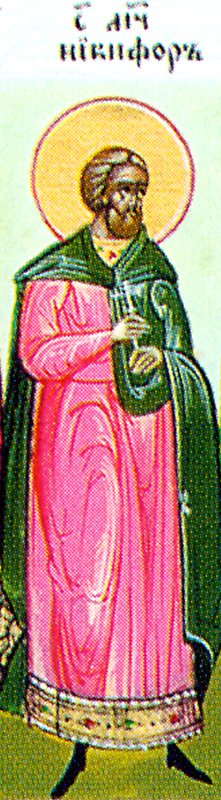
Martyr Nikephoros of Antioch, in Syria

Martyr Nikephoros of Antioch, in Syria

Sapricius the priest and the layman Nicephorus lived in Antioch of Syria. Though they were the closest of friends, a disagreement between them led to estrangement and then to outright enmity. In time, Nicephorus came to himself and realized that reconciliation and love among brethren are precious in the sight of the Lord, and he sent to Sapricius to ask his forgiveness for Christ’s sake. B Sapricius the priest and the layman Nicephorus lived in Antioch of Syria. Though they were the closest of friends, a disagreement between them led to estrangement and then to outright enmity. In time, Nicephorus came to himself and realized that reconciliation and love among brethren are precious in the sight of the Lord, and he sent to Sapricius to ask his forgiveness for Christ’s sake. But his messengers were turned away, and Sapricius coldly refused any reconciliation. At the same time he violated the Lord’s commandment by continuing to serve at the altar without seeking to make peace. Nicephorus finally went in person and threw himself at Sapricius’ feet, but even this had no effect. Soon, persecution of Christians broke out, and Sapricius was arrested. When he confessed Christ without fear or hesitation, and refused to make sacrifice to the idols even under torture, he was condemned to be beheaded. Nicephorus was distressed that Sapricius might give his life in Christ’s name while still at enmity with a brother; and that he himself would lose his chance to make peace. As Sapricius was being led to the place of execution, Nicephorus went on his knees before him and cried ‘Martyr of Christ, forgive me the offences for which you are angry with me!’ Still, Sapricius coldly spurned his former friend’s pleas. For this reason, as the executioner was raising his sword, and the crown of martyrdom was only seconds away, God withdrew his grace from the priest, who turned to the executioner and declared his readiness to adore the idols. Nicephorus, who was among the witnesses, begged him not to apostatise, but his words were of no effect. Nicephorus then turned to the executioner and shouted ‘I am a Christian! I believe in our Lord Jesus Christ whom he has just denied. Let him go and put me to death in his place!’ The Governor agreed, and ordered the release of Sapricius and the execution of Nicephorus. The Martyr laid his neck on the block joyfully and claimed the crown that Sapricius had thrown away. The Synaxarion concludes: ‘When he departed for heaven to receive the crown of glory, Saint Nicephorus left to us Christians a vivid illustration of these words uttered by the Holy Spirit: If I deliver my body to be burned but have no love, I gain nothing (1 Cor. 13:3). If you do not forgive men their trespasses neither will your heavenly Father forgive your trespasses… For the measure you give will be the measure you get (Matt. 6:15; 7:2).’

Troparion - Tone 4

Your holy martyr Nikēphóros, O Lord, / through his suffering has received an incorruptible crown from You, our God. / For having Your strength, he laid low his adversaries, / and shattered the powerless boldness of demons. / Through his intercessions, save our souls!

Kontakion - Tone 1

Bound with chains of love, O Nikēphóros, / you demolished the malice of hatred. / And when beheaded, you became a holy martyr for the Incarnate Savior. / Pray to Him for us who praise your glorious memory in song.
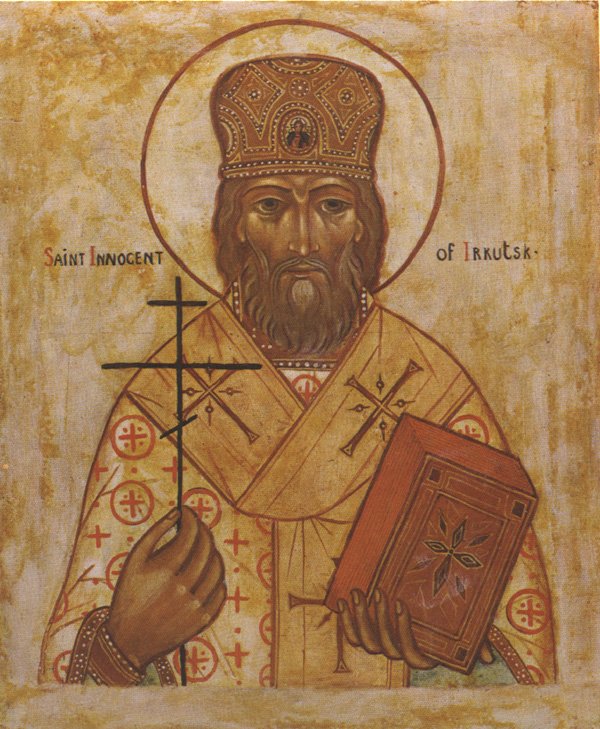
Uncovering of the relics of Saint Innocent, Bishop of Irkutsk

Uncovering of the relics of Saint Innocent, Bishop of Irkutsk

Saint Innocent, the first Bishop of Irkutsk, reposed on November 27, 1731. But because the Kursk Root Icon of the Mother of God is commemorated on that day, his Feast Day is celebrated on November 26. After the Saint's death, his persecutors received their just retribution. Archimandrite Anthony was discredited in Beijing as unorthodox. Saint Innocent, the first Bishop of Irkutsk, reposed on November 27, 1731. But because the Kursk Root Icon of the Mother of God is commemorated on that day, his Feast Day is celebrated on November 26. After the Saint's death, his persecutors received their just retribution. Archimandrite Anthony was discredited in Beijing as unorthodox. He was returned to St. Petersburg, deposed and imprisoned. Soon afterward, the Vice-Governor of Irkutsk was executed for his crimes. In 1764, the body of Saint Innocent was discovered to be incorrupt during restoration work on the Ascension Monastery’s Tikhvin church. Many miracles occurred not only at Irkutsk, but also in the remote places of Siberia, for those who turned to the Saint in prayer. In 1783, there was a great fire at Ascension Monastery. Everything that could burn was burnt. However, the old wooden temple, where the Saint's body rested, remained unharmed. On February 9, 1805, the Most Holy Synod decided to uncover the Hierarch's relics and to number him among the Saints. On February 2, 1831, the Feast of the Meeting of the Lord, His Grace Bishop Benjamin took Vladyka's holy relics from his tomb and placed them in the midst of the Tikhvin church, and then he served the Divine Liturgy before them. A week later, on February 9, the Hierarch's relics were solemnly transferred from the Tikhvin church to the Ascension Cathedral in a Cross Procession with the wonderworking Kazan Icon of the Mother of God. In the twenties of the XX century, a period of persecution by the new godless authorities against Christians began. The Superior of Ascension Monastery was arrested, along with other hierarchs of Siberia. In 1921, the Saint's relics were subjected to a sacrilegious medical examination, after which they were taken from the orphaned Monastery, and then they disappeared for a long time. In 1990, in one of the churches of the city of Yaroslavl, Saint Innocent's relics were discovered in a utility room. A medical examination showed that the body, which was not touched by decay, was that of Saint Innocent. His holy relics were returned to Irkutsk, and today they rest in Znamensky Monastery. Saint Innocent, the first Bishop of Irkutsk is commemorated on November 26 (the day of his repose), February 9 (the discovery of his relics in 1805), June 10 (Synaxis of the Saints of Siberia), September 2 (the return of his relics to Irkutsk in 1990), on October 10 (Synaxis of the Saints of Volhynia), and on the third Sunday after Pentecost (Synaxis of the Saints of St. Petersburg).

Troparion - Tone 3

Most radiant luminary of the Church, you enlightened Siberia with the rays of your virtues, / and by healing a multitude of those who came to your shrine with faith, you glorified God. / We entreat you, O Hierarch and Father Innocent, / by your prayers preserve us from all misfortunes and sorrows.

Kontakion - Tone 2

Let us the faithful lovingly glorify the blameless1 shepherd / and preacher of faith among the peoples of Mongolia, / the glory and adornment of the flock of Irkutsk, / for he is the guardian of Siberia and intercessor for our souls.1 An allusion to the Saint's name. Непорочности means "blameless," or "irreproachable." In other words, "innocent."

Hieromartyr Peter of Damascus, bishop of Damascus (ca. 776)

“Saint Peter was Bishop of Damascus during the reign of Constantine Copronymus (c. 776) and a contemporary of Saint John of Damascus. He was arrested on the orders of the Caliph Walid for castigating the heretical doctrines of the Muslims and the Manichaeans. His tongue was cut out and he was exiled to South Arabia (Arabia Felix), where he c “Saint Peter was Bishop of Damascus during the reign of Constantine Copronymus (c. 776) and a contemporary of Saint John of Damascus. He was arrested on the orders of the Caliph Walid for castigating the heretical doctrines of the Muslims and the Manichaeans. His tongue was cut out and he was exiled to South Arabia (Arabia Felix), where he continued to teach the true Faith and to serve the holy Mysteries until he entered into the reward of his labours in heaven.’ (Synaxarion)

Venerable Pancratius of the Kiev Caves

The holy hieromonk Pancratius performed the divine services with much grace, and received the gift of working miracles. He shared his gifts with those who asked, healing the sick with fasting, prayer, and anointing with holy oil.

Troparion - Tone 8

By a flood of tears you made the desert fertile, / and your longing for God brought forth fruits in abundance. / By the radiance of miracles you illumined the whole universe! / O our holy father Pancratius, pray to Christ our God to save our souls!

Venerable Nikēphóros of Vazheozersk

Saint Nikēphóros of Vazhe Lake came to Saint Alexander of Svir (April 17) in the year 1510 and was warmly received by him. In 1518 he made a visit, with the blessing of his mentor, to Saint Cyril of New Lake (February 4). When Nikēphóros approached New Lake, he was fatigued by his long journey and lay down in the darkness and fell asleep. Sa Saint Nikēphóros of Vazhe Lake came to Saint Alexander of Svir (April 17) in the year 1510 and was warmly received by him. In 1518 he made a visit, with the blessing of his mentor, to Saint Cyril of New Lake (February 4). When Nikēphóros approached New Lake, he was fatigued by his long journey and lay down in the darkness and fell asleep. Saint Cyril hastened by boat to row across the lake and awoke him. Saint Nikēphóros spent eight days in spiritual conversation with the saint. Nikēphóros then journeyed to Kiev to venerate the relics of the saints of the Caves. Upon his return, and with the blessing of Saint Alexander, he settled at Vazhe Lake, where Saint Gennadius pursued asceticism. Saint Nikēphóros built the Church of the Transfiguration and a monastery, where he lived until his own death. In the second half of the nineteenth century, in the Zadne-Nikiforov wilderness, a church was built and dedicated to Saints Nikēphóros and Gennadius of Vazhe Lake. The relics of the saints were put to rest in a hidden place in the monastery they founded.

Troparion - Tone 8

By a flood of tears you made the desert fertile, / and your longing for God brought forth fruits in abundance. / By the radiance of miracles you illumined the whole universe! / O our holy father Nicephorus, pray to Christ our God to save our souls!

Peter of Damascus, Hesychast (12th c.)

Little is known of him except by his writings in the Philokalia . Saint Nikodemos, compiler of the Philokalia, writes that his work is ‘a recapitulation of holy watchfulness… a circle within a circle, a concentrated Philokalia within the more extendedPhilokalia.’

Venerable Gennadius of Vazheozersk

Saint Gennadius of Vazhe Lake was the son of rich parents but, giving away everything, he became a disciple of Saint Alexander of Svir and lived with him in asceticism as a hermit by the river Svira. Afterwards, with blessing of Saint Alexander, he went to Vazhe Lake, twelve versts from the Svir monastery. Saint Gennadius of Vazhe Lake was the son of rich parents but, giving away everything, he became a disciple of Saint Alexander of Svir and lived with him in asceticism as a hermit by the river Svira. Afterwards, with blessing of Saint Alexander, he went to Vazhe Lake, twelve versts from the Svir monastery. And here, having built a cell, he spent his solitary ascetic life with two of his disciples. Before his death, Saint Gennadius told his disciple, “Here at this place shall be a church and a monastery.” The holy ascetic reposed on January 8, 1516.

Troparion - Tone 8

By a flood of tears you made the desert fertile, / and your longing for God brought forth fruits in abundance. / By the radiance of miracles you illumined the whole universe! / O our holy father Gennadius, pray to Christ our God to save our souls!
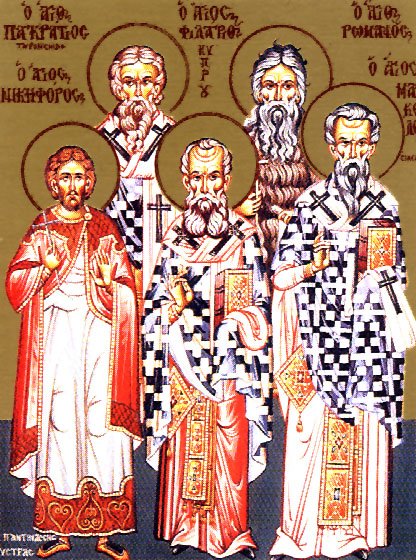
Hieromartyrs Marcellus, Bishop of Sicily, Philagrius, Bishop of Cyprus, and Pancratius, Bishop of Taoromina

Hieromartyrs Marcellus, Bishop of Sicily, Philagrius, Bishop of Cyprus, and Pancratius, Bishop of Taoromina

The Hieromartyrs Marcellus, Philagrius and Pancratius were disciples of the holy Apostle Peter and were made bishops by him: Saints Marcellus of Sicily, Philagrius of Cyprus, and Pancratius of Taormina. They were put to death for spreading the faith of Christ among the pagans.

Troparion - Tone 4

O God of our Fathers, / always act with kindness towards us; / take not Your mercy from us, / but guide our lives in peace / through the prayers of the hierarchs Marcellus, Philagrius, and Pancratius.
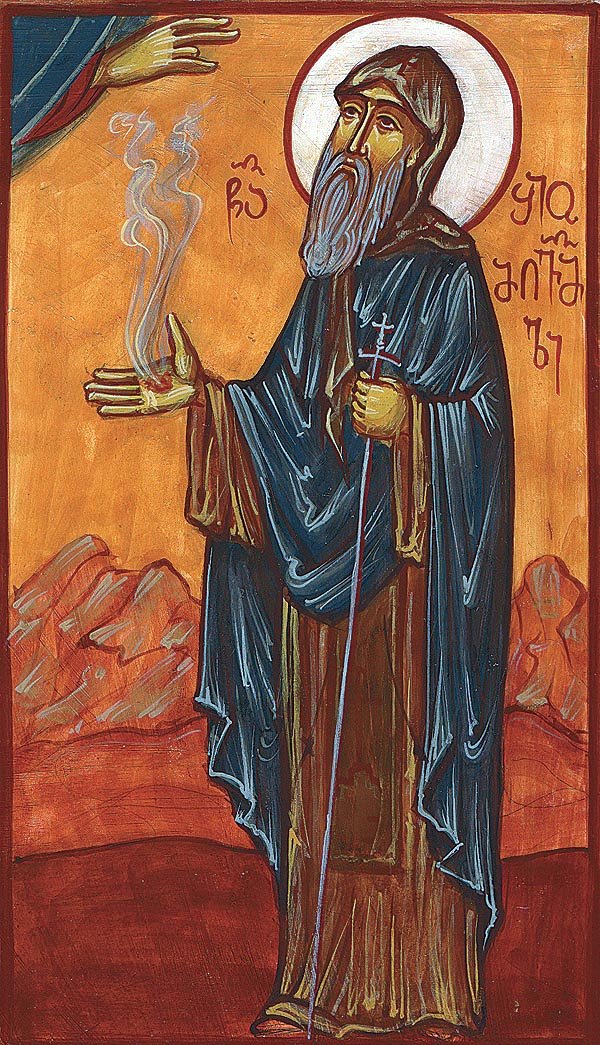
Venerable Shio Mgvime

Venerable Shio Mgvime

Saint Shio was one of the twelve disciples of Saint John Zedazeni. They were holy Syrian (Cappadocian) ascetics, the founders of Georgian monasticism, who arrived in Georgia from Cappadocia in the mid-sixth century. The holy Thirteen Cappadocian Fathers were actually Georgians, who received their spiritual schooling at the renowned Lavra of Saint Simeon the Stylite and at other monasteries of Syria and Mesopotamia, intending to return to their native land and assist in its Christian enlightenment. Saint Shio was one of the twelve disciples of Saint John Zedazeni. They were holy Syrian (Cappadocian) ascetics, the founders of Georgian monasticism, who arrived in Georgia from Cappadocia in the mid-sixth century. The holy Thirteen Cappadocian Fathers were actually Georgians, who received their spiritual schooling at the renowned Lavra of Saint Simeon the Stylite and at other monasteries of Syria and Mesopotamia, intending to return to their native land and assist in its Christian enlightenment. Saint Shio is also commemorated on May 9.

Troparion - Tone 8

By a flood of tears you made the desert fertile, / and your longing for God brought forth fruits in abundance. / By the radiance of miracles you illumined the whole universe! / O our holy father Shio, pray to Christ our God to save our souls!

Virgin Martyr Apollonia

Saint Apollonia was an elderly virgin and deaconess of Alexandria, whose martyrdom was described by Saint Dionysius of Alexandria (October 5) in one of his letters. When Decius became emperor in 249, he launched the greatest attack upon Christianity up to that time, becoming the first emperor to call for its total extermination. Saint Apollonia was an elderly virgin and deaconess of Alexandria, whose martyrdom was described by Saint Dionysius of Alexandria (October 5) in one of his letters. When Decius became emperor in 249, he launched the greatest attack upon Christianity up to that time, becoming the first emperor to call for its total extermination. Saint Dionysius says that the persecution started at Alexandria a year before it began in other places, incited by a certain “prophet and poet of evil,” who stirred up the people against the Christians. Backed by the power of the government, the pagans massacred Christians, believing that they were serving their false gods by doing so. The “aged and excellent virgin Apollonia” was seized and struck in the face until all her teeth were knocked out. The mob built a fire outside the city and threatened to burn her alive unless she agreed to worship the idols and sacrifice to the emperor’s genius. Saint Apollonia asked the pagans to let go of her for a moment so that she could pray. As soon as they did, she leaped into the flames and was consumed, receiving a double crown of martyrdom and virginity. Because of the nature of her torments, she is sometimes depicted with a golden tooth hanging from a necklace, or holding a tooth in a pair of pincers. She is invoked by those suffering from toothache.
Venerable Romanós of Cilicia

Venerable Romanós of Cilicia

Saint Romanós was from the city of Rosón in Cilicia, but he spent his anchoritic life in strict fasting in a cave near Antioch during the V century. There, at the foot of a mountain, he built a small cell, in which he struggled as an ascetic. He wore heavy chains under his hair shirt, and for many years he did not light a fire in his cell. Saint Romanós was from the city of Rosón in Cilicia, but he spent his anchoritic life in strict fasting in a cave near Antioch during the V century. There, at the foot of a mountain, he built a small cell, in which he struggled as an ascetic. He wore heavy chains under his hair shirt, and for many years he did not light a fire in his cell. Because of his most holy life, God granted him the grace of working miracles. Reports of his holiness attracted great crowds of the faithful to him, who asked for his blessing. The Saint healed several persons who suffered from grave illnesses, and through his prayers, many infertile women were able to give birth to healthy children. The charisma 1 of working miracles did not make him proud. Quite the contrary! The Saint often quoted the words of Saint Paul: "Therefore, let anyone who thinks that he stands take heed lest he fall" (I Corinthians 10:12). He also said that it is no great thing to perform miracles, but rather to do works of righteousness and to keep God's commandments. Thus, after leading a God-pleasing life, Saint Romanós reposed in peace. He is also commemorated on November 27. Saint Romanós is one of many Saints whose intercession we seek for deliverance from childlessness and barreness. Some of the others are: Saint Stylianos (November 26), Saint Hypatios the Igoumen of Rufinianus in Chalcedon († March 31, 446), Saints Theodore and John (July 12). 1 χάρισματα = Extraordinary powers given to certain individuals by God, enabling them to serve the Church by the grace of the Holy Spirit.

Scripture Readings

Epistle

1 John 2:18-3:10

18 Little children, it is the last time: and as ye have heard that antichrist shall come, even now are there many antichrists; whereby we know that it is the last time.
19 They went out from us, but they were not of us; for if they had been of us, they would no doubt have continued with us: but they went out, that they might be made manifest that they were not all of us.
20 But ye have an unction from the Holy One, and ye know all things.
21 I have not written unto you because ye know not the truth, but because ye know it, and that no lie is of the truth.
22 Who is a liar but he that denieth that Jesus is the Christ? He is antichrist, that denieth the Father and the Son.
23 Whosoever denieth the Son, the same hath not the Father: [but] he that acknowledgeth the Son hath the Father also.
24 Let that therefore abide in you, which ye have heard from the beginning. If that which ye have heard from the beginning shall remain in you, ye also shall continue in the Son, and in the Father.
25 And this is the promise that he hath promised us, even eternal life.
26 These things have I written unto you concerning them that seduce you.
27 But the anointing which ye have received of him abideth in you, and ye need not that any man teach you: but as the same anointing teacheth you of all things, and is truth, and is no lie, and even as it hath taught you, ye shall abide in him.
28 And now, little children, abide in him; that, when he shall appear, we may have confidence, and not be ashamed before him at his coming.
29 If ye know that he is righteous, ye know that every one that doeth righteousness is born of him.
1 Behold, what manner of love the Father hath bestowed upon us, that we should be called the sons of God: therefore the world knoweth us not, because it knew him not.
2 Beloved, now are we the sons of God, and it doth not yet appear what we shall be: but we know that, when he shall appear, we shall be like him; for we shall see him as he is.
3 And every man that hath this hope in him purifieth himself, even as he is pure.
4 Whosoever committeth sin transgresseth also the law: for sin is the transgression of the law.
5 And ye know that he was manifested to take away our sins; and in him is no sin.
6 Whosoever abideth in him sinneth not: whosoever sinneth hath not seen him, neither known him.
7 Little children, let no man deceive you: he that doeth righteousness is righteous, even as he is righteous.
8 He that committeth sin is of the devil; for the devil sinneth from the beginning. For this purpose the Son of God was manifested, that he might destroy the works of the devil.
9 Whosoever is born of God doth not commit sin; for his seed remaineth in him: and he cannot sin, because he is born of God.
10 In this the children of God are manifest, and the children of the devil: whosoever doeth not righteousness is not of God, neither he that loveth not his brother.

Gospel

Mark 11:1-11

1 And when they came nigh to Jerusalem, unto Bethphage and Bethany, at the mount of Olives, he sendeth forth two of his disciples,
2 And saith unto them, Go your way into the village over against you: and as soon as ye be entered into it, ye shall find a colt tied, whereon never man sat; loose him, and bring him.
3 And if any man say unto you, Why do ye this? say ye that the Lord hath need of him; and straightway he will send him hither.
4 And they went their way, and found the colt tied by the door without in a place where two ways met; and they loose him.
5 And certain of them that stood there said unto them, What do ye, loosing the colt?
6 And they said unto them even as Jesus had commanded: and they let them go.
7 And they brought the colt to Jesus, and cast their garments on him; and he sat upon him.
8 And many spread their garments in the way: and others cut down branches off the trees, and strawed them in the way.
9 And they that went before, and they that followed, cried, saying, Hosanna; Blessed is he that cometh in the name of the Lord:
10 Blessed be the kingdom of our father David, that cometh in the name of the Lord: Hosanna in the highest.
11 And Jesus entered into Jerusalem, and into the temple: and when he had looked round about upon all things, and now the eventide was come, he went out unto Bethany with the twelve.

Liturgical data sourced from OCA.org and orthocal.info