Fasting Rules

Meat allowed Meat Allowed
Fish allowed Fish Allowed
Dairy allowed Dairy Allowed
Oil allowed Oil Allowed
Wine allowed Wine Allowed

Saints & Commemorations
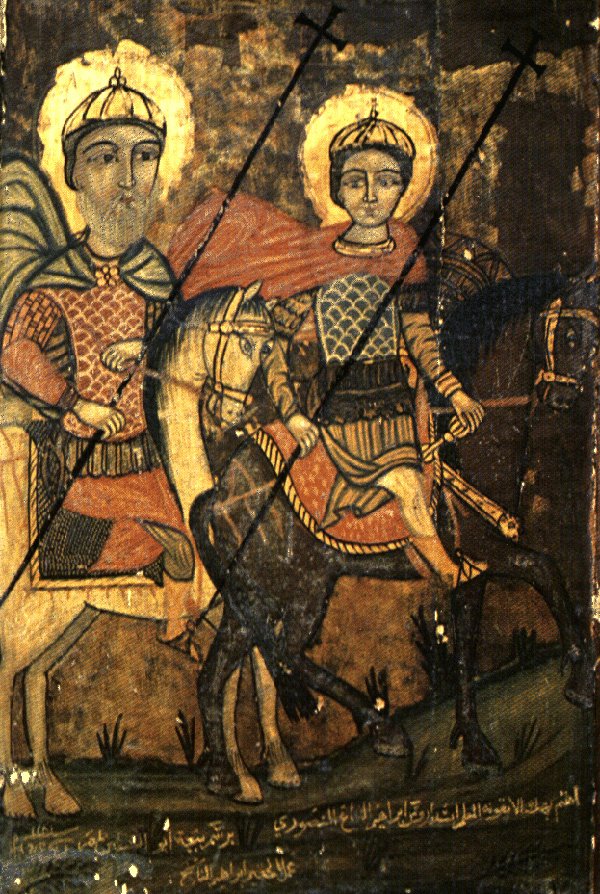
Martyrs Isidore and Myrope of Chios

Martyrs Isidore and Myrope of Chios

A devout Christian from his early youth, he was kidnapped from his native Chios and impressed into the army. When he openly confessed himself a Christian, his commander ordered him to make sacrifice to the gods. When he resolutely refused, the commander ordered him to be beaten with iron flails, then had his tongue cut out. A devout Christian from his early youth, he was kidnapped from his native Chios and impressed into the army. When he openly confessed himself a Christian, his commander ordered him to make sacrifice to the gods. When he resolutely refused, the commander ordered him to be beaten with iron flails, then had his tongue cut out. But even without a tongue, Isidore was miraculously enabled to speak, and clearly proclaimed the name of Christ. At the same moment, the commander was struck mute. The commander then ordered by signs that Isidore be beheaded. Isidore went to his death rejoicing and praising God. This occurred during the persecutions of the Emperor Decius.

Troparion - Tone 4

Enlisted by the King of the Ages, / you spurned the earthly king and his army to boldly preach Christ our God. / Therefore, you have completed your contest and shine forth as His glorious martyr. / Entreat Him to save our souls, for we honor you, blest Isidore.

Kontakion - Tone 3

In your combat with the dragon, / you gained the victory, O martyr Isidore. / As a radiant beacon from Egypt, / you shone forth to illumine all under the sun, / advancing towards Him who shone forth from the Virgin Mother of God, / for whose sake you were slain, O Passion-Bearer, / offering yourself as a fragrant sacrifice.
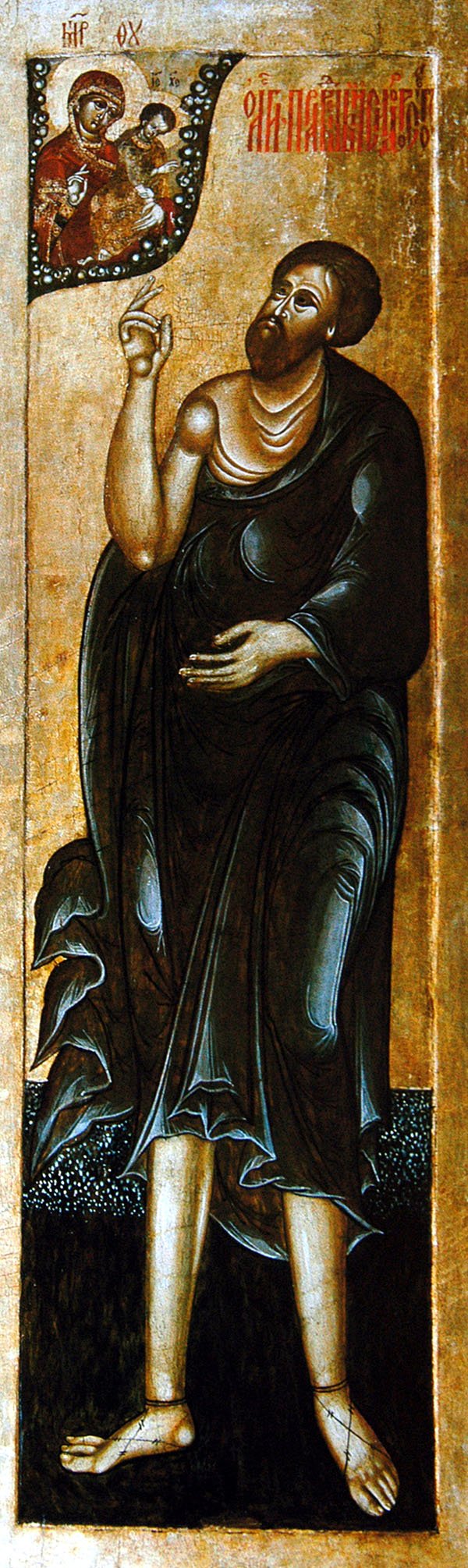
Venerable Isidore the Fool-For-Christ and Wonderworker of Rostov

Venerable Isidore the Fool-For-Christ and Wonderworker of Rostov

He was German by birth but, drawn to the Orthodox faith, he moved to Rostov and not only became Orthodox, but took on the podvig of folly for Christ. He lived in complete destitution, spending the days pretending madness and the nights in prayer. Many wonders were performed by this Saint even in his lifetime. He was German by birth but, drawn to the Orthodox faith, he moved to Rostov and not only became Orthodox, but took on the podvig of folly for Christ. He lived in complete destitution, spending the days pretending madness and the nights in prayer. Many wonders were performed by this Saint even in his lifetime. When he died in his meager hut in 1484, the people of Rostov smelled a fragrant odor throughout the city. A merchant whom he had miraculously saved from drowning built a church in the place where his hut had stood.

Troparion - Tone 4

Enlightened by Divine grace, O godly-wise one, / with great chastity and patience you completed the course of your temporal life well. / Therefore, after death, the purity of your life was revealed; / for you pour forth the grace of healing to those who hasten to your holy tomb with faith. / O Blessed Isidore, pray to Christ God for the salvation of our souls.

Kontakion - Tone 8

O Saint Isidore, you were called from the earthly abodes to the eternal, / preserving your body unharmed even after death, / for you lived your life in chastity and purity, O Blessed one, / without defiling your body. / Boldly entreat Christ God for the salvation of our souls.
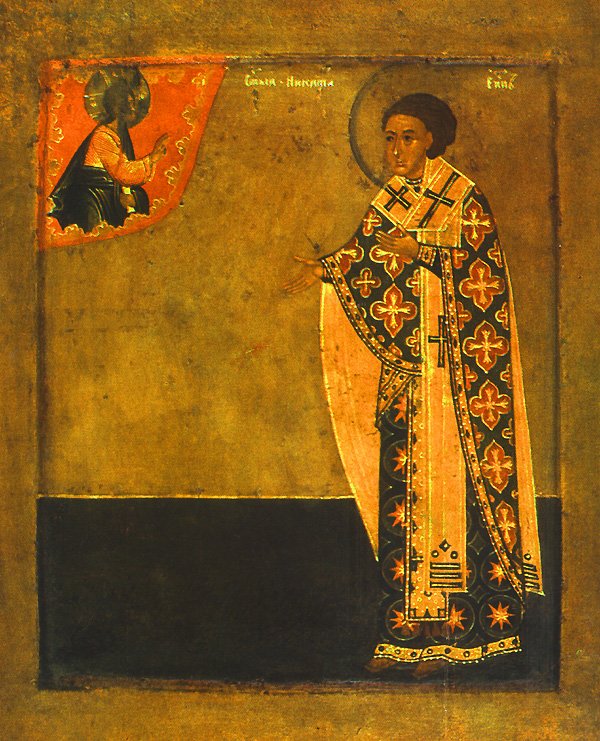
Saint Nikḗtas, Bishop of Novgorod, Recluse of the Kiev Far Caves

Saint Nikḗtas, Bishop of Novgorod, Recluse of the Kiev Far Caves

Saint Nikḗtas, Hermit of the Kiev Caves, Bishop of Novgorod (+1109): The memory of Saint Nikḗtas was celebrated on May 14 at Novgorod, where his relics are located. The saint is also commemorated on January 31, the day of his repose, and on April 30, the day of the Uncovering of his Relics (1558).

Troparion - Tone 4

In truth you were revealed to your flock as a rule of faith, / an image of humility and a teacher of abstinence; / your humility exalted you; / your poverty enriched you. / Hierarch Father Nikita, / entreat Christ our God / that our souls may be saved.

Martyr Maximus

The Holy Martyr Maximus suffered under the emperor Decius (249-251). Maximus was a layman and a merchant. He was a devout Christian and he led many pagans to faith in Christ the Savior, and persuaded them to accept Baptism. Once, when the pagans had gathered to offer a human sacrifice to their gods, Saint Maximus plucked up his courage, unable to bear the sight of such a spectacle, and rushed at them, loudly denouncing their impiety and error, calling the idols soulless creations of mankind. The Holy Martyr Maximus suffered under the emperor Decius (249-251). Maximus was a layman and a merchant. He was a devout Christian and he led many pagans to faith in Christ the Savior, and persuaded them to accept Baptism. Once, when the pagans had gathered to offer a human sacrifice to their gods, Saint Maximus plucked up his courage, unable to bear the sight of such a spectacle, and rushed at them, loudly denouncing their impiety and error, calling the idols soulless creations of mankind. The frenzied pagans stoned the martyr to death.

Troparion - Tone 3

Your holy martyr Maximus, O Lord, / through his sufferings has received an incorruptible crown from You, our God. / For having Your strength, he laid low his adversaries, / and shattered the powerless boldness of demons. / Through his intercessions, save our souls!

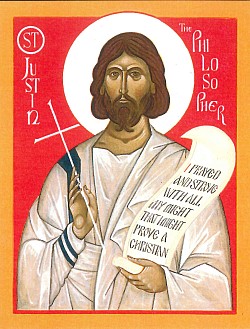
Venerable Serapion of Egypt

Saint Serapion lived during the fifth century in Egypt. He was called the linen cloth-wearer (Sindonite) since he wore only a coarse linen garb called a “sindon.” From his youth the monk lived like the birds of the air, without a shelter. For several days at a time he did not eat, not having the means to buy bread. He Saint Serapion lived during the fifth century in Egypt. He was called the linen cloth-wearer (Sindonite) since he wore only a coarse linen garb called a “sindon.” From his youth the monk lived like the birds of the air, without a shelter. For several days at a time he did not eat, not having the means to buy bread. He gave away his sindon to a beggar who was shivering from the cold, and he himself was naked. A certain Greek philosopher, wishing to test the non-covetousness of the monk, gave him a gold coin and watched him. The saint went to the bakery, bought one loaf of bread, gave the merchant the gold coin and left, having no regard for the value of the money. Saint Serapion led many on the way of salvation. Once, he was the servant of a Greek actor, whom he converted to Christ. The actor, imitating the example of the holy life of the saint, believed and was baptized together with all his family. He asked Saint Serapion to remain with him not as a servant, but as a guide and friend, but the monk went away, not taking any of the money offered him. Traveling to Rome, Saint Serapion got on a ship, but paid nothing to the ship owners. At first they began to reproach him for this, but noticing that the Elder had gone five days already without eating, they began to feed him for the sake of God, and in this they fulfilled the command of the Lord. At Rome, the saint continued to wander about, going from house to house, having nothing, accumulating only spiritual wealth for himself and for his neighbor.

Troparion - Tone 8

By a flood of tears you made the desert fertile, / and your longing for God brought forth fruits in abundance. / By the radiance of miracles you illumined the whole universe! / O our holy father Serapion, pray to Christ our God to save our souls!

Our Holy Father Serapion the Sindonite (5th c.)

“ ‘Sindon’ means ‘linen cloth,’ and this saint was called ‘the Sindonite’ because he covered his naked body only with a linen cloth. He carried the Gospels in his hand. Serapion lived like the birds, with no roof and no cares, moving from one place to another. He gave his linen cloth to a poor wretch who was shivering with cold, and himself remained completely naked. When someone “ ‘Sindon’ means ‘linen cloth,’ and this saint was called ‘the Sindonite’ because he covered his naked body only with a linen cloth. He carried the Gospels in his hand. Serapion lived like the birds, with no roof and no cares, moving from one place to another. He gave his linen cloth to a poor wretch who was shivering with cold, and himself remained completely naked. When someone asked him: ‘Serapion, who made you naked?’, he indicated the Gospels and said: ‘This!’ But, after that, he gave away the Gospels also for the money needed by a man who was being hounded to prison by a creditor in debt. [note: Gospel books were all hand-written, and were uncommon and valuable.] At one time in Athens, he did not eat for four days, having nothing, and began to cry out with hunger. When the Athenian philosophers asked him what he was shouting about, he replied: ‘There were three to whom I was in debt: two have quietened down, but the third is still tormenting me. The first creditor is carnal lust, who has tormented me from my youth; the second is love of money, and the third is the stomach. The first two have left me alone, but the third one still torments me.’ The philosophers gave him some gold to buy bread. He went to a baker, bought a single loaf, put down all the gold and went out. He went peacefully to the Lord in old age, in the 5th century.” (Prologue)

Saint Leontius, Patriarch of Jerusalem

Saint Leontios was from Tiberioupolis in Phrygia and was born to wealthy and devout parents around the second half of the XII century. When he was 15-17 years old, his father reposed, so he left his birthplace and studied under a pious priest, then he went to Ptelidίon Monastery of the Mother of God, where he was tonsured as a monk. Saint Leontios was from Tiberioupolis in Phrygia and was born to wealthy and devout parents around the second half of the XII century. When he was 15-17 years old, his father reposed, so he left his birthplace and studied under a pious priest, then he went to Ptelidίon Monastery of the Mother of God, where he was tonsured as a monk. Later he went to Constantinople and became associated with the Metropolitan of Tiberias, to whom he submitted himself. After following his Elder, who was returning to his diocese, they sailed to Patmos to worship at the Monastery of Saint John the Theologian. He started for Cyprus, but God's will led him back to Patmos. There, under the spiritual guidance of Igoumen Theoktistos (Theóktistos), a man experienced in spiritual matters, he became an example of brotherly love and humility. When Igoumen Theoktistos reposed, Leontios was chosen to succeed him, by unanimous decision of the monks. Saint Leontios visited the island of Crete for the material needs of the monastery. The Monastery of the Holy Apostle and Evangelist John had a base on Crete, within the ancient city of Aptera, and above the Turkish fortress of Isdezin (Kalami), which was then a dependency of the Patmos Monastery. Taking care of the Monastery's affairs, Saint Leontios went to Constantinople. There he won the respect and esteem of Emperor Manuel Komnenos (1143-1180) who proposed that he become a Bishop in Russia or Cyprus, but Saint Leontius declined out of humility. But when he was offered the throne of Jerusalem, Leontios could not refuse and he became Patriarch of Jerusalem in 1170, at a time when that Church was being tested by the domination of the Latins. Because of the control he exercised over the new Emperor Andronikos Komnenos, Saint Leontios was exiled, and he reposed at a ripe old age on May 14, 1190. He is commemorated on Patmos and in Jerusalem on May 14. His Church Service was published in Jerusalem in 1912. Saint Leontios was Patriarch of Jerusalem from 1223-1261, according to Saint Gregory Palamas (November 14) and Theodore, a monk of Constantinople. This Life was translated from Greek into the Russian language in an abridged form. It was translated a second time more fully by Saint Νikodemos (Νikόdēmos) of the Holy Mountain (July 14), who says the Patriarch's death actually occurred in 1175.

Troparion - Tone 4

The truth of things revealed you to your flock as a rule of faith, / a model of meekness, and a teacher of temperance. / Therefore, through humility, you attained the heights; / and through poverty, riches. / O Hierarch Leontios our Father, entreat Christ God that our souls may be saved.

Kontakion - Tone 2

Podoben: “You sought the heights...”) O Hierarch Leontios, / divine thunder, spiritual trumpet, planter of faith and pruner of heresies, great favorite of the Trinity, as you stand before God with the Angels, / pray unceasingly for all of us.
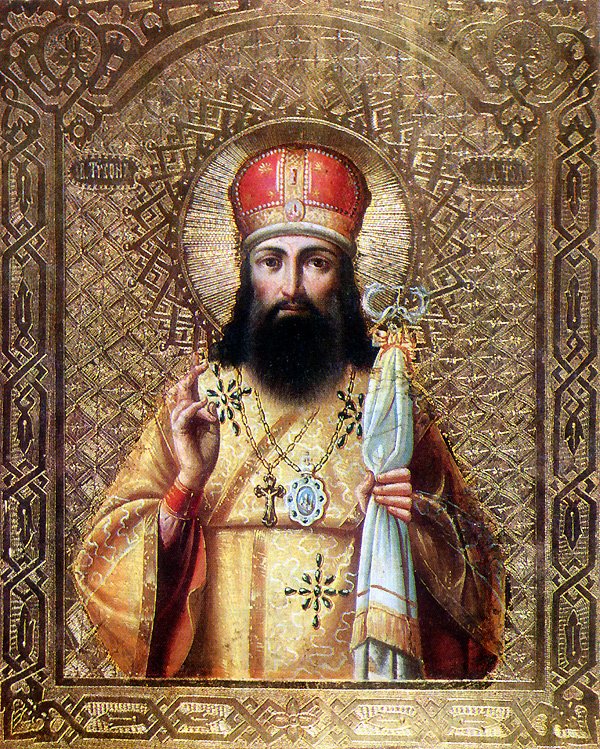
First opening of the relics of Saint Tikhon of Zadonsk

First opening of the relics of Saint Tikhon of Zadonsk

The incorrupt relics of Saint Tikhon of Zadonsk were first uncovered in May 1846, during the construction of the new cathedral at Zadonsk. They were found beneath the altar of the old church. Saint Tikhon is also commemorated on August 13.

Troparion - Tone 8

From your youth you loved Christ, O blessed one. / You have been an example for all by word, life, love, faith, purity, and humility. / Therefore, you now abide in the heavenly mansions, / where you stand before the throne of the All-holy Trinity. / Holy Hierarch Tikhon, pray for the salvation of our souls.

Kontakion - Tone 8

Successor to the Apostles, / adornment of hierarchs, and teacher of the Orthodox Faith: / Beseech the Master of all to grant peace to the universe / and to our souls great mercy.
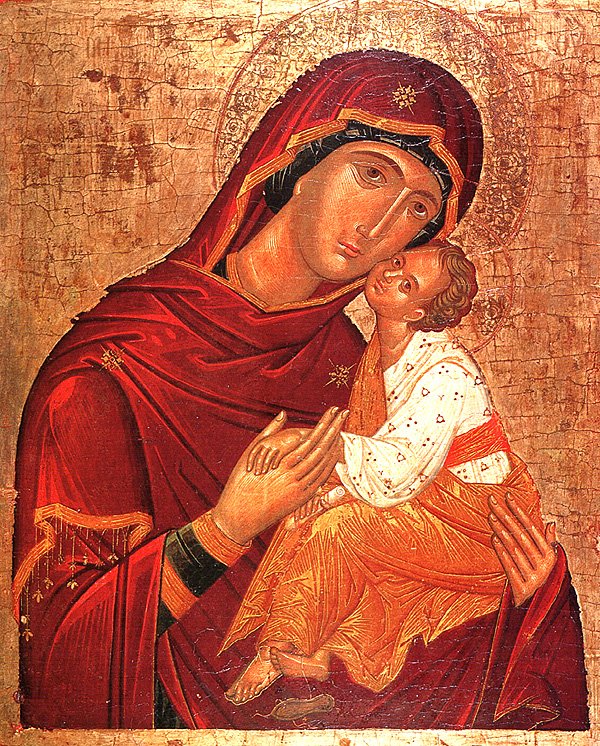
“Sweet-Kissing” Icon of the Mother of God

“Sweet-Kissing” Icon of the Mother of God

No information available at this time.
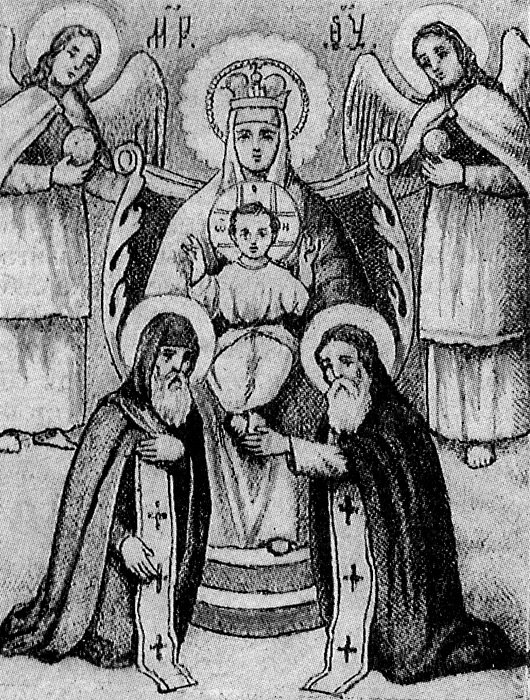
“Yaroslavl-Caves” Icon of the Mother of God

“Yaroslavl-Caves” Icon of the Mother of God

Alexandra Dmitrievna Dobychkina, who was from a middle-class family in Yaroslavl, suffered terribly from spiritual and physical ailments for seventeen years. In 1823 she beheld a vision of a church in which was an Icon of the Mother of God. Offering her heartfelt prayers to the Most Holy Theotokos, she asked to be freed from these afflictions. Alexandra Dmitrievna Dobychkina, who was from a middle-class family in Yaroslavl, suffered terribly from spiritual and physical ailments for seventeen years. In 1823 she beheld a vision of a church in which was an Icon of the Mother of God. Offering her heartfelt prayers to the Most Holy Theotokos, she asked to be freed from these afflictions. One day Alexandra had a vision in which she was shown a church where there was a certain Icon of the Mother of God. Then a mysterious voice told her to search for the Icon in that church, and there she would be healed. On May 1, 1823, Alexandra managed to find the church beside the residence of the Bishop of Yaroslavl. The church was very old, and was dedicated to the Feast of the Procession of the Precious Wood of the Life-giving Cross of the Lord (August 1). Recognizing the church as the one she had seen in her vision, Alexandra went inside to look around. Suddenly, she found herself before an Icon of the Mother of God painted on the wall, the same one she had been shown in the vision. Struck with fear, she fell to the floor with terrible convulsions, and writhed in pain. When these subsided, Alexandra stood up and prayed fervently before the holy Icon. As she prayed, she began to feel relief from her painful torments. The next day she was perfectly well. From that time, many miraculous cures have taken place before this Icon for those who pray to the Most Holy Theotokos with faith and reverence. The Yaroslavl-Caves Icon of the Mother of God depicts her seated on a throne with her Divine Child, and it also includes Saints Anthony and Theodosios, the wonderworkers of the Kiev Caves (September 2). Two Angels stand behind the throne on either side. There are two other Yaroslavl Icons: the first is the famous Yaroslavl Icon (June 8), which is of the Eleousa (Tenderness) type, and dates from the XIII century. The second is the Yaroslavl-Kazan Icon, which was revealed on July 8,1588.

Troparion - Tone 4

Let all of us, who are burdened with sins, fall on our knees before the Theotokos, / bowing before her wonderworking Icon of Tenderness, / kissing it and crying aloud with tears: / “O Sovereign Lady, accept the prayer of your unworthy servants, / and grant to us who ask, your great mercy.”

Kontakion - Tone 6

We have no other help, we have no other hope but you, O Lady. / Help us, for in you do we hope, / and of you do we boast, for we are your servants. / Let us not be put to shame.

New Martyr Raiko (John) of Bulgaria

No information available at this time.

Troparion - Tone 3

Your holy martyr Raiko, O Lord, / through his sufferings has received an incorruptible crown from You, our God. / For having Your strength, he laid low his adversaries, / and shattered the powerless boldness of demons. / Through his intercessions, save our souls!
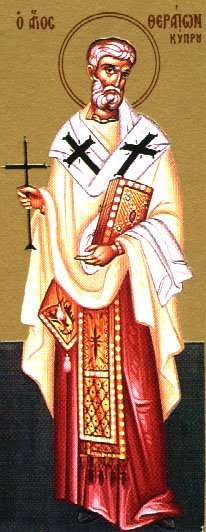
Hieromartyr Therapontus of Cyprus

Hieromartyr Therapontus of Cyprus

No information available at this time.

Troparion - Tone 4

By sharing in the ways of the Apostles, / you became a successor to their throne. / Through the practice of virtue, you found the way to divine contemplation, O inspired one of God; / by teaching the word of truth without error, you defended the Faith, / even to the shedding of your blood. / Hieromartyr Therapontus, entreat Christ God to save our souls.

Scripture Readings

Epistle

Acts 14:20-27

20 Howbeit, as the disciples stood round about him, he rose up, and came into the city: and the next day he departed with Barnabas to Derbe.
21 And when they had preached the gospel to that city, and had taught many, they returned again to Lystra, and to Iconium, and Antioch,
22 Confirming the souls of the disciples, and exhorting them to continue in the faith, and that we must through much tribulation enter into the kingdom of God.
23 And when they had ordained them elders in every church, and had prayed with fasting, they commended them to the Lord, on whom they believed.
24 And after they had passed throughout Pisidia, they came to Pamphylia.
25 And when they had preached the word in Perga, they went down into Attalia:
26 And thence sailed to Antioch, from whence they had been recommended to the grace of God for the work which they fulfilled.
27 And when they were come, and had gathered the church together, they rehearsed all that God had done with them, and how he had opened the door of faith unto the Gentiles.

Gospel

John 9:39-10:9

39 And Jesus said, For judgment I am come into this world, that they which see not might see; and that they which see might be made blind.
40 And some of the Pharisees which were with him heard these words, and said unto him, Are we blind also?
41 Jesus said unto them, If ye were blind, ye should have no sin: but now ye say, We see; therefore your sin remaineth.
1 Verily, verily, I say unto you, He that entereth not by the door into the sheepfold, but climbeth up some other way, the same is a thief and a robber.
2 But he that entereth in by the door is the shepherd of the sheep.
3 To him the porter openeth; and the sheep hear his voice: and he calleth his own sheep by name, and leadeth them out.
4 And when he putteth forth his own sheep, he goeth before them, and the sheep follow him: for they know his voice.
5 And a stranger will they not follow, but will flee from him: for they know not the voice of strangers.
6 This parable spake Jesus unto them: but they understood not what things they were which he spake unto them.
7 Then said Jesus unto them again, Verily, verily, I say unto you, I am the door of the sheep.
8 All that ever came before me are thieves and robbers: but the sheep did not hear them.
9 I am the door: by me if any man enter in, he shall be saved, and shall go in and out, and find pasture.

Liturgical data sourced from OCA.org and orthocal.info