The Holy Martyr Basiliscus was a nephew of the Great Martyr Theodore the Recruit (February 17), and he suffered together with his brothers Eutropius and Kleonikos during the persecution of the emperor Maximian Galerius (305-311). The holy martyrs Kleonikos and Eutropius (March 3) were crucified, but the martyr Basiliscus was sent to Comana where he was detained in prison.
The Holy Martyr Basiliscus was a nephew of the Great Martyr Theodore the Recruit (February 17), and he suffered together with his brothers Eutropius and Kleonikos during the persecution of the emperor Maximian Galerius (305-311). The holy martyrs Kleonikos and Eutropius (March 3) were crucified, but the martyr Basiliscus was sent to Comana where he was detained in prison.
The governor Agrippa arrived in the city of Amasea, and started a persecution against Christians. Saint Basiliscus in prison prepared himself for his impending ordeal. The Lord appeared to him in a dream, promising the martyr His help, and foretold his martyric death at Comana. Saint Basiliscus asked the prison guards to let him go to his native village to bid his relatives farewell. They let him go, since they respected him for his holy life and working of miracles. Arriving home, Saint Basiliscus saw his family one last time, and urged them to stand firmly in the Faith.
When Agrippa learned that Saint Basiliscus had gone to see his relatives, he went into a rage. He chastized the prison guards, and he sent a detachment of soldiers after the martyr, headed by a cruel magistrianum (adjutant of the governor). Meeting Saint Basiliscus, who was actually on his way back, the magistrianum placed heavy chains on him, and shod him with metal sandals with nails driven into the soles, and set off to Comana.
Arriving at a certain village during the hot afternoon, the travellers stayed at the house of a woman named Troana. The soldiers went into the house to relax and refresh themselves with food, and they tied the martyr Basiliscus to a dry tree. Standing in the heavy chains beneath the scorching sun, the saint prayed to God. Suddenly a Voice was heard from above, “Fear not, for I am with you.”
The earth shook, and a spring of water came forth from the resulting fissure. The magistrianum, the soldiers and Troana, rushed out of the house, frightened by the earthquake. Shaken by the miracle which had taken place, they set the martyr free. Sick people from the village came to the holy martyr and received healing through his prayers.
When the saint finally stood before Agrippa, he was commanded to offer sacrifice to the pagan gods. He replied, “I offer to God a sacrifice of praise and thanksgiving every hour.” They led him into a pagan temple. In an instant fire came down from Heaven, which burned the temple, and reduced the idols to dust. Then in a blind rage Agrippa gave orders to behead Saint Basiliscus and throw his body into the river. The death of the martyr occurred in the year 308.
Christians quickly gathered the remains of the holy martyr, and buried them by night in a ploughed field. Upon this spot a church was built in honor of Saint Basiliscus, into which they transferred his relics. Through the prayers of the holy martyr healings began to occur. The saint appeared in a dream to Saint John Chrysostom (November 13) before his death at Comana and said to him, “Tomorrow we shall be together.” Saint Eusignius (August 5) was an eyewitness to his sufferings and told the world about the struggles of Saint Basiliscus.
Troparion - Tone 4
Your holy martyr Basiliscus, O Lord, / through his suffering has received an incorruptible crown from You, our God. / For having Your strength, he laid low his adversaries, / and shattered the powerless boldness of demons. / Through his intercessions, save our souls!
Kontakion - Tone 8
You were shown to be strong and courageous in suffering; / you were revealed to be a wonder-worker in miracles! / You openly bore the name of Christ, putting the tyrant to shame! / Therefore we honor you, most honored Basiliscus, / ever crying: “Rejoice, splendid adornment of the martyrs!”
John-Vladimir, Ruler of Serbia
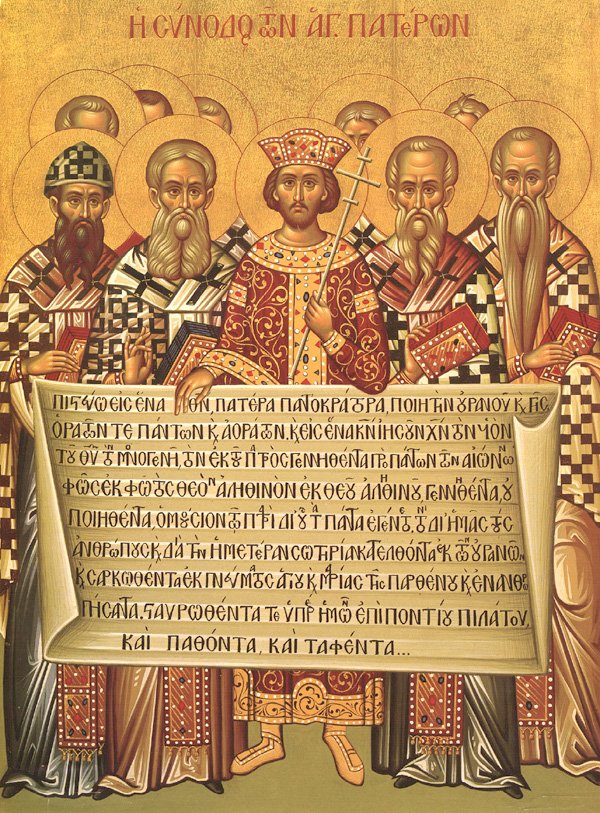
Commemoration of the Holy Fathers of the Second Ecumenical Council
The council was called by the Emperor Theodosius the Great, primarily to clarify the Church’s teaching on the Holy Spirit. Macedonius, bishop of Constantinople, had falsely taught that the Spirit is a creature rather than a Divine Person “Who together with the Father and the Son is worshiped and glorified.” Partly to correct this error, the council revis
The council was called by the Emperor Theodosius the Great, primarily to clarify the Church’s teaching on the Holy Spirit. Macedonius, bishop of Constantinople, had falsely taught that the Spirit is a creature rather than a Divine Person “Who together with the Father and the Son is worshiped and glorified.” Partly to correct this error, the council revised and expanded the text of the Nicene Creed into the form that we know today.
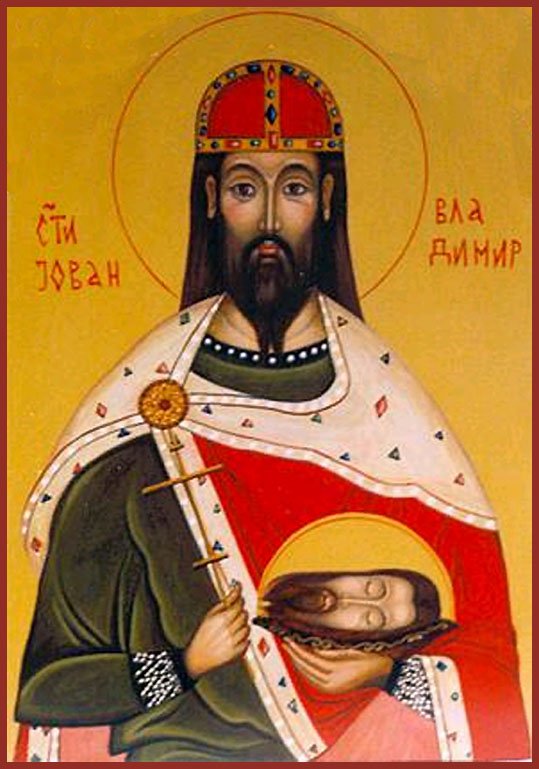
Saint John-Vladimir, Prince of Bulgaria, Greatmartyr, and Miracle-worker
The Holy Martyr John-Vladimir, a Serbian prince, was born in the tenth century. From his childhood he was raised in piety, and at maturity he wisely governed his holdings Illyria and Dalmatia, preserving the holy Faith in purity.
The noble prince was married to Kosara, a daughter of the Bulgarian Tsar Samuel.
The Holy Martyr John-Vladimir, a Serbian prince, was born in the tenth century. From his childhood he was raised in piety, and at maturity he wisely governed his holdings Illyria and Dalmatia, preserving the holy Faith in purity.
The noble prince was married to Kosara, a daughter of the Bulgarian Tsar Samuel. Summoned for talks with the Bulgarian Tsar John-Vladislav, he was treacherously murdered by the Tsar on May 22, 1015, at the entrance to a church. Kosara, the pious spouse of the holy prince, entered a women’s monastery that she built, and where also she died, not leaving the church until the very end of her life. The relics of the holy prince are located near Elbosan.
Troparion - Tone 3
Your holy martyr John, O Lord, / through his sufferings has received an incorruptible crown from You, our God. / For having Your strength, he laid low his adversaries, / and shattered the powerless boldness of demons. / Through his intercessions, save our souls!
Monastic Martyr Paul of the Lavra, Mount Athos
No information on the life of this saint is available at this time.
Troparion - Tone 1
The image of God was truly preserved in you, O Father, / for you took up the Cross and followed Christ. / By so doing you taught us to disregard the flesh for it passes away / but to care instead for the soul, since it is immortal. / Therefore your spirit, venerable Paul, rejoices with the angels.
Kontakion - Tone 2
As a venerable and proven ascetic, as an honorable and renowned martyr, / and as a model of the desert life, O most exalted Paul, / we sing hymns of praise to you, / for you have trampled upon serpents.
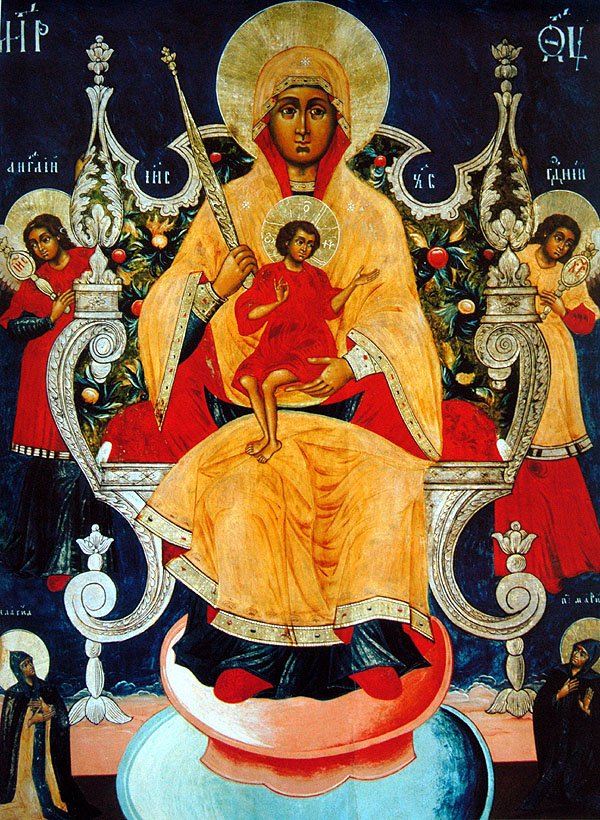
Icon of the Mother of God of Cyprus
The Cyprus Icon of the Most Holy Theotokos is also commemorated on the Sunday of Orthodoxy, Pentecost Monday, April 20 and July 9.
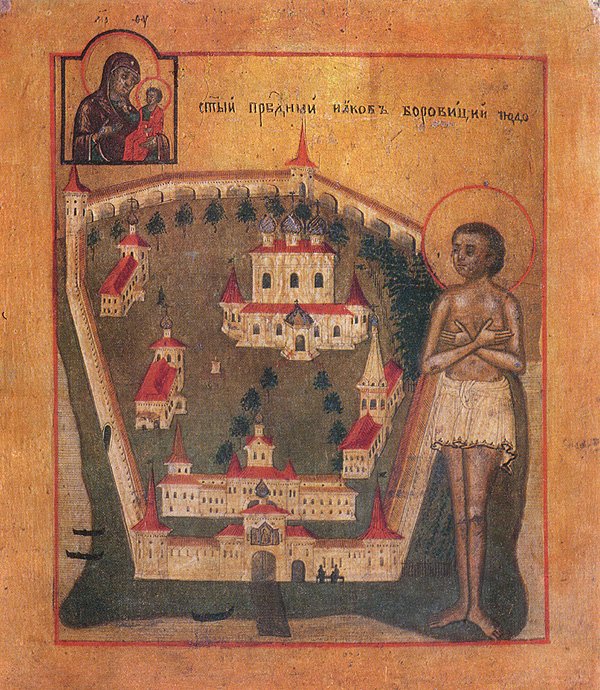
Blessed James of Borovichi, Wonderworker of Novgorod
Many ancient Russian cities have their own patron Saint, whose name is associated with miraculous healings and the protection of their city from enemies. The patron Saint of Borovichi in the Novgorod region is the Righteous James, a Wonderworker and a Fool for Christ.
Saint James is the patron Saint of the Borovichi region and of the Iveron (Ivḗron) Valdai Monastery. I
Many ancient Russian cities have their own patron Saint, whose name is associated with miraculous healings and the protection of their city from enemies. The patron Saint of Borovichi in the Novgorod region is the Righteous James, a Wonderworker and a Fool for Christ.
Saint James is the patron Saint of the Borovichi region and of the Iveron (Ivḗron) Valdai Monastery. In a manuscript of the XVI century, kept at Holy Trinity-Sergius Lavra, stories about this Saint are set forth.
On April 11, 1452, on Bright Tuesday, a great event took place near the Holy Spirit Monastery. A spring flood; the fast-flowing Msta River rolled its waves through the rapids in a loud stream; The life-giving warmth of the spring sun melted all the ice in the river. Suddenly, a large ice floe appeared, moving against the rapid flow of the river; thick steam rose from it like smoke from a fire. It landed on the right bank, a hundred fathoms above the Monastery. Those who witnessed this saw a rather darkened pine block on the ice floe, as if had been scorched by fire, this was the lower part of the coffin, without a lid, and in it was the poorly covered body of a certain youth. Seized with horror, the faint-hearted people of Borovichi took the floating body for an ordinary corpse of a drowned man.
In order to avoid trouble, they tried hard to push the ice floe with its strange burden away from the shore with a special long staves. However, the ice floe returned to its former place. Then, after tying the log with ropes, they dragged it along with the ice floe, along the course of the Msta River, and took it two versts from the Monastery. At dawn the next day, the ice floe returned with its burden again. This was repeated for a third time.
Finally, the Lord brought the foolish men to their senses. A certain youth appeared in a dream to several well-intentioned elderly men of Borovichi and said to them: "Orthodox Christians, why do you drive away a fellow Christian? Why do you resist the Lord, Who has sent my body to you? Is it because you do not know my name? Well then, know that I am called James; named for Saint James, the Lord's brother according to the flesh."
The simple-minded and God-fearing men awoke from their sleep, and told one another about the wondrous dream, and their hearts were touched. The rumor spread quickly, and then the residents of Borovichi regretted their unreasonable attitude toward the relics of the Servant of God revealed by his voyage. Many bitter tears were shed at the same time; the staves, with which the relics had been pushed off, were burned. The old men, accompanied by a crowd, hastened to the bank of the Msta River, with a firm intention to remove the honorable relics from the ice floe at once, and to place them right there on the bank. On the ground a log framework was built, which resembled a small chapel. For 93 years after his voyage and burial, the incorrupt relics of Saint James, which had been placed under a bushel (Matthew 5:15), unceasingly exuded grace-filled healing for all who came to him with faith.
After the many signs and miracles which occurred at the grave of the Righteous James, in 1544 the inhabitants of the region brought this to the attention of Archbishop Theodosios of Novgorod with a special petition from the clergy and laity. expressing their sincere desire and earnest request that the honorable relics of this new wonderworker be opened, as a most precious treasure given by God. This great celebration took place on October 23, 1545, on the Feast Day of the Apostle James, the brother of the Lord. Soon after the burial of the relics of the Righteous James, a healing spring sprang up.The pious inhabitants of the neighborhood, zealous for the glory of the name of the Lord, Who is wondrous in His Saints, a small wooden church was built there and dedicated to the Tenderness (i.e. Sweet-Kissing) Icon of the Mother of God.
During the reign of the most pious sovereign, Tsar Alexei, His Holiness Nikon, the great Patriarch of All Russia, aware of the miracles which occurred at the relics of the Righteous James, and at the same time, he was told that the holy relics were pgreatly neglected because of the poverty of Holy Spirit Monastery, he intended to transfer the holy relics to the Ivḗron Monastery, which was then on one of the islands of Lake Valdai. This transfer took place on February 23, 1654.
Who exactly is the God-pleasing youth, the Righteous James, who is called the Wonderworker of Borovichi, in his short life on earth; who were his parents, and from where did his incorrupt relics sail to the Borovichi shore? There are no reliable details concerning these things, neither written nor oral.
The miracles of Saint James are described in the book "The Legend of Saint James the Righteous Wonderworker of Borovichi," published in 1901 in St. Petersburg. The residents of Borovichi remember that at the beginning of World War II, Saint James appeared in a dream to a deeply believing Elder and said: "Let the faithful go around the city three times with my icon, and I will spare my city." Indeed, a group of believers walked around the city for three nights with the cross, chanting prayers, and carrying the icon of Saint James and a particle of his relics. The Cross Procession took place secretly, at night, because the faithful feared persecution by the godless authorities. Soon the front approached the city. Borovichi was only 70 kilometers away, but the city was not damaged.
On October 23, the Feast of Saint James, Orthodox Christians all over the world offer prayers to this Saint, and unite spiritually with the faithful of Borovichi.
The Righteous James is commemorated three times a year: on May 22; on October 23 ( the transfer of his honorable relics ); and on the Third Sunday after Pentecost (Synaxis of the Novgorod Saints).
Troparion - Tone 1
Enlightened by Divine Grace, / after death you grant healing to those who come to you, most wise James, / and now we honor the transfer of your precious relics, rejoicing in both soul and body. / Therefore, we all cry: / “Glory to Him Who gave you strength. / Glory to Him Who crowned you. / Glory to Him Who, through you, grants healing to all.”
Kontakion - Tone 8
Like a bright star, O Father, / you shone forth in the east, and came west, O blessed one, at the transfer of your relics. / Now, like the rays of the sun, you radiate healing for those who come to the shrine of your relics. / Pray to Christ God to save the Orthodox people who pray to you, that all may cry: / “Rejoice, divinely-wise James.”
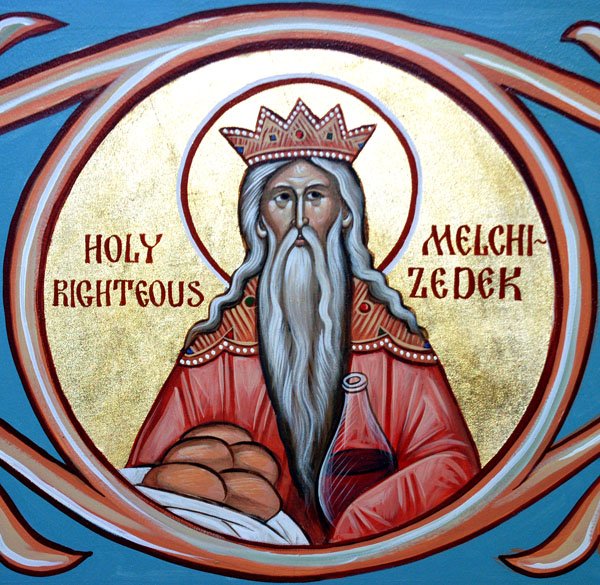
Righteous Melchizedek, King of Salem
He was a “priest of the most high God” (Genesis 14:18-20), who blessed our Forefather Abraham and “brought forth bread and wine,” prefiguring the Holy Eucharist, centuries before the Law was given to Moses or Christ became incarnate. The Epistle to the Hebrews (ch. 7) reveals Melchizedek, the Priest-King, to be a type of Christ.
Scripture Readings
☩Epistle
Acts 19:1-8
1
And it came to pass, that, while Apollos was at Corinth, Paul having passed through the upper coasts came to Ephesus: and finding certain disciples,
2
He said unto them, Have ye received the Holy Ghost since ye believed? And they said unto him, We have not so much as heard whether there be any Holy Ghost.
3
And he said unto them, Unto what then were ye baptized? And they said, Unto John’s baptism.
4
Then said Paul, John verily baptized with the baptism of repentance, saying unto the people, that they should believe on him which should come after him, that is, on Christ Jesus.
5
When they heard this, they were baptized in the name of the Lord Jesus.
6
And when Paul had laid his hands upon them, the Holy Ghost came on them; and they spake with tongues, and prophesied.
7
And all the men were about twelve.
8
And he went into the synagogue, and spake boldly for the space of three months, disputing and persuading the things concerning the kingdom of God.
☩Gospel
John 14:1-11
1
Let not your heart be troubled: ye believe in God, believe also in me.
2
In my Father’s house are many mansions: if it were not so, I would have told you. I go to prepare a place for you.
3
And if I go and prepare a place for you, I will come again, and receive you unto myself; that where I am, there ye may be also.
4
And whither I go ye know, and the way ye know.
5
Thomas saith unto him, Lord, we know not whither thou goest; and how can we know the way?
6
Jesus saith unto him, I am the way, the truth, and the life: no man cometh unto the Father, but by me.
7
If ye had known me, ye should have known my Father also: and from henceforth ye know him, and have seen him.
8
Philip saith unto him, Lord, shew us the Father, and it sufficeth us.
9
Jesus saith unto him, Have I been so long time with you, and yet hast thou not known me, Philip? he that hath seen me hath seen the Father; and how sayest thou then, Shew us the Father?
10
Believest thou not that I am in the Father, and the Father in me? the words that I speak unto you I speak not of myself: but the Father that dwelleth in me, he doeth the works.
11
Believe me that I am in the Father, and the Father in me: or else believe me for the very works’ sake.
 Meat
Abstain
Meat
Abstain
 Fish
Abstain
Fish
Abstain
 Dairy
Abstain
Dairy
Abstain
 Oil
Allowed
Oil
Allowed
 Wine
Allowed
Wine
Allowed