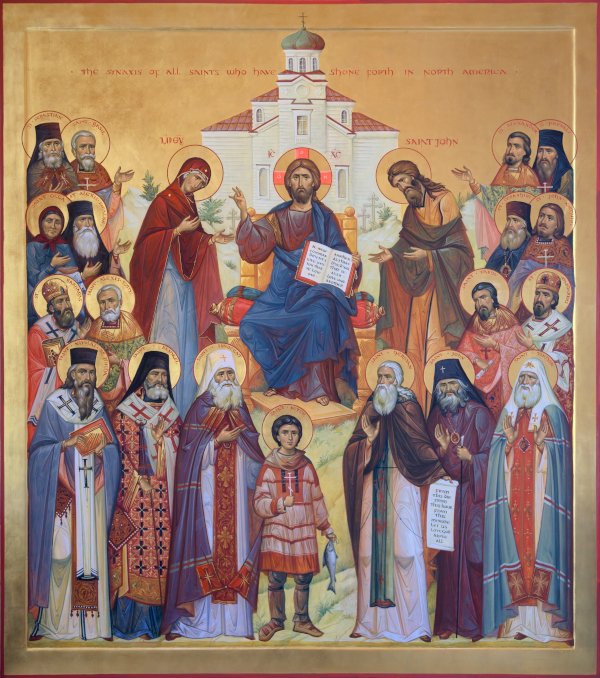
On the second Sunday after Pentecost, each local Orthodox Church commemorates all the saints, known and unknown, who have shone forth in its territory. Accordingly, the Orthodox Church in America remembers the saints of North America on this day.
Saints of all times, and in every country are seen as the fulfillment of God’s promise to redeem fallen humanity. T
On the second Sunday after Pentecost, each local Orthodox Church commemorates all the saints, known and unknown, who have shone forth in its territory. Accordingly, the Orthodox Church in America remembers the saints of North America on this day.
Saints of all times, and in every country are seen as the fulfillment of God’s promise to redeem fallen humanity. Their example encourages us to “lay aside every weight, and the sin which so easily besets us” and to “run with patience the race that is set before us” (Hebrews 12:1). The saints of North America also teach us how we should live, and what we must expect to endure as Christians
Although it is a relatively young church, the Orthodox Church in America has produced saints in nearly all of the six major categories of saints: Apostles (and Equals of the Apostles); Martyrs (and Confessors); Prophets; Hierarchs; Monastic Saints; and the Righteous. Prophets, of course, lived in Old Testament times and predicted the coming of Christ.
The first Divine Liturgy in what is now American territory (northern latitude 58 degrees, 14 minutes, western longitude 141 degrees) was celebrated on July 20, 1741, the Feast of the Prophet Elias, aboard the ship Peter under the command of Vitus Bering. Hieromonk Hilarion Trusov and the priest Ignatius Kozirevsky served together on that occasion. Several years later, the Russian merchant Gregory I. Shelikov visited Valaam monastery, suggesting to the abbot that it would be desirable to send missionaries to Russian America.
On September 24, 1794, after a journey of 7,327 miles (the longest missionary journey in Orthodox history) and 293 days, a group of monks from Valaam arrived on Kodiak Island in Alaska. The mission was headed by Archimandrite Joasaph, and included Hieromonks Juvenal, Macarius, and Athanasius, the Hierodeacons Nectarius and Stephen, and the monks Herman and Joasaph. Saint Herman of Alaska (December 13, August 9), the last surviving member of the mission, fell asleep in the Lord in 1837.
Throughout the Church’s history, the seeds of faith have always been watered by the blood of the martyrs. The Protomartyr Juvenal was killed near Lake Iliamna by natives in 1799, thus becoming the first Orthodox Christian to shed his blood for Christ in the New World. In 1816, Saint Peter the Aleut was put to death by Spanish missionaries in California when he refused to convert to Roman Catholicism.
Missionary efforts continued in the nineteenth century, with outreach to the native peoples of Alaska. Two of the most prominent laborers in Christ’s Vineyard were Saint Innocent Veniaminov (March 31 and October 6) and Saint Jacob Netsvetov (July 26), who translated Orthodox services and books into the native languages. Father Jacob Netsvetev died in Sitka in 1864 after a life of devoted service to the Church. Father John Veniaminov, after his wife’s death, received monastic tonsure with the name Innocent. He died in 1879 as the Metropolitan of Moscow.
As the nineteenth century was drawing to a close, an event of enormous significance for the North American Church took place. On March 25, 1891, Bishop Vladimir went to Minneapolis to receive Saint Alexis Toth (May 7) and 361 of his parishioners into the Orthodox Church. This was the beginning of the return of many Uniates to Orthodoxy.
Saint Tikhon (Bellavin), the future Patriarch of Moscow (April 7, October 9), came to America as bishop of the diocese of the Aleutians and Alaska in September 1898. As the only Orthodox bishop on the continent, Saint Tikhon traveled extensively throughout North America in order to minister to his widely scattered and diverse flock. He realized that the local church here could not be a permanent extension of the Russian Church. Therefore, he focused his efforts on giving the American Church a diocesan and parish structure which would help it mature and grow.
Saint Tikhon returned to Russia in 1907, and was elected as Patriarch of Moscow ten years later. He died in 1925, and for many years his exact burial place remained unknown. Saint Tikhon’s grave was discovered on February 22, 1992 in the smaller cathedral of Our Lady of the Don in the Don Monastery when a fire made renovation of the church necessary.
Saint Raphael of Brooklyn (February 27) was the first Orthodox bishop to be consecrated in North America. Archimandrite Raphael Hawaweeny was consecrated by Bishop Tikhon and Bishop Innocent (Pustynsky) at Saint Nicholas Cathedral in New York on March 13, 1904. As Bishop of Brooklyn, Saint Raphael was a trusted and capable assistant to Saint Tikhon in his archpastoral ministry. Saint Raphael reposed on February 27, 1915.
The first All American Council took place March 5-7, 1907 at Mayfield, PA, and the main topic was “How to expand the mission.” Guidelines and directions for missionary activity, and statutes for the administrative structure of parishes were also set forth.
In the twentieth century, in the aftermath of the Russian Revolution, countless men, women, and children received the crown of martyrdom rather than renounce Christ. Saints John Kochurov (October 31) and Alexander Hotovitzky (December 4 and August 7) both served the Church in North America before going back to Russia. Saint John became the first clergyman to be martyred in Russia on October 31, 1917 in Saint Petersburg. Saint Alexander Hotovitzky, who served in America until 1914, was killed in 1937.
In addition to the saints listed above, we also honor those saints who are known only to God, and have not been recognized officially by the Church. As we contemplate the lives of these saints, let us remember that we are also called by God to a life of holiness.
Troparion - Tone 8
As the bountiful harvest of Your sowing of salvation, / the lands of North America offer to You, O Lord, all the saints who have shone in them. / By their prayers keep the Church and our land in abiding peace / through the Theotokos, O most Merciful One.
Kontakion - Tone 3
Today the choir of Saints who were pleasing to God in the lands of North America / now stands before us in the Church and invisibly prays to God for us. / With them the angels glorify Him, / and all the saints of the Church of Christ keep festival with them; / and together they all pray for us to the Pre-Eternal God.
All Saints of America, All Saints of Russia
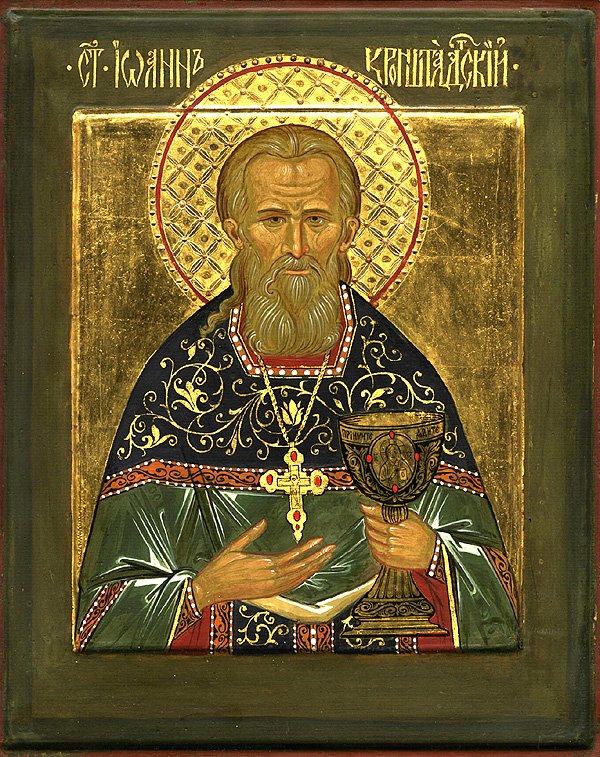
Glorification of Saint John of Kronstadt
Saint John of Kronstadt was glorified by the Russian Orthodox Church in 1990. He is also commemorated on December 20.
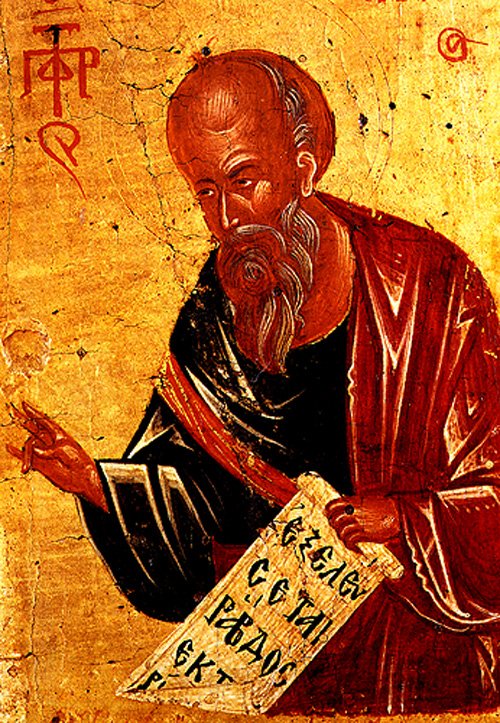
Prophet Elisha
The disciple and spiritual heir of the Prophet Elijah (July 20), his story can be found in II Kings. Unlike most of the Old Testament prophets, he was granted the gift of working many miracles. He reposed in peace at a great age. The Fathers tell us that he was anointed by Elijah in the year 908 BC and reposed in peace at a great age in 839 BC.
The disciple and spiritual heir of the Prophet Elijah (July 20), his story can be found in II Kings. Unlike most of the Old Testament prophets, he was granted the gift of working many miracles. He reposed in peace at a great age. The Fathers tell us that he was anointed by Elijah in the year 908 BC and reposed in peace at a great age in 839 BC. He was buried in Samaria. Even after his death, miracles of wonderworking were performed through his relics.
Troparion - Tone 4
An angel in the flesh and the cornerstone of the prophets, / the second forerunner of the coming of Christ, / glorious Elijah sent grace from on high to Elisha, / to dispel diseases and to cleanse lepers. / Therefore, he pours forth healings on those who honor him.
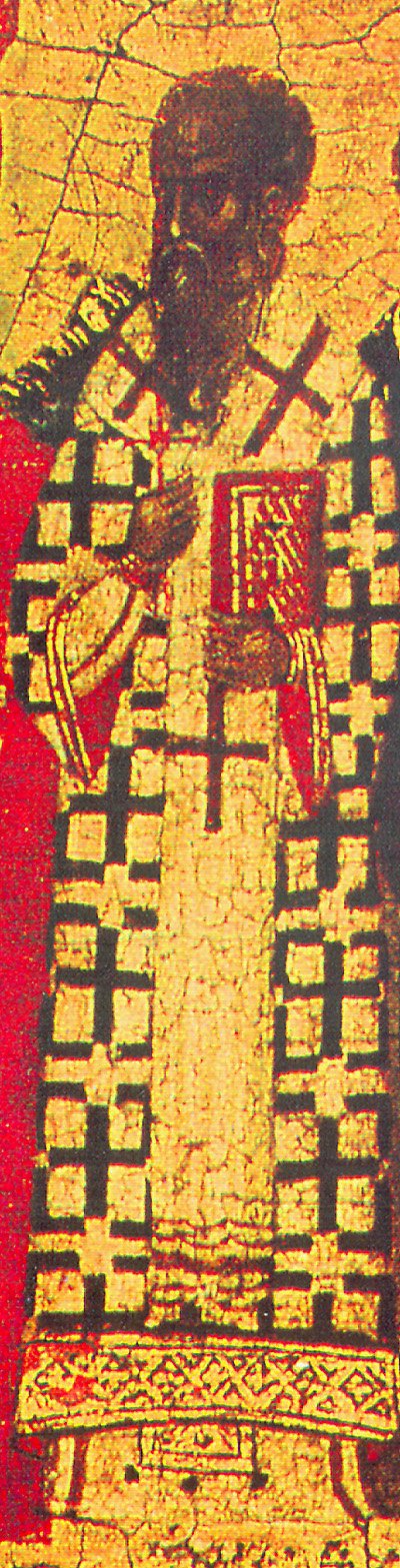
Saint Methodius, Patriarch of Constantinople
Saint Methodius, Patriarch of Constantinople, was born in Sicily into a rich family. Having a vocation to serve God, he went while still in his youth off to a monastery on the island of Chios and renovated it with his means. During the reign of the iconoclast Leo the Armenian (813-820), Methodius held the high position of “apokrisiaros” (“advocate for Church matters”) under the holy Patriarch Nikēphóros (June 2). He was di
Saint Methodius, Patriarch of Constantinople, was born in Sicily into a rich family. Having a vocation to serve God, he went while still in his youth off to a monastery on the island of Chios and renovated it with his means. During the reign of the iconoclast Leo the Armenian (813-820), Methodius held the high position of “apokrisiaros” (“advocate for Church matters”) under the holy Patriarch Nikēphóros (June 2). He was dispatched by the patriarch to Rome on a mission to the papacy and he remained there. During this period Leo the Armenian removed Nikēphóros from the patriarchal throne and put on it the iconoclast Theodotus of Melissinea, given the nickname “Kassiter” (“Tinman”) (815-822). After the death of Leo the Armenian, Saint Methodius returned, and in the dignity of presbyter he struggled incessantly against the Iconoclast heresy.
The emperor Michael the Stammerer (820-829) at first was noted for his benevolence and he set free many imprisoned by his predecessor for their veneration of icons, but after a while he renewed the persecution against Orthodoxy. Saint Methodius was locked up in prison in Akrita. After the death of Michael the Stammerer, the ruler was Theophilus (829-842), who also was an iconoclast. More refined a man than his father, he set free Saint Methodius, who likewise was a man of learning, superbly skilled in matters not only ecclesial, but also civil. Having received his freedom, Saint Methodius renewed the struggle with the heretics, and for a while the emperor tolerated this.
But after defeat in a war with the Arabs, Theophilus vented his anger against Methodius, saying, that God had punished him because he had let an “icon-worshipper” come close to him. Methodius objected, saying that the Lord was angry with him for the insults upon His holy icons. They gave the saint over to tortures, and struck him much about the face, from which his jaw was broken. Ugly scars remained on his face. Methodius was sent off to the island of Antigonos and he was locked up there with two robbers in a deep cave. In this dark prison where the light of day did not penetrate, Methodius languished for 7 years until the death of the emperor Theophilus.
During this time, the holy Confessors Theodore and Theophanes the Branded (December 27), who had also been sent to prison, sent Methodius greetings in verse, and the prisoner replied with greetings in verse, as well.
After the death of Theophilus, his son Michael III (842-867) began to rule, but not being of mature age, the Byzantine Empire was actually ruled by his mother, the empress Theodora, a venerater of icons.
The empress tried to extirpate the Iconoclast heresy, and gave orders to free the confessors imprisoned for icon veneration. The heretic Annios occupying the patriarchal throne was banished, and Saint Methodius chosen in his place. At Constantinople was convened a local Council with Saint Methodius presiding (842). The Council restored icon veneration and established an annual celebration of the triumph of Orthodoxy. The “Synodikon of Orthodoxy” compiled by Saint Methodius is read on the First Sunday of Great Lent.
Attempting to undermine the authority of Saint Methodius, and also the love and esteem of his flock for him, the heretics slandered him as having transgressed chastity. The slander was exposed as such, and the enemies of the saint put to shame. The final years of the saint passed peacefully, he toiled much, wisely guided the Church and his flock, renovated temples ruined by the heretics, gathered up the relics of saints scattered about by the heretics, and transferred the relics of Patriarch Nikēphóros from the place of his imprisonment back to Constantinople. Saint Methodius died in the year 846. He was spiritually close to Ioannikos (4 November), who had foretold that he would become patriarch and also the time of his death. Besides the “Synodikon of Orthodoxy,” the holy hierarch also compiled a rule for those converted to the Faith, three rites of marriage and several pastoral sermons and church hymns.
Troparion - Tone 4
You appeared to your flock as a rule of faith, / an image of humility, and a teacher of abstinence. / Because of your lowliness, heaven was opened to you; / because of your poverty, riches were granted to you! / O Holy Bishop Methodius, pray to Christ our God to save our souls!
Kontakion - Tone 2
You contended on earth as one already delivered from the body, / and thus you deserved heaven, O Methodius! / You proclaimed throughout the world the righteousness of venerating Icons, / spending your days in hardship and effort, / and now you still rebuke those who do not honor the image of Christ.
St John Mavropos, Metropolitan of Euchaïta(1100)
He is commemorated today on the Slavic Calendar; for his life, see October 5, his commemoration on the Greek Calendar.
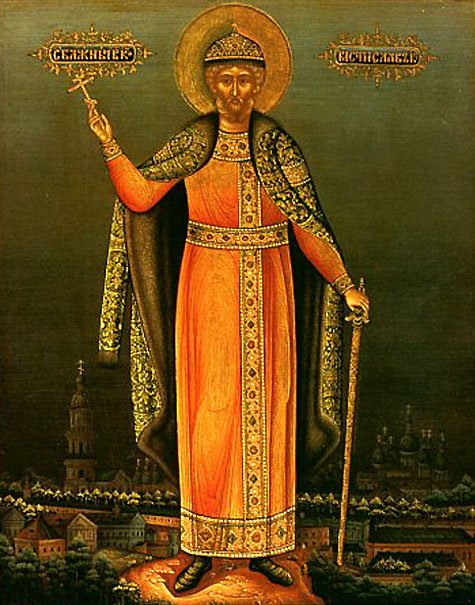
Saint Mstislav (George), Prince of Novgorod
No information available at this time.
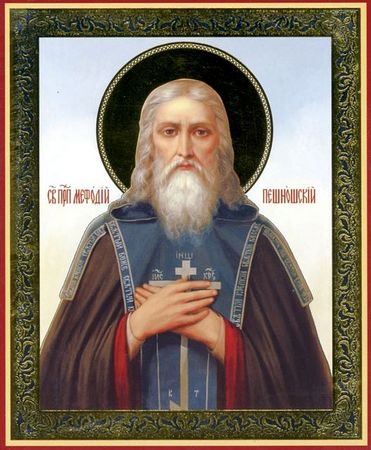
Venerable Methodius, Abbot of Peshnosha
According to an old manuscript calendar, “The Monk Methodios, the Igumen (and founder) of Peshnosha Monastery, the disciple of Saint Sergius the wonderworker, reposed in the summer of 6900 (1392), on the fourteenth day of June.”
Saint Methodios was regarded as a saint at Peshnosha from the day of his death, and his memory was celebrated at the monastery and in the surrounding villages on June 14, on the same day as Saint Methodios, Patriarch of Constantinople.
Ac
According to an old manuscript calendar, “The Monk Methodios, the Igumen (and founder) of Peshnosha Monastery, the disciple of Saint Sergius the wonderworker, reposed in the summer of 6900 (1392), on the fourteenth day of June.”
Saint Methodios was regarded as a saint at Peshnosha from the day of his death, and his memory was celebrated at the monastery and in the surrounding villages on June 14, on the same day as Saint Methodios, Patriarch of Constantinople.
According to other sources, Saint Methodios reposed on June 4, 1392.
Saint Methodios was numbered among the saints at the Moscow Council of 1549.
Troparion - Tone 8
By a flood of tears you made the desert fertile, / and your longing for God brought forth fruits in abundance. / By the radiance of miracles you illumined the whole universe! / O our holy father Methodius, pray to Christ our God to save our souls!
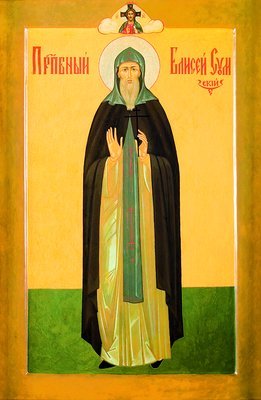
Venerable Elisha of Suma, Solovki
Saint Elisha of Suma was a monk at the Solovki monastery, and was occupied with the weaving of fishing nets. Before his death he became a schemamonk. In 1688 miracles began from the saint’s grave in a crypt in the Nikolsk church of the city of Suma, Archangelsk diocese.
Troparion - Tone 8
By a flood of tears you made the desert fertile, / and your longing for God brought forth fruits in abundance. / By the radiance of miracles you illumined the whole universe! / O our holy father Elisha, pray to Christ our God to save our souls!
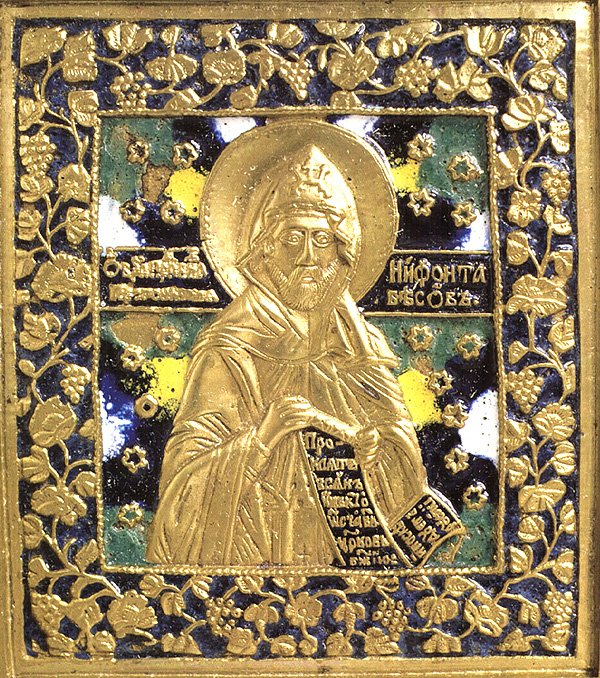
Venerable Niphon of Mount Athos
Saint Niphon of Athos lived in the fourteenth century, and was the son of a priest. From childhood he was raised under the principles of strict Christian morality. Upon taking monastic tonsure he soon was ordained to the holy priesthood. But the thirst for perfect stillness and solitary labors led the monk to the Holy Mountain.
Saint Niphon of Athos lived in the fourteenth century, and was the son of a priest. From childhood he was raised under the principles of strict Christian morality. Upon taking monastic tonsure he soon was ordained to the holy priesthood. But the thirst for perfect stillness and solitary labors led the monk to the Holy Mountain. There he struggled for many years with the renowned Athonite Elder Saint Maximus Kavsokalyvites (“the Hut-burner,” January 13). Saint Niphon died at age 96, glorified by gifts of wonderworking and clairvoyance.
Troparion - Tone 8
By a flood of tears you made the desert fertile, / and your longing for God brought forth fruits in abundance. / By the radiance of miracles you illumined the whole universe! / O our holy father Niphon, pray to Christ our God to save our souls!
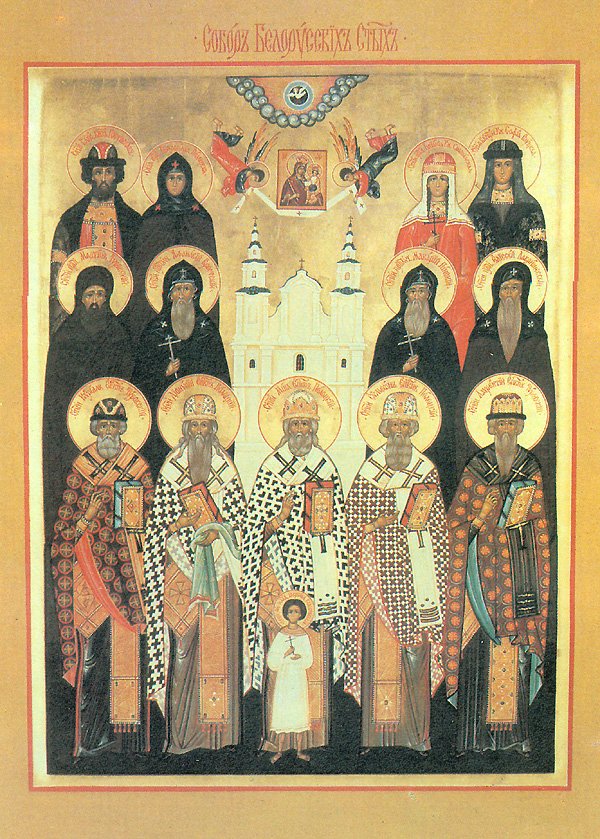
Synaxis of the Saints of Belarus
No information available at this time.
Synaxis of the Saints of Diveyevo
The Holy Trinity St. Seraphim-Diveyevo Convent was founded in 1760 when the Mother of God appeared in a dream to a woman named Agatha in the village of Diveyevo and promised that she would build a great women's monastery there. Agatha also built a church in honor of the Kazan Icon of the Most Holy Theotokos on the spot where she had appeared.
The Holy Trinity St. Seraphim-Diveyevo Convent was founded in 1760 when the Mother of God appeared in a dream to a woman named Agatha in the village of Diveyevo and promised that she would build a great women's monastery there. Agatha also built a church in honor of the Kazan Icon of the Most Holy Theotokos on the spot where she had appeared. Later, Agatha received the monastic tonsure and the new name Alexandra, and she became the first Igoumeness of the new Convent.
The Most Holy Theotokos chose Diveyevo as her "fourth portion in the inhabited world." The others are Mount Athos, Georgia, and Kiev's Holy Trinity Lavra of the Caves. She also promised that God's mercy and grace would be gathered there from the other three portions.
Venerable Alexandra Mel'gunova (+ June 13, 1789)
Martyr Daria Slushinskaya (+ August 5/18,1919)
Martyr Daria Timagina (+ August 5/18,1919)
Venerable Elena Manturova (+ May 28, 1832)
Martyr Eudokia Shikova (+ August 5/18,1919)
Martyr Jacob Gusev (+ December 16/29 1937)
Martyr Maria of Puzo (+ August 5/18,1919)
Blessed Maria Ivanovna Fedina, Fool for Christ (+ August 26/ September 8, 1937)
Martyr Maria Neizvestnaya, Suborovskaya (+ August 5,1919)
Martyr Michael Gusev (+ December 16/29 1937)
Venerable Martha Milyukova (+ August 21,1829)
Martyr Pelagia Testova (+ October 21/November 3, 1944)
Confessor Matrona (Vlasova) of Diveevo, (+ October 25/November 7, 1963)
Blessed Natalia Dmitrievna-“Natashenka” of Diveevo (+ February 22/March 7, 1900
Blessed Paraskeve (Pasha) Ivanovna Semyonovna, Fool for Christ (+ September 22, 1915)
Blessed Pelagia Ivanovna Semyonovna (+ January 30, 1884)
Pelagia (Testova) of Diveevo (+1944) Commemorated on October 21/November 3
Venerable Seraphim of Sarov (January 2 and July 19)
Hieromartyr Seraphim (Chichagov (+ November 28, 1937)
Hieromartyr Seraphim of Dmitrov (+ August 13/26, 1937)
Martyr Xenia Cherlina-Brailovskaya (+ September 2/15,1937)
Scripture Readings
☩Epistle
Romans 2:10-16
10
But glory, honour, and peace, to every man that worketh good, to the Jew first, and also to the Gentile:
11
For there is no respect of persons with God.
12
For as many as have sinned without law shall also perish without law: and as many as have sinned in the law shall be judged by the law;
13
(For not the hearers of the law are just before God, but the doers of the law shall be justified.
14
For when the Gentiles, which have not the law, do by nature the things contained in the law, these, having not the law, are a law unto themselves:
15
Which shew the work of the law written in their hearts, their conscience also bearing witness, and their thoughts the mean while accusing or else excusing one another;)
16
In the day when God shall judge the secrets of men by Jesus Christ according to my gospel.
☩Gospel
Matthew 4:18-23
18
And Jesus, walking by the sea of Galilee, saw two brethren, Simon called Peter, and Andrew his brother, casting a net into the sea: for they were fishers.
19
And he saith unto them, Follow me, and I will make you fishers of men.
20
And they straightway left their nets, and followed him.
21
And going on from thence, he saw other two brethren, James the son of Zebedee, and John his brother, in a ship with Zebedee their father, mending their nets; and he called them.
22
And they immediately left the ship and their father, and followed him.
23
And Jesus went about all Galilee, teaching in their synagogues, and preaching the gospel of the kingdom, and healing all manner of sickness and all manner of disease among the people.
 Meat
Abstain
Meat
Abstain
 Fish
Allowed
Fish
Allowed
 Dairy
Abstain
Dairy
Abstain
 Oil
Allowed
Oil
Allowed
 Wine
Allowed
Wine
Allowed