Fasting Rules

Meat not allowed Meat Abstain
Fish allowed Fish Allowed
Dairy not allowed Dairy Abstain
Oil allowed Oil Allowed
Wine allowed Wine Allowed

Saints & Commemorations
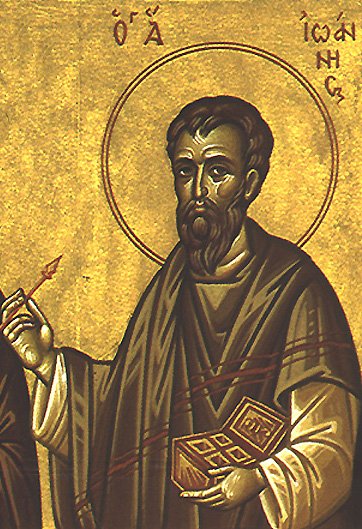
Translation of the Relics of the holy and wonderworking Unmercenaries Cyrus and John

Translation of the Relics of the holy and wonderworking Unmercenaries Cyrus and John

The Transfer of the Relics of the Holy Martyrs, Unmercenaries and Wonderworkers, Cyrus and John from the city of Konopa, near Alexandria (where they suffered in the year 311) to the nearby village of Manuphin, took place in the year 412. This Egyptian village prompted fear in everyone, since in a former time there was a pagan temple inhabited by evil spirits. The Transfer of the Relics of the Holy Martyrs, Unmercenaries and Wonderworkers, Cyrus and John from the city of Konopa, near Alexandria (where they suffered in the year 311) to the nearby village of Manuphin, took place in the year 412. This Egyptian village prompted fear in everyone, since in a former time there was a pagan temple inhabited by evil spirits. Patriarch Theophilus (385-412) wanted to cleanse this place of demons, but he died. His wish was fulfilled by his successor in the See of Alexandria, the holy Patriarch Cyril (412-444). He prayed fervently in carrying out this project. An angel of the Lord appeared in a vision to the hierarch and commanded the venerable relics of Saints Cyrus and John be transferred to Manuphin. His Holiness Patriarch Cyril did the angel’s bidding and built a church at Manuphin in the name of the holy martyrs. From that time this place was purified of the Enemy’s influence, and by the prayers of the holy Martyrs Cyrus and John there began to occur many miracles, healings of the sick and infirm. An account of Saints Cyrus and John is located under January 31.

Troparion - Tone 5

O Christ God, / You have given us the miracles of Your martyrs, Cyrus and John, / as an invincible rampart; / through their prayers, frustrate the plans of the heathens, / and strengthen the faith of the Orthodox Christians, / for You alone are good and love mankind.

Trans. Rel. Ven. Cyrus and John

Venerable Xenophon, Abbot of Robeika, Novgorod

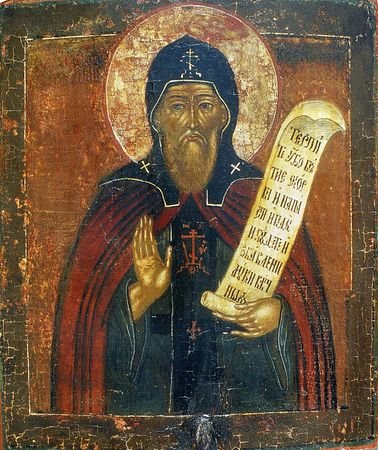
Venerable Xenophon, Abbot of Robeika, Novgorod

Our holy Father Xenophon of Robeika was the disciple of Saint Barlaam of Khutyn (November 6). He became the third Igoumen of the Khutyn monastery after Igoumen Isidore (+1243), and at the insistence of Saint Anthony of Dymsk (June 24). After resigning as Igoumen, Saint Xenophon would later establish Holy Trinity Monastery on the banks of the Robeika River (not far from Novgorod). Our holy Father Xenophon of Robeika was the disciple of Saint Barlaam of Khutyn (November 6). He became the third Igoumen of the Khutyn monastery after Igoumen Isidore (+1243), and at the insistence of Saint Anthony of Dymsk (June 24). After resigning as Igoumen, Saint Xenophon would later establish Holy Trinity Monastery on the banks of the Robeika River (not far from Novgorod). Saint Xenophon's pious disposition was apparent from his earliest years, for he knew that this world will soon pass away. He also knew that this life is filled with sorrow, but after it there shall be everlasting life, which is true, filled with joy and spiritual consolations. With all his heart, mind, and soul, the Venerable one was drawn to the attainment of this eternal, joyous life with the Lord. He tried his best to avoid the sensuality of worldly life, striving only for its higher meaning. Saint Xenophon settled with Saint Barlaam of Khutyn in the wilderness at the place where Xenophon would shine forth like a pillar of fire. There they put up a cross, built a chapel and a humble dwelling. By the Lord's will, however, the disciple went far away from his Elder to another spot where he could live an ascetical life under harsh conditions. This occurred while they were inspecting the site where they wanted to establish their dwelling. A terrible storm sprang up, and Saint Xenophon called his Elder to come into the cell and take cover; but the Elder became angry at his disciple, telling him to go on a raft in search of another place for his ascetical struggles, and he gave him a quarter of a loaf of bread. Saint Xenophon set off on the raft upon the Robeika River, miraculously sailing against the current, and soon he stood upon the shore. He stopped at the place where the raft had stuck, and there he fished, praying that the Lord would strengthen him. After some time, Saint Xenophon went back to his Spiritual Father Saint Barlaam, asking for forgiveness. He received the Elder's blessing to build a chapel at the place where he now lived. Saint Barlaam blessed him, and in all humility, the disciple went back, set up a cross, and then built a chapel and a small hut for his cell. Later, after the consecration of the church of Saint Nicholas, Saint Xenophon's monastic community was established in the same remote marshland. Other ascetics of piety began to flock there, but the number of monks was small. In 1251, Saint Xenophon became the Igoumen of the monastery. Although the monastery was neither wealthy nor distinguished, the monks labored to make it beautiful. Saint Xenophon reposed peacefully on June 28, 1262. His holy relics rested for many years in the monastery church, which later became a parish.

Troparion - Tone 4

You appeared as a splendid growth in the wilderness, Venerable Father, / for from your youth you chose a life of purity, following your spiritual instructor, / and by his admonitions, you turned your mind to heavenly things. / You dwelt in the wilderness and there you founded a monastery, becoming a wise counselor for your flock, / shining as a bright lamp in Great Novgorod with honor and strength. / Therefore, Christ enriched you with miracles and glorified you. / O Xenophon our Father, pray to Christ God for the salvation of our souls.
Venerable Sergius and Herman, Wonderworkers of Valaam

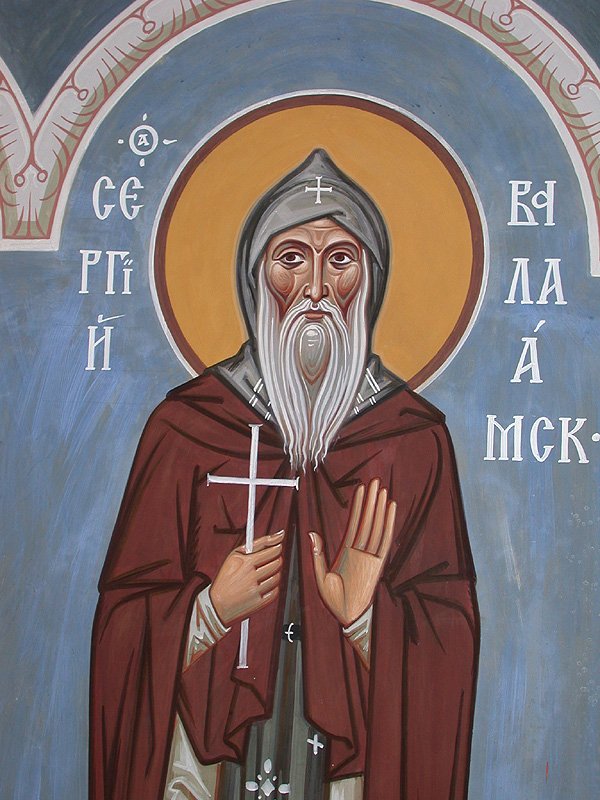
Venerable Sergius and Herman, Wonderworkers of Valaam

After helping to establish Orthodoxy among the Karelian Finns, they founded the famous Valaam Monastery on Lake Ladoga in northern Russia. Both reposed in the same year.

Troparion - Tone 4

Fulfilling the Gospel of Christ and loving him alone, / despising earthly cares you settled on an island. / There you fought against the invisible foe, / subjecting your bodies to the Spirit by fasting, vigil and prayer. / Crowned with glory and now standing before the Trinity, / pray, O Fathers Sergius and Herman, / that our souls may be saved!

Kontakion - Tone 4

You left the world to follow in Christ’s footsteps, / reaching Lake Neva and the island of Valaam. / There you lived the angelic life / and were translated to the heavenly bridal chamber. / As you stand with the angels remember the children whom you gathered, / that we may joyfully cry to you: / Rejoice, blessed Fathers Sergius and Herman!”

Synaxis of the Icon of our Most Holy Lady the Theotokos "Of the Three Hands"

Saint John of Damascus (December 4), the great defender of Orthodoxy against the iconoclasts, was falsely accused of plotting against the Caliph of Damascus through the intrigues of the iconoclast Emperor Leo the Isaurian (reigned 717-741). The Caliph ordered St John’s hand to be cut off for his suspected treachery. T Saint John of Damascus (December 4), the great defender of Orthodoxy against the iconoclasts, was falsely accused of plotting against the Caliph of Damascus through the intrigues of the iconoclast Emperor Leo the Isaurian (reigned 717-741). The Caliph ordered St John’s hand to be cut off for his suspected treachery. The saint asked for the severed hand, and passed the night praying fervently for aid before an icon of the most holy Theotokos. Waking in the morning, he found his hand miraculously restored, with only a scar around the wrist where it had been completely severed. In thanksgiving, St John had a silver hand mounted on the icon. When he became a monk in the monastery of St Sabbas in the Holy Land, he took the icon with him. It remained there until it was given to St Sabbas (Sava) of Serbia (January 14), who brought it to Serbia. Later it was miraculously taken to the Hilandar Monastery on the Holy Mountain (carried, according to legend, from Serbia to Mt Athos by an unguided donkey), where it may now be found.

Our Holy Father Sennuphius the Standard-Bearer (4th c.)
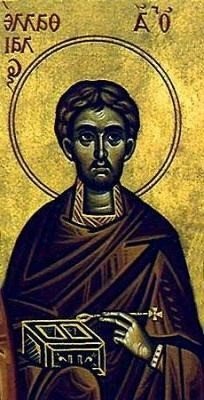
“A great ascetic and wonderworker of the Egyptian desert, he was a contemporary of Patriarch Theophilus and the Emperor Theodosius the Great. He is called ‘the Standard-Bearer’ because he once helped the Emperor Theodosius to gain a victory over enemy forces by his prayers. When the Emperor summoned him to Constantinople, he replied that he was unable to go, but sent his torn and patched monastic habit and his staff. Going “A great ascetic and wonderworker of the Egyptian desert, he was a contemporary of Patriarch Theophilus and the Emperor Theodosius the Great. He is called ‘the Standard-Bearer’ because he once helped the Emperor Theodosius to gain a victory over enemy forces by his prayers. When the Emperor summoned him to Constantinople, he replied that he was unable to go, but sent his torn and patched monastic habit and his staff. Going out to battle, the Emperor put on Sennuphius’s habit and carried his staff in his hand, and returned victorious from the battle.” (Prologue)
Saint Paul, Physician of Corinth

Saint Paul, Physician of Corinth

Saint Paul the Physician, from the city of Corinth, in his youth took monastic tonsure at one of the monasteries. Here the saint toiled much and became an experienced ascetic. Once Paul, through demonic malice, was slandered by a woman. She came to the monastery with a newborn infant and said, that Saint Paul was the father. Saint Paul the Physician, from the city of Corinth, in his youth took monastic tonsure at one of the monasteries. Here the saint toiled much and became an experienced ascetic. Once Paul, through demonic malice, was slandered by a woman. She came to the monastery with a newborn infant and said, that Saint Paul was the father. The Elder with humility and joy endured the slander, he did not deny it and he took the infant, as though it were his own son. When they began to reproach the saint for breaking his monastic vows, Saint Paul said, “Brethren, let us ask the infant who his father is!” The newborn, pointing his hand at the blacksmith, said, “Here is my father and not the monk Paul.” Seeing this miracle, people bowed down to the Elder, asking forgiveness. From this time Saint Paul received from God the gift of healing the sick, whereby he received the name physician. Saint Paul died at age 70.

Troparion - Tone 8

By a flood of tears you made the desert fertile, / and your longing for God brought forth fruits in abundance. / By the radiance of miracles you illumined the whole universe! / O our holy father Paul, pray to Christ our God to save our souls!
Icon of the Mother of God “Of the Three Hands”

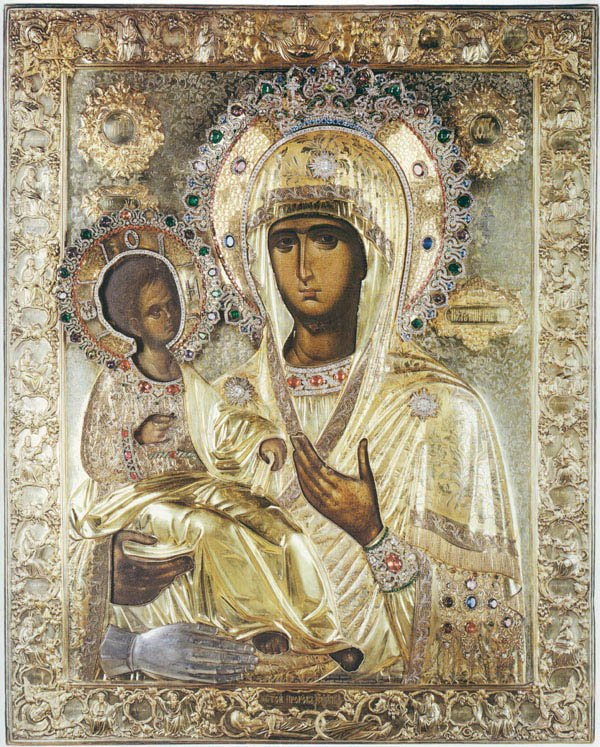
Icon of the Mother of God “Of the Three Hands”

The Icon of the Mother of God, “Of the Three Hands”: In the eighth century during the time of the Iconoclasts, Saint John of Damascus (December 4) was zealous in his veneration of holy icons. Because of this, he was slandered by the emperor and iconoclast Leo III the Isaurian (717-740), who informed the Damascus caliph that Saint John was committing treasonous acts against him. The The Icon of the Mother of God, “Of the Three Hands”: In the eighth century during the time of the Iconoclasts, Saint John of Damascus (December 4) was zealous in his veneration of holy icons. Because of this, he was slandered by the emperor and iconoclast Leo III the Isaurian (717-740), who informed the Damascus caliph that Saint John was committing treasonous acts against him. The caliph gave orders to cut off the hand of the monk and take it to the marketplace. Towards evening Saint John, having asked the caliph for the cut-off hand, put it to its joint and fell to the ground before the icon of the Mother of God. The monk begged Our Lady to heal the hand, which had written in defense of Orthodoxy. After long prayer he fell asleep and saw in a dream that the All-Pure Mother of God had turned to him promising him quick healing. Before this the Mother of God bid him toil without fail with this hand. Having awakened from sleep, Saint John saw that his hand was unharmed. In thankfulness for this healing Saint John placed on the icon a hand fashioned of silver, from which the icon received its name “Of Three Hands.” (Some iconographers, in their ignorance, have mistakenly depicted the Most Holy Theotokos with three arms and three hands.) According to Tradition, Saint John wrote a hymn of thanksgiving to the Mother of God: “All of creation rejoices in You, O Full of Grace,” which appears in place of the hymn “It is Truly Meet” in the Liturgy of Saint Basil the Great. Saint John Damascene accepted monasticism at the monastery of Saint Savva the Sanctified and there bestowed his wonderworking icon. The Lavra presented the icon “Of Three Hands” in blessing to Saint Savva, Archbishop of Serbia (+ 1237, January 12). During the time of an invasion of Serbia by the Turks, some Christians who wanted to protect the icon, entrusted it to the safekeeping of the Mother of God Herself. They placed it upon a donkey, which without a driver proceeded to Athos and stopped in front of the Hilandar monastery. The monks put the icon in the monastery’s cathedral church (katholikon). During a time of discord over the choice of igumen, the Mother of God deigned to head the monastery Herself, and from that time Her holy icon has occupied the igumen’s place in the temple. At the Hilandar monastery there is chosen only a vicar, and from the holy icon the monks take a blessing for every obedience. In Greek usage, this Icon is commemorated on June 28; but on July 12 in Slavic usage.

Hieromartyr Basil

The Hieromartyr Basil (Sitnikov) was a deacon of the Dalmatov - Saint Nicholas Church in the province of Perm. He graduated from the three classes of the religious school, and beginning in 1885, he served as a Reader. In 1898, he was ordained as a deacon, serving first at Saint John the Baptist Church in the village of Izyeduga in the Shadrinsk district of the Yekaterinburg diocese. The Hieromartyr Basil (Sitnikov) was a deacon of the Dalmatov - Saint Nicholas Church in the province of Perm. He graduated from the three classes of the religious school, and beginning in 1885, he served as a Reader. In 1898, he was ordained as a deacon, serving first at Saint John the Baptist Church in the village of Izyeduga in the Shadrinsk district of the Yekaterinburg diocese. Later, he served in the Church of the Nativity of the Theotokos in the village of Baklanskoye in that same district. On November 5, 1913, he was transferred to the Saint Nicholas Church in the city of Dalmatov, where he was put to death by the atheists who had come to power. In 1918, after the priests Vladimir Sergeiev and Alexander Sidorov were arrested, Deacon Basil began to reproach the atheists for plundering the property of these arrested shepherds. They took note of this and got their revenge. Deacon Basil Sitnikov was killed on the day after the priests with whom he served, on June 28, 1918.

Troparion - Tone 4

By sharing in the ways of the Apostles, / you became a successor to their throne. / Through the practice of virtue, you found the way to divine contemplation, O inspired one of God; / by teaching the word of truth without error, you defended the Faith, / even to the shedding of your blood. / Hieromartyr Basil, entreat Christ God to save our souls.

Holy Martyr Pappias

Numerous Christians were slaughtered during the persecution under Diocletian and Maximian in the early IV century, and Saint Pappias was one of those arrested for preaching the Gospel. The idol-worshippers tried to force him to sacrifice to the pagan gods, but he refused to deny Christ. Therefore, he was imprisoned and tortured for several days. W Numerous Christians were slaughtered during the persecution under Diocletian and Maximian in the early IV century, and Saint Pappias was one of those arrested for preaching the Gospel. The idol-worshippers tried to force him to sacrifice to the pagan gods, but he refused to deny Christ. Therefore, he was imprisoned and tortured for several days. When he remained unshakeable in his faith, he was beheaded, and his soul ascended victoriously into Heaven.

Troparion - Tone 3

Your holy martyr Pappias, O Lord, / through his sufferings has received an incorruptible crown from You, our God. / For having Your strength, he laid low his adversaries, / and shattered the powerless boldness of demons. / Through his intercessions, save our souls!

Venerable Confessor Sergius of Paphlagonia

The Holy and Venerable Sergius of Paphlagonia came from the town of Niketia (Nikḗtia) in Amastrisos on the Black Sea. He belonged to an aristocratic family, and was related to the family of Empress Theodora, the wife of the iconoclastic Emperor Theophilos. Saint Sergius excelled in his studies and soon attained high military and political posts. The Holy and Venerable Sergius of Paphlagonia came from the town of Niketia (Nikḗtia) in Amastrisos on the Black Sea. He belonged to an aristocratic family, and was related to the family of Empress Theodora, the wife of the iconoclastic Emperor Theophilos. Saint Sergius excelled in his studies and soon attained high military and political posts. Although Theophilos was a staunch supporter of the iconoclasts, Sergius remained a Confessor of the Orthodox Faith, making great efforts to restore the Holy Icons. He also became the protector of many who defended the Holy Icons, and were being persecuted by Theophilos. After the Emperor's death, Saint Sergius made great contributions and used all of his influence to strengthen Theodora's decision to convene an Ecumenical Council for the restoration of the Icons. Saint Sergius is particularly honored in Crete, where he reposed peacefully in the year 866, and was buried in the Monastery of the Magistrate. Later his holy relics were transferred with great honor, and were buried in the Monastery of the Most Holy Theotokos on the gulf of Nikomedia, which was called Niketianos (Nikētiános) because its founder was from the town of Niketia.

Troparion - Tone 8

In you, O Father, was preserved with exactness what was according to the image; / for you took up the Cross and followed Christ. / By so doing, you taught us to disregard the flesh, for it passes away; / but to care for the soul, since it is immortal. / Therefore, O Venerable Sergius, your spirit rejoices with the Angels.

Kontakion - Tone 2

Finding delight in abstinence, you subdued the desires of the flesh. / Revealed as one nurtured in the Faith, / you blossomed like the Tree of Life in Paradise, / O Holy Father Sergius.

Scripture Readings

Epistle

Romans 6:18-23

18 Being then made free from sin, ye became the servants of righteousness.
19 I speak after the manner of men because of the infirmity of your flesh: for as ye have yielded your members servants to uncleanness and to iniquity unto iniquity; even so now yield your members servants to righteousness unto holiness.
20 For when ye were the servants of sin, ye were free from righteousness.
21 What fruit had ye then in those things whereof ye are now ashamed? for the end of those things is death.
22 But now being made free from sin, and become servants to God, ye have your fruit unto holiness, and the end everlasting life.
23 For the wages of sin is death; but the gift of God is eternal life through Jesus Christ our Lord.

Gospel

Matthew 8:5-13

5 And when Jesus was entered into Capernaum, there came unto him a centurion, beseeching him,
6 And saying, Lord, my servant lieth at home sick of the palsy, grievously tormented.
7 And Jesus saith unto him, I will come and heal him.
8 The centurion answered and said, Lord, I am not worthy that thou shouldest come under my roof: but speak the word only, and my servant shall be healed.
9 For I am a man under authority, having soldiers under me: and I say to this man, Go, and he goeth; and to another, Come, and he cometh; and to my servant, Do this, and he doeth it.
10 When Jesus heard it, he marvelled, and said to them that followed, Verily I say unto you, I have not found so great faith, no, not in Israel.
11 And I say unto you, That many shall come from the east and west, and shall sit down with Abraham, and Isaac, and Jacob, in the kingdom of heaven.
12 But the children of the kingdom shall be cast out into outer darkness: there shall be weeping and gnashing of teeth.
13 And Jesus said unto the centurion, Go thy way; and as thou hast believed, so be it done unto thee. And his servant was healed in the selfsame hour.

Liturgical data sourced from OCA.org and orthocal.info