Fasting Rules

Meat not allowed Meat Abstain
Fish allowed Fish Allowed
Dairy not allowed Dairy Abstain
Oil allowed Oil Allowed
Wine allowed Wine Allowed

Saints & Commemorations
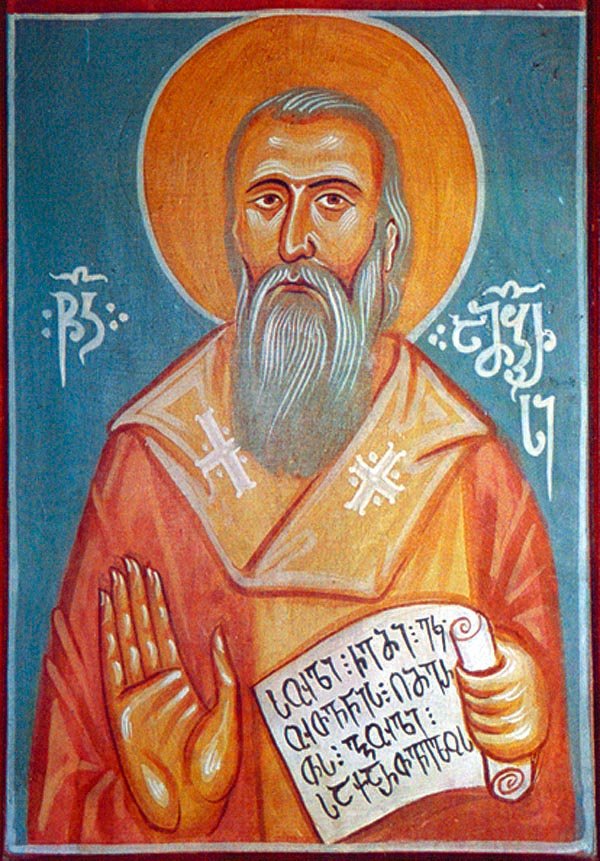
St Maximos the Confessor (662)

St Maximos the Confessor (662)

He was from a noble family in Constantinople, and became the private secretary of the Emperor Heraclius and his grandson Constans. But when the Monothelite heresy (that Christ possesses one divine will, rather than a divine and a human will) took hold in the Imperial court, the Saint could not bear to be surrounded by this error and left the court for the Monastery at Chrysopolis, where in time he became the abbot. He was from a noble family in Constantinople, and became the private secretary of the Emperor Heraclius and his grandson Constans. But when the Monothelite heresy (that Christ possesses one divine will, rather than a divine and a human will) took hold in the Imperial court, the Saint could not bear to be surrounded by this error and left the court for the Monastery at Chrysopolis, where in time he became the abbot. From the monastery he continued to speak and write in defense of Orthodox belief. The Emperor Constans ordered him either to accept Monothelite belief or to cease speaking against it, but St Maximos would do neither. For this, his tongue was torn out, his right hand was cut off, and he was sent into exile, where he reposed in 662. He is also commemorated on January 21; see that day for a slightly fuller account.

Troparion - Tone 8

Champion of Orthodoxy, teacher of purity and of true worship, / the enlightener of the universe and the adornment of hierarchs: / all-wise father Ambrose, your teachings have gleamed with light upon all things. / Intercede before Christ God to save our souls.

St Tikhon of Zadonsk (1783)

He is one of the best-loved Saints of the Russian people. He was born into a very poor family in Novgorod province and received the baptismal name of Timothy. He went to seminary in Novgorod, where he excelled, later teaching Greek and other subjects. He was tonsured a monk at the age of thirty-four, receiving the monastic name of Tikhon. He is one of the best-loved Saints of the Russian people. He was born into a very poor family in Novgorod province and received the baptismal name of Timothy. He went to seminary in Novgorod, where he excelled, later teaching Greek and other subjects. He was tonsured a monk at the age of thirty-four, receiving the monastic name of Tikhon. As his ascesis and wisdom became known, he quickly became eminent in the Church and in 1761 was made a bishop. In 1763 he was consecrated Bishop of Voronezh. After serving as bishop for about seven years, he retired to the monastery of Zadonsk, where he spent the remainder of his life. He devoted his “retirement” to prayer and the writing of books, producing a huge collection of writings that have earned him the name “the Russian Chrysostom.” He reposed in peace in 1783 at the age of fifty-nine. Many miracles were wrought by him after his death, and he was soon proclaimed a Saint by the people. When his body was exhumed in 1845 (over sixty years later) to make way for a new church in Zadonsk, his relics were found to be whole and incorrupt; even his vestments were free from decay. He was officially glorified in 1863; some three hundred thousand pilgrims attended his glorification.

Holy Martyr Hippolytus of Rome and 18 Martyrs with him (258)

He was the pagan jailkeeper who guarded St Laurence (see August 10); seeing his prisoner’s holiness and the wonders wrought by him, Hippolytus was convinced of the truth of the Faith and became a Christian. When St Laurence baptized him, he was granted a vision of heaven and said ‘I see innocent souls in great joy.’ He took Laurence into his own home, and his entire household were baptized, nineteen in all. When He was the pagan jailkeeper who guarded St Laurence (see August 10); seeing his prisoner’s holiness and the wonders wrought by him, Hippolytus was convinced of the truth of the Faith and became a Christian. When St Laurence baptized him, he was granted a vision of heaven and said ‘I see innocent souls in great joy.’ He took Laurence into his own home, and his entire household were baptized, nineteen in all. When St Laurence was martyred, Hippolytus retrieved his body by night and buried it. He was detected and brought before the Emperor Valerian on the third day after Laurence’s death. Despite severe beatings he would not renounce his faith. The Emperor ordered that he be stripped and flayed but, standing naked before the emperor, Hippolytus said ‘You have not stripped me, but have begun to clothe me.’ Despite all torments, neither Hippolytus nor any of his household would deny Christ. All of his household were slain, one by one, before Hippolytus. Finally Hippolytus himself was bound behind a wild horse and dragged to death.

Our Holy Mother the Empress Irene (Xenia in Monasticism) (12th c.)

She was the pious wife of the Emperor John II Comnenus (reigned 1118-1143), but retired into monastic life. She founded the Monastery of the Pantokrator in Constantinople.

St Tikhon of Zadonsk

He is one of the best-loved Saints of the Russian people. He was born into a very poor family in Novgorod province and received the baptismal name of Timothy. He went to seminary in Novgorod, where he excelled, later teaching Greek and other subjects. He was tonsured a monk at the age of thirty-four, receiving the monastic name of Tikhon. He is one of the best-loved Saints of the Russian people. He was born into a very poor family in Novgorod province and received the baptismal name of Timothy. He went to seminary in Novgorod, where he excelled, later teaching Greek and other subjects. He was tonsured a monk at the age of thirty-four, receiving the monastic name of Tikhon. As his ascesis and wisdom became known, he quickly became eminent in the Church and in 1761 was made a bishop. In 1763 he was consecrated Bishop of Voronezh. After serving as bishop for about seven years, he retired to the monastery of Zadonsk, where he spent the remainder of his life. He devoted his “retirement” to prayer and the writing of books, producing a huge collection of writings that have earned him the name “the Russian Chrysostom.” He reposed in peace in 1783 at the age of fifty-nine. Many miracles were wrought by him after his death, and he was soon proclaimed a Saint by the people. When his body was exhumed in 1845 (over sixty years later) to make way for a new church in Zadonsk, his relics were found to be whole and incorrupt; even his vestments were free from decay. He was officially glorified in 1863; some three hundred thousand pilgrims attended his glorification.

Scripture Readings

Epistle

2 Corinthians 4:1-6

1 Therefore seeing we have this ministry, as we have received mercy, we faint not; But have renounced the hidden things of dishonesty, not walking in craftiness, nor handling the word of God deceitfully; but by manifestation of the truth commending ourselves to every man’s conscience in the sight of God. But if our gospel be hid, it is hid to them that are lost: In whom the god of this world hath blinded the minds of them which believe not, lest the light of the glorious gospel of Christ, who is the image of God, should shine unto them. For we preach not ourselves, but Christ Jesus the Lord; and ourselves your servants for Jesus’ sake. For God, who commanded the light to shine out of darkness, hath shined in our hearts, to give the light of the knowledge of the glory of God in the face of Jesus Christ.

Gospel

Matthew 24:13-28

13 But he that shall endure unto the end, the same shall be saved. And this gospel of the kingdom shall be preached in all the world for a witness unto all nations; and then shall the end come. When ye therefore shall see the abomination of desolation, spoken of by Daniel the prophet, stand in the holy place, (whoso readeth, let him understand:) Then let them which be in Judaea flee into the mountains: Let him which is on the housetop not come down to take any thing out of his house: Neither let him which is in the field return back to take his clothes. And woe unto them that are with child, and to them that give suck in those days! But pray ye that your flight be not in the winter, neither on the sabbath day: For then shall be great tribulation, such as was not since the beginning of the world to this time, no, nor ever shall be. And except those days should be shortened, there should no flesh be saved: but for the elect’s sake those days shall be shortened. Then if any man shall say unto you, Lo, here is Christ, or there; believe it not. For there shall arise false Christs, and false prophets, and shall shew great signs and wonders; insomuch that, if it were possible, they shall deceive the very elect. Behold, I have told you before. Wherefore if they shall say unto you, Behold, he is in the desert; go not forth: behold, he is in the secret chambers; believe it not. For as the lightning cometh out of the east, and shineth even unto the west; so shall also the coming of the Son of man be. For wheresoever the carcase is, there will the eagles be gathered together.

Liturgical data sourced from OCA.org and orthocal.info