Fasting Rules
 Meat
Allowed
Meat
Allowed
 Fish
Allowed
Fish
Allowed
 Dairy
Allowed
Dairy
Allowed
 Oil
Allowed
Oil
Allowed
 Wine
Allowed
Wine
Allowed
Saints & Commemorations
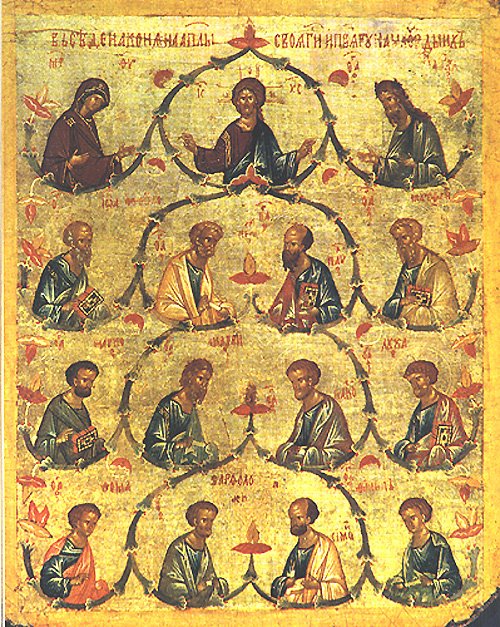
Synaxis of the Holy, Glorious and All-Praised Twelve Apostles
The Synaxis of the Glorious and All-Praiseworthy Twelve Apostles of Christ appears to be an ancient Feast. The Church honors each of the Twelve Apostles on separate dates during the year, and has established a general commemoration for all of them on the day after the commemoration of the Glorious and First-Ranked among the Apostles Peter and Paul.
The Synaxis of the Glorious and All-Praiseworthy Twelve Apostles of Christ appears to be an ancient Feast. The Church honors each of the Twelve Apostles on separate dates during the year, and has established a general commemoration for all of them on the day after the commemoration of the Glorious and First-Ranked among the Apostles Peter and Paul.
The holy God-crowned Emperor Constantine the Great (May 21) built a church in Constantinople in honor of the Twelve Apostles. There are instructions for celebrating this Feast which date from the fourth century. For lists of the Apostles' names, see: Mt.10:2, Mark 3:14, Luke 6:12, Acts 1:13, 26.
The holy, glorious, all-laudable Apostle Andrew the First-called is also commemorated on November 30. He was the brother of Saint Peter (June 29).
The holy, glorious, all-laudable Apostle James is also commemorated on April 30. He and his brother John are the sons of Zebedee, and were called “sons of Thunder” (Mark 3: 17).
The holy, glorious, all-laudable Apostle and Evangelist, virgin, and beloved friend of Christ, John the Theologian is also commemorated on September 26 and May 8. He and his brother James are the sons of Zebedee, and were called “sons of Thunder” (Mark 3:17).
The holy, glorious, all-laudable Apostle Philip is also commemorated on November 14.
The holy, glorious, all-laudable Apostle Bartholomew is also commemorated on June 11 and August 25.
The holy, glorious, all-laudable Apostle Thomas is also commemorated on October 6 and on the Sunday after Pascha.
The holy, glorious, all-laudable Apostle and Evangelist Matthew is also commemorated on November 16.
The holy, glorious, all-laudable Apostle James, the son of Alphaeus, is also commemorated on October 9.
The holy, glorious, all-laudable Apostle Jude is also commemorated on June 19. He is also known as Thaddeus (but should not be confused with Saint Thaddeus of the Seventy, who is commemorated on August 21), and was the brother of Saint James (October 23).
The holy, glorious, all-laudable Apostle Simon the Zealot is also commemorated on May 10.
The holy, glorious, all-laudable Apostle Matthias is also commemorated on August 9.
Troparion - Tone 4
First-enthroned of the apostles, / teachers of the universe: / Entreat the Master of all / to grant peace to the world, / and to our souls great mercy!*
* Note: The troparion for June 30 is the same as June 29.
Kontakion - Tone 2
First-enthroned of the apostles, / teachers of the universe: / Entreat the Master of all / to grant peace to the world, / and to our souls great mercy!*
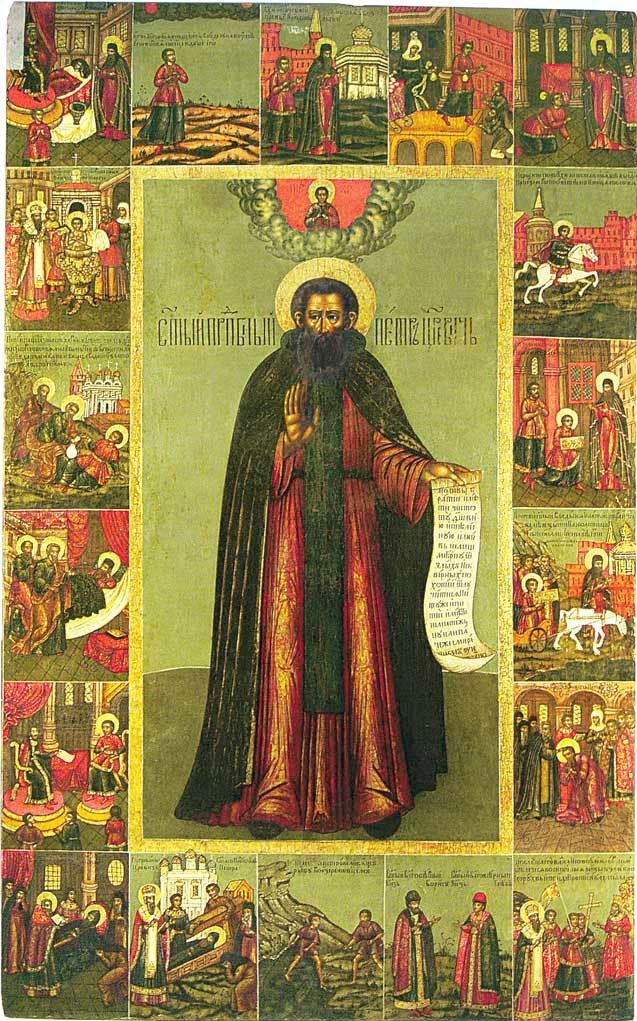
Saint Peter, Prince of Ordinsk, Rostov
Saint Peter, Prince of the Horde, was the nephew of Bergai Khan of the Golden Horde. In the year 1253 Saint Cyril, Bishop of Rostov (May 21), went to the Horde to petition for church needs in his diocese and he told the khan about the Christian Faith, and of the miracles and healings worked by the relics of Saint Leontius of Rostov (May 23).
Saint Peter, Prince of the Horde, was the nephew of Bergai Khan of the Golden Horde. In the year 1253 Saint Cyril, Bishop of Rostov (May 21), went to the Horde to petition for church needs in his diocese and he told the khan about the Christian Faith, and of the miracles and healings worked by the relics of Saint Leontius of Rostov (May 23). Among the retinue was the young nephew of the khan, upon whom the holy bishop made a very strong impression. After some length of time the son of Bergai fell ill. Remembering the account of the Russian bishop about the healings, he summoned Saint Cyril, and through his prayers the sick one was healed. The khan richly rewarded Saint Cyril and sent him off to his diocese.
Along the way the lad, the nephew of Bergai Khan, overtook the holy hierarch, and entreated him to take him along to Rostov. At Rostov the boy was baptized with the name Peter, and he married. Saint Peter distinguished himself with a love for silence, contemplation, and prayer. After a miraculous appearance to him of the Apostles Peter and Paul he built a monastery near Lake Nera in their honor. After the death of his wife, shortly before his own death in 1290, the saint embraced monasticism at the monastery he had founded.
Local veneration of the holy Prince Peter began in the fourteenth century. A general celebration was established at the Council of 1547.
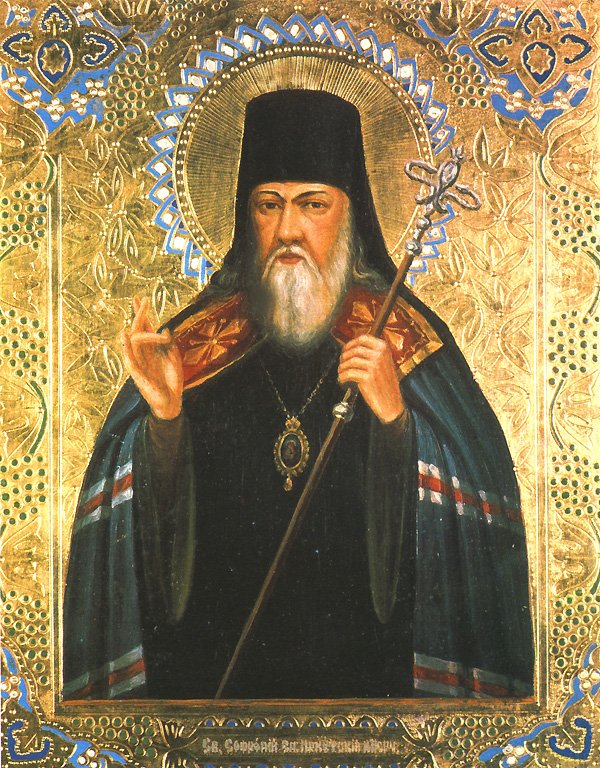
Translation of the relics of Saint Sophronius, Bishop of Irkutsk
Saint Sophronius, Bishop of Irkutsk and All Siberia, reposed on March 30, 1771, the second day of Holy Pascha. While they awaited a decision of the Holy Synod concerning the burial, his body remained unburied for six months, and during this time it was not subject to decay. Then, in view of this circumstance, and also knowing about the strict ascetic life of Saint Sophronius, the flock began to venerate him as a saint of God.
Saint Sophronius, Bishop of Irkutsk and All Siberia, reposed on March 30, 1771, the second day of Holy Pascha. While they awaited a decision of the Holy Synod concerning the burial, his body remained unburied for six months, and during this time it was not subject to decay. Then, in view of this circumstance, and also knowing about the strict ascetic life of Saint Sophronius, the flock began to venerate him as a saint of God. Frequently (in 1833, 1854, 1870, 1909) his relics were seen to be incorrupt, and a source of grace-filled miracles. A fire occurring on April 18, 1917 at the Theophany Cathedral at Irkutsk left only the bones of the holy bishop. This did not diminish, but on the contrary, it increased the reverent veneration of the saint by the faithful of the nation.
A local Council of the Russian Orthodox Church in its deliberations of April 10/23, 1918 decided to glorify Bishop Sophronius, numbering him among the holy saints of God. This solemnity of adding Saint Sophronius to the list of the saints was done on June 30. At a second session of this Council under the presidency of His Holiness Patriarch Tikhon (now Saint Tikhon) a Service to Saint Sophronius was approved, with a Troparion composed by Archbishop John, who at that time guided the Irkutsk diocese, so that all believers would have the possibility of adding prayer to the holy saint into the voice of the Siberian churches, deeply venerating the memory of their illuminator and intercessor.
And at the present time believers turn for help to Saint Sophronius. Prayers witness to this, having been composed on the day of the 40th year celebration of the glorification of the holy hierarch on July 13,1958, by Metropolitan Nestor (Anisimov), then Metropolitan of Novosibirsk and Barnaulsk, and a solemn feast of the 200 year anniversary of the day of death of Saint Sophronius took place at the Zolotonoshsk Krasnogorsk women’s monastery and in the Irkutsk diocese (Journal of the Moscow Patriarchate, 1971, No. 9), and he is venerated by all believers of the Russian Orthodox Church.
Troparion - Tone 4
From your youth you loved Christ, O blessed Sophronios, / and you governed monastic communities well; / and being honored with the rank of Hierarch, you kept watch over the flock of Irkutsk. / Thus, after your repose, you received the gift of miracles from God, / and now entreat Christ God to deliver us from misfortunes, and to save our souls.
Kontakion - Tone 4
Let us glorify with love the Hierarch and namesake of sobriety, / O faithful, the special adornment of the Church of Irkutsk, our Father and Hierarch Sophronios, / for he is the guardian of that city and land, and an intercessor for our souls.
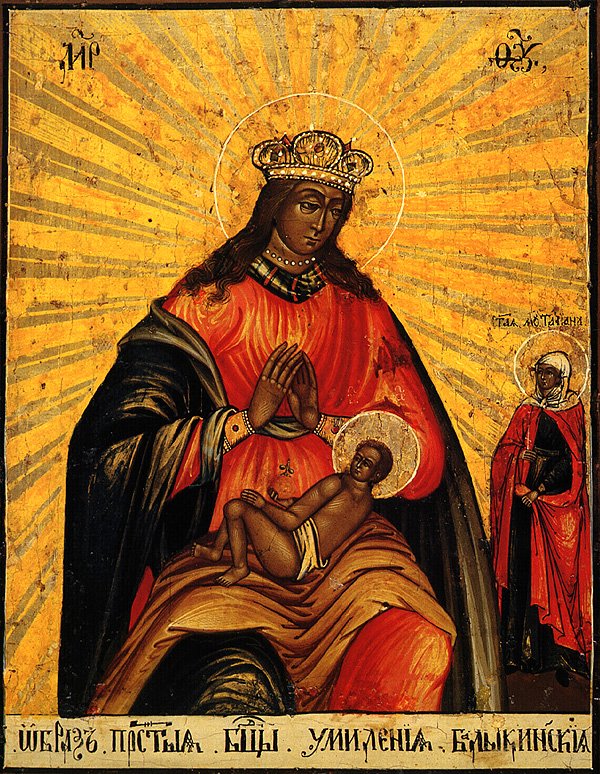
Icon of the Mother of God of Balikin
The Balikin Icon of the Mother of God is from the Chernigov Province. The child Christ is clothed only around the waist, and rests in His Mother’s lap. The hands of the Theotokos are joined in prayer.
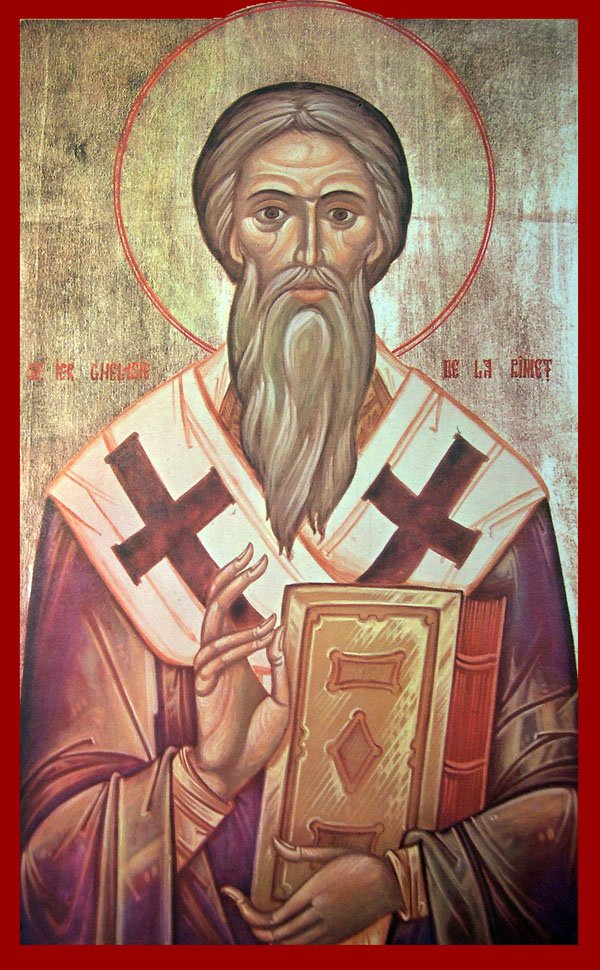
Saint Gelasius of Rimet
Saint Gelasius was the igumen of the Rimet Monastery in Transylvania. He had lived as a solitary near Rimet creek, and he was granted the grace of working miracles.
The saint fasted on weekdays, eating only on Saturdays and Sundays, and his only food was the Eucharist. During the day he fulfilled his monastic obediences, and at night he kept vigil.
Saint Gelasius was the igumen of the Rimet Monastery in Transylvania. He had lived as a solitary near Rimet creek, and he was granted the grace of working miracles.
The saint fasted on weekdays, eating only on Saturdays and Sundays, and his only food was the Eucharist. During the day he fulfilled his monastic obediences, and at night he kept vigil.
Saint Gelasius was the spiritual Father of many hermits of Rimet Mountain, whom he would visit during Great Lent. He healed the sick, and cast out demons from those who were possessed. It is said that a spring of water appeared through his holy prayers.
His later years were spent as a bishop, and he departed to the Lord after many labors on behalf of his flock.
Saint Gelasius was glorified by the Orthodox Church of Romania in 1992.
Troparion - Tone 4
In truth you were revealed to your flock as a rule of faith, / an image of humility and a teacher of abstinence; / your humility exalted you; / your poverty enriched you. / Hierarch Father Gelasius, / entreat Christ our God / that our souls may be saved.
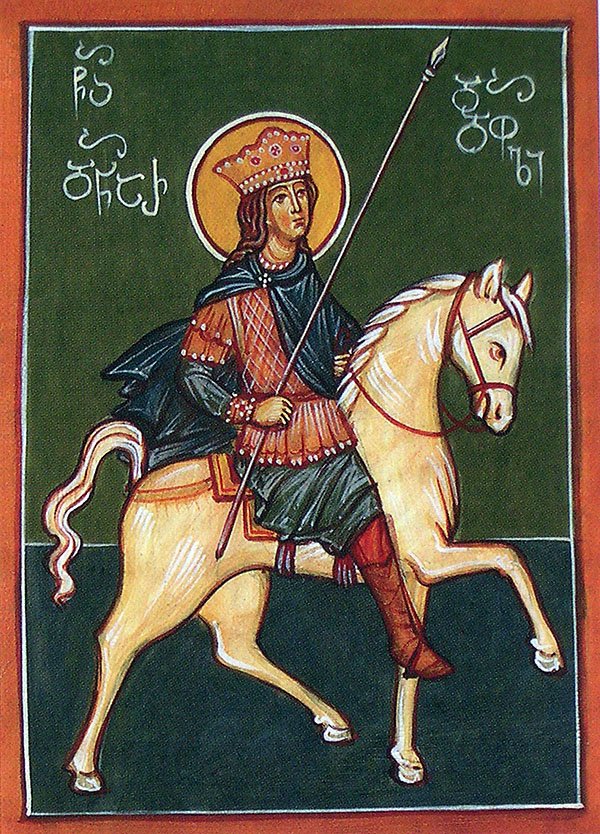
Holy Queen Dinar
The Russian Church has preserved chronicles of the life of Queen Dinar, a woman who achieved much on behalf of the Christian Faith. For years scholars have disputed about the historical figure discussed in great depth in the Russian Church. Many believed that the sources described Holy Queen Tamar, but the period of Tamar’s rule does not match that of the figure described in the chronicles. T
The Russian Church has preserved chronicles of the life of Queen Dinar, a woman who achieved much on behalf of the Christian Faith. For years scholars have disputed about the historical figure discussed in great depth in the Russian Church. Many believed that the sources described Holy Queen Tamar, but the period of Tamar’s rule does not match that of the figure described in the chronicles. The Georgian chronicle Life of Kartli , however, has preserved information about a certain Dinar, Queen of Hereti (southeastern Georgia), who, along with her son Ishkhanik, converted Hereti to the Orthodox Faith and delivered its people from the Monophysite heresy in the 10th century. Queen Dinar’s story resembles that recounted in the Russian Chronicles more closely than any other.
According to the Armenian historian Moses of Kalankaytuk, Slavic tribes that carried out incursions in the southernmost Caucasus often journeyed through the Transcaucasus, and it was with these tribes that the story of Queen Dinar made its way to Russia. The Georgian Church renders great honor to Holy Queen Dinar. As a result of her zealous labors and achievements, a large part of the eastern Transcaucasus was saved from the Monophysite heresy that dominated the region.
Today, on the north wall of the Throne Hall in the Moscow Kremlin, there hangs an image of Holy Queen Dinar mounted on a white horse, victorious over the enemy.
Scripture Readings
☩Epistle
Romans 14:9-18
9
For to this end Christ both died, and rose, and revived, that he might be Lord both of the dead and living.
10
But why dost thou judge thy brother? or why dost thou set at nought thy brother? for we shall all stand before the judgment seat of Christ.
11
For it is written, As I live, saith the Lord, every knee shall bow to me, and every tongue shall confess to God.
12
So then every one of us shall give account of himself to God.
13
Let us not therefore judge one another any more: but judge this rather, that no man put a stumblingblock or an occasion to fall in his brother’s way.
14
I know, and am persuaded by the Lord Jesus, that there is nothing unclean of itself: but to him that esteemeth any thing to be unclean, to him it is unclean.
15
But if thy brother be grieved with thy meat, now walkest thou not charitably. Destroy not him with thy meat, for whom Christ died.
16
Let not then your good be evil spoken of:
17
For the kingdom of God is not meat and drink; but righteousness, and peace, and joy in the Holy Ghost.
18
For he that in these things serveth Christ is acceptable to God, and approved of men.
☩Gospel
Matthew 12:14-16, 22-30
14
Then the Pharisees went out, and held a council against him, how they might destroy him.
15
But when Jesus knew it, he withdrew himself from thence: and great multitudes followed him, and he healed them all;
16
And charged them that they should not make him known:
22
Then was brought unto him one possessed with a devil, blind, and dumb: and he healed him, insomuch that the blind and dumb both spake and saw.
23
And all the people were amazed, and said, Is not this the son of David?
24
But when the Pharisees heard it, they said, This fellow doth not cast out devils, but by Beelzebub the prince of the devils.
25
And Jesus knew their thoughts, and said unto them, Every kingdom divided against itself is brought to desolation; and every city or house divided against itself shall not stand:
26
And if Satan cast out Satan, he is divided against himself; how shall then his kingdom stand?
27
And if I by Beelzebub cast out devils, by whom do your children cast them out? therefore they shall be your judges.
28
But if I cast out devils by the Spirit of God, then the kingdom of God is come unto you.
29
Or else how can one enter into a strong man’s house, and spoil his goods, except he first bind the strong man? and then he will spoil his house.
30
He that is not with me is against me; and he that gathereth not with me scattereth abroad.
Liturgical data sourced from OCA.org and orthocal.info