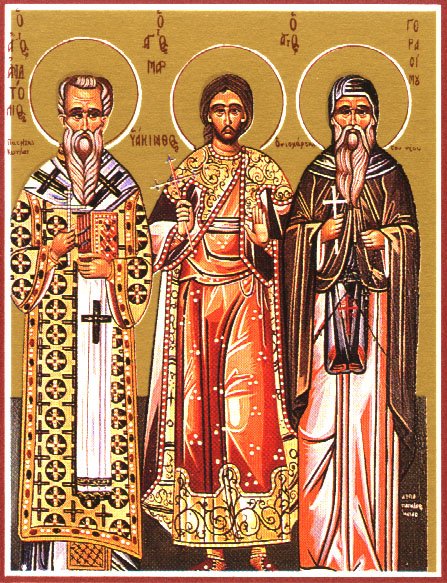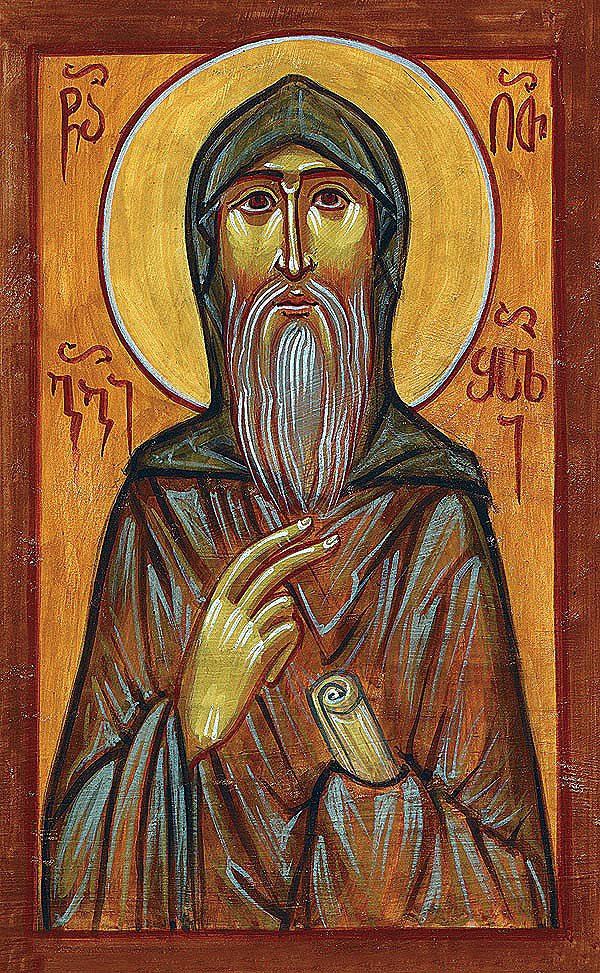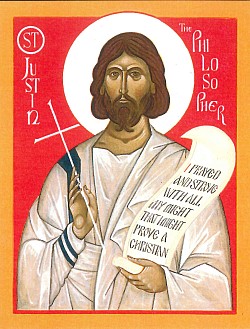
Fasting Rules

Meat not allowed Meat Abstain
Fish not allowed Fish Abstain
Dairy not allowed Dairy Abstain
Oil not allowed Oil Abstain
Wine not allowed Wine Abstain

Saints & Commemorations

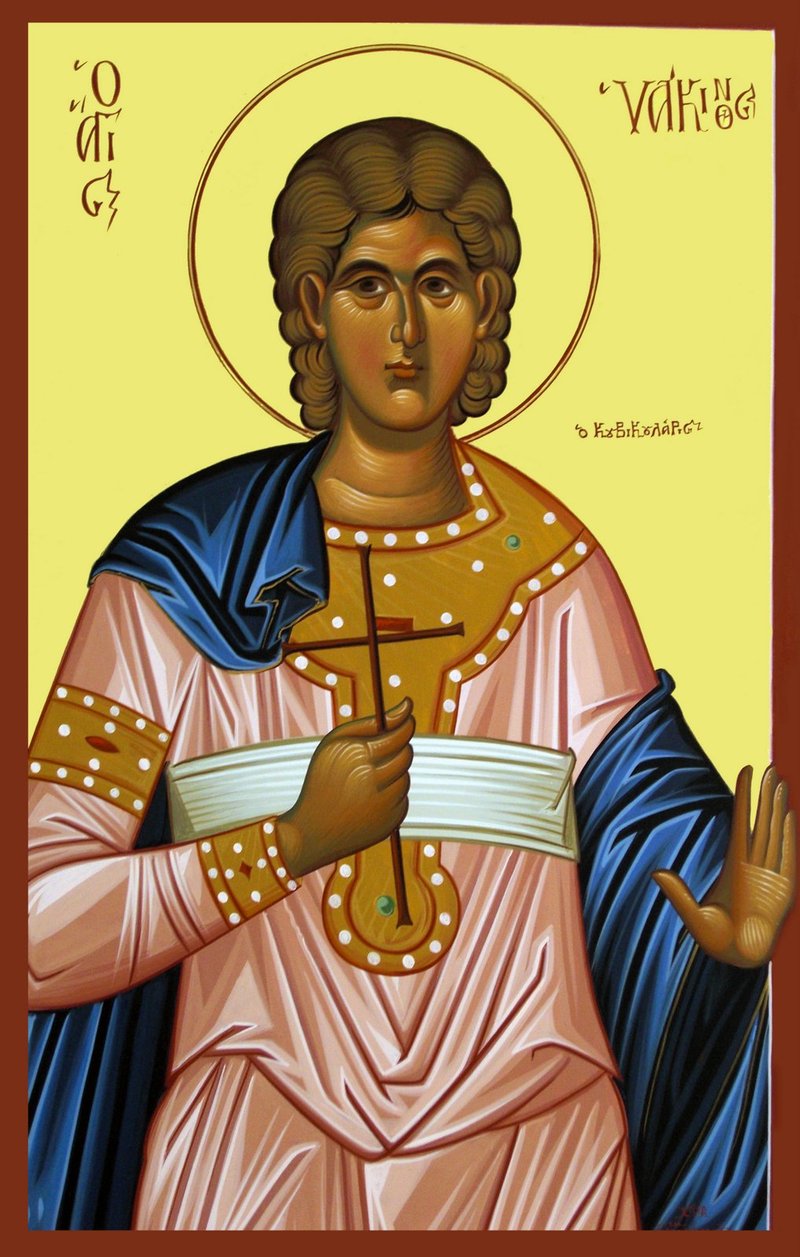
Martyr Hyacinth of Caesarea, in Cappadocia, and those with him

Martyr Hyacinth of Caesarea, in Cappadocia, and those with him

Saint Hyacinth, a native of Caesarea in Cappadocia, was raised in a Christian family. The emperor Trajan made the boy his “cubicularius” (chamberlain), unaware that he was a secret Christian. One day, while the emperor and his entourage were offering sacrifice to idols, the young Hyacinth remained at the palace, shut himself up in a small room, and prayed fervently to the Lord Jesus Christ. One Saint Hyacinth, a native of Caesarea in Cappadocia, was raised in a Christian family. The emperor Trajan made the boy his “cubicularius” (chamberlain), unaware that he was a secret Christian. One day, while the emperor and his entourage were offering sacrifice to idols, the young Hyacinth remained at the palace, shut himself up in a small room, and prayed fervently to the Lord Jesus Christ. One of the servants overheard him praying and denounced him to the emperor. He said that although Hyacinth was entrusted with an imperial position, he did not honor the Roman gods, and was secretly praying to Christ. Hyacinth was brought to trial before Trajan, who tried to persuade him to deny Christ and sacrifice to the deaf and dumb idols, but the holy martyr remained steadfast and declared that he was a Christian. He was whipped and thrown into prison, where the only food given to him was what had already been offered to the idols. They hoped that he would be overcome with hunger and thirst and eat it. Saint Hyacinth did not eat the food, and he died after thirty-eight days. When they came to torture him again, they found his dead body. The jailer saw two angels in the cell. One covered the saint’s body with his own garment, and the other placed a crown of glory on his head. The twelve-year-old Hyacinth suffered for Christ in the year 108 in the city of Rome. Later, the saint’s relics were transferred to Caesarea. Saints Diomedes, Eulampius, Asclepiodotus, and Golinduc also suffered with Saint Hyacinth.

Troparion - Tone 4

Like a fragrant hyacinth of the Church of Christ, O all-blessed Hyacinth, / you radiate grace to the ends of the world. / By the brilliance of your confession of faith, / you were illustrious in contest in emulation of God the Word / and you ever illumine those who acclaim you.

Kontakion - Tone 2

Come, you faithful, / plait a crown of unfading hyacinths today for the Martyr Hyacinth, / and let us cry to Him: / “Rejoice, glory of martyrs.”

Trans. Rel. Philip, Metr. Moscow

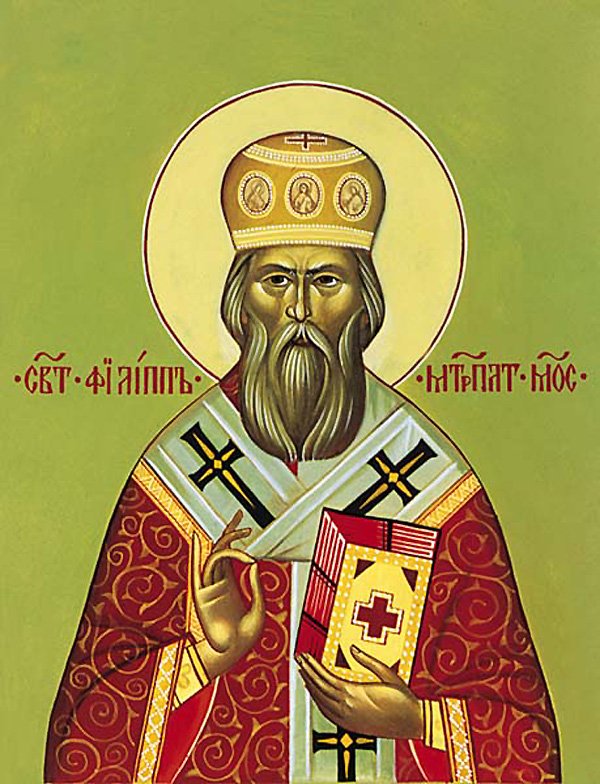
Translation of the relics of Hieromartyr Philip, Metropolitan of Moscow

Translation of the relics of Hieromartyr Philip, Metropolitan of Moscow

The Transfer of the Relics of Saint Philip, Metropolitan of Moscow and Wonderworker of All Russia: After the martyric death of Saint Philip (January 9), his body was buried at the Otrocha monastery, in Tver. The monks of the Solovki monastery, where he was formerly igumen, in 1591 requested permission for the transfer of his relics to their monastery. The Transfer of the Relics of Saint Philip, Metropolitan of Moscow and Wonderworker of All Russia: After the martyric death of Saint Philip (January 9), his body was buried at the Otrocha monastery, in Tver. The monks of the Solovki monastery, where he was formerly igumen, in 1591 requested permission for the transfer of his relics to their monastery. The much-suffering and incorrupt body was placed in a grave, prepared by Saint Philip for himself while still alive, beneath the portico of a temple of Saints Zosima and Sabbatius of Solovki, nearby the grave of the Elder Jonah (Shamin), his beloved guide in monastic deeds. On April 29, 1649 a grammota by Patriarch Joseph was sent to Elias, the igumen of the Solovki monastery, concerning the solemn uncovering of the relics of Saint Philip. On May 31 the relics were transferred into a new reliquary and placed in the Transfiguration cathedral. In 1652 Nikon, then Metropolitan of Novgorod, proposed that the relics of the three martyred hierarchs: Metropolitan Philip, and Patriarchs Job and Hermogenes be transferred to Moscow. With the blessing of Patriarch Joseph, Metropolitan Nikon set off in 1652 to Solovki for the relics of Saint Philip and solemnly conveyed them to Moscow. Into the hand of the saint was put a document of repentance by Tsar Aleksei Mikhailovich, in which he asked the forgiveness of sins of his great-grandfather Ivan the Terrible, “transgressing” his own power afront the power of the Church. On July 3 the holy relics were met in Moscow: “a pastor, innocent and cast out, was returned to his own throne.” In the Dormition cathedral, “he stood in his own place for 10 days.” All day, from morning until night, the bells rang as if it were Pascha. Afterwards the holy relics were placed in the Dormition Cathedral at the south door of the altar. At the place where the relics of Saint Philip were met in Moscow by clergy and people, a cross was set up, which gave its name to the Cross Tollgate in Moscow (at the Rizhsk rail-station).

Troparion - Tone 8

O foremost pillar of Orthodoxy / and defender of the truth, / the new confessor Philip laid down his life for his flock / therefore having boldness before Christ our God / pray for this city and people who honor your holy memory.

Our Holy Father Isaiah the Solitary (491)

One of the Desert Fathers, he lived in asceticism first at Scetis in Egypt, then in Palestine; he died in Gaza. His instructive writings are often quoted by the Fathers. Abba Isaiah said: The crown of all good works consists in this: that a man place all his hope in God, that he flee to Him once and for all with all his heart and strength, that he One of the Desert Fathers, he lived in asceticism first at Scetis in Egypt, then in Palestine; he died in Gaza. His instructive writings are often quoted by the Fathers. Abba Isaiah said: The crown of all good works consists in this: that a man place all his hope in God, that he flee to Him once and for all with all his heart and strength, that he be filled with compassion for all and weep before God, imploring His help and mercy.

Venerable Anatolius of the Kiev Near Caves

No information available at this time.

Troparion - Tone 8

By a flood of tears you made the desert fertile, / and your longing for God brought forth fruits in abundance. / By the radiance of miracles you illumined the whole universe! / O our holy father Anatolius, pray to Christ our God to save our souls!
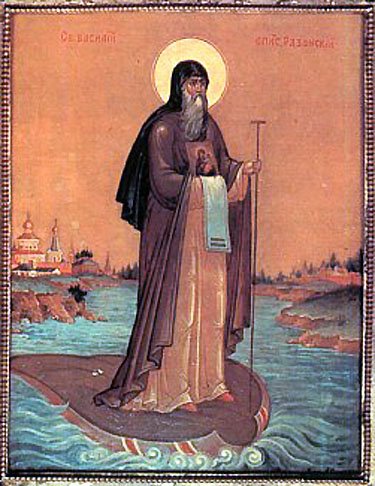
Venerable Anatolius the Recluse of the Kiev Far Caves

No information available at this time.

Troparion - Tone 8

By a flood of tears you made the desert fertile, / and your longing for God brought forth fruits in abundance. / By the radiance of miracles you illumined the whole universe! / O our holy father Anatolius, pray to Christ our God to save our souls!

Saint Basil, Bishop of Ryazan

Saint Basil, Bishop of Ryazan

Saint Basil, Bishop of Ryazan and Murom: His memory is celebrated by the Church on June 10 and July 3 (the day of his death in 1295). On June 10, 1609 the holy relics of Bishop Basil at Ryazan were uncovered and transferred to the Dormition cathedral church. Saint Basil I, Wonderworker of Ryazan, is mentioned in the Lavrentian Chronicles. Saint Basil, Bishop of Ryazan and Murom: His memory is celebrated by the Church on June 10 and July 3 (the day of his death in 1295). On June 10, 1609 the holy relics of Bishop Basil at Ryazan were uncovered and transferred to the Dormition cathedral church. Saint Basil I, Wonderworker of Ryazan, is mentioned in the Lavrentian Chronicles. In the ancient list of Ryazan hierarchs, he is mentioned as the fourth. (Basil II was consecrated as bishop in 1356 by Saint Alexis, Metropolitan of Moscow,). An older tradition connects with Saint Basil the transfer to Ryazan of the wonderworking Murom Icon of the Mother of God (April 12). Saint Basil was at first bishop of Murom. But by the slander of the spirit of evil, the citizens rose up against him, unjustly accusing him of transgressions unbecoming an archpastor. Then the saint, after prolonged prayer, left for the River Oka, and spreading out on the water his bishop’s mantiya he stood upon it, holding in his hands the icon of the Most Holy Theotokos of Murom. A strong wind carried him against the current and after several hours he reached Ryazan, where he was received with reverence by the prince and people of Ryazan. Even during his lifetime Saint Basil was regarded a righteous and pious man. Long before his relics were uncovered at the beginning of the seventeenth century, the Ryazan people cherished his memory and called him “their constant intercessor, helper in sorrows and travail.” To him most often they turned before setting out on journeys: seeking his help against problems on dry land, and to protect them from drowning in the water. In about the year 1540 the monk Erazm Ermolaev wrote “An Account of Basil, Bishop of Ryazan and Murom”.

Troparion - Tone 4

At first you were honored with the episcopal dignity at Murom, but were unjustly banished. / You climbed onto your mantya as if it were a light ship; / and as one without a body, you made your way supernaturally over the water, / guided by the Providence of the Most High, and by the intercession of the Mother of God, you reached the God-saved city of Ryazan. / There you accepted your hierarchal throne, and your God-given flock of Ryazan. / You have done well, O Hierarch and Father Basil. / Entreat Christ God that our souls may be saved.

Kontakion - Tone 8

O Hierarch Basil, you shone in the city of Murom like a bright star, / and upon the water you reached the city of Ryazan; / you helped the Church of God well by enlightening the people with your teaching and your life. / Even now, remember your children who pray to you, our good teacher, / and entreat Christ God and His Most Pure Mother for us, / that with grateful souls we may cry to you: / "Rejoice, O Christ-pleaser and fervent intercessor with God for us.

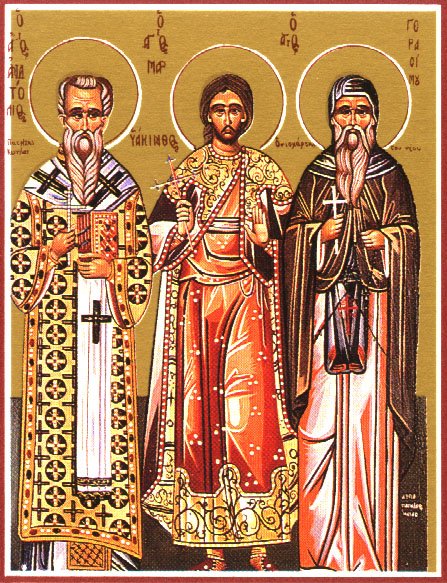
Our Father among the Saints Anatolios, Archbishop of Constantinople (458)
He was a priest from Alexandria. At the ‘Robber Council’ at Ephesus in 449, Dioscoros, the monophysite who occupied the Patriarchal throne in Alexandria, had Anatolios installed as Patriarch of Constantinople, thinking that he would prove an ally. But Anatolios quickly emerged as a fervent champion of Orthodoxy: he convened a council of bishops just before the Council of Chalcedon in 451, at which Pope Leo’s Orthodox “Tome” (see February 18) was approved, though Dioscoros had not allowed it to be read at the Robber Council. At the Co He was a priest from Alexandria. At the ‘Robber Council’ at Ephesus in 449, Dioscoros, the monophysite who occupied the Patriarchal throne in Alexandria, had Anatolios installed as Patriarch of Constantinople, thinking that he would prove an ally. But Anatolios quickly emerged as a fervent champion of Orthodoxy: he convened a council of bishops just before the Council of Chalcedon in 451, at which Pope Leo’s Orthodox “Tome” (see February 18) was approved, though Dioscoros had not allowed it to be read at the Robber Council. At the Council of Chalcedon, Anatolios condemned Nestorius, Eutyches, and his frustrated patron Dioscoros. He reposed in peace in 458. Anatolios is believed to be the author of the ‘Anatolian Stichera’ found in the weekly Vespers and Matins services; but these may have been composed by another Anatolios, a monk and a disciple of St Theodore the Studite.
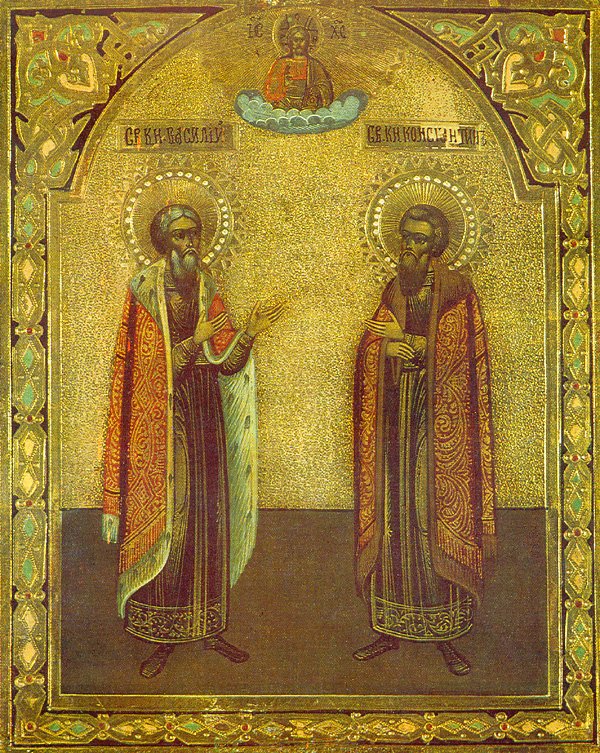
Right-believing Princes Basil and Constantine Vsevolodovich of Yaroslavl

Right-believing Princes Basil and Constantine Vsevolodovich of Yaroslavl

In their youth, holy Princes Basil and Constantine Vsevolodovich lost their father, Vsevolod, who fell in battle with the Tatars (Mongols). Saint Basil, the elder brother, succeeded to the throne. As prince, he had to face a multitude of concerns, tasks and sorrows. The city and the villages were devastated from the invasion of the Tatars, many households remained without shelter and food, and he had to concern himself about everything and about everyone. In their youth, holy Princes Basil and Constantine Vsevolodovich lost their father, Vsevolod, who fell in battle with the Tatars (Mongols). Saint Basil, the elder brother, succeeded to the throne. As prince, he had to face a multitude of concerns, tasks and sorrows. The city and the villages were devastated from the invasion of the Tatars, many households remained without shelter and food, and he had to concern himself about everything and about everyone. Besides this, it was necessary to gain the good will of the Tatar Khan, and the holy prince more than once journeyed for this reason to the Horde. He suffered also a family misfortune, the loss of his only son. All his tribulations the holy prince suffered without complaint, and he ruled the princedom like a true Christian. He did not enter into disputes with other princes, he concerned himself with the unfortunate among his subjects, and he built churches. But soon his life, filled with many sorrows, exhausted the strength of the prince, and he took sick and died in the year 1249. After him holy Prince Constantine succeeded to the throne. He strove to imitate his brother, but to his great dismay, everywhere he saw pillage and murdering done by the Tatars. In 1257 the Tatars fell upon Yaroslavl itself. The prince came out to fight the enemy, but here in this battle he gave up his life for his country. In the year 1501 the incorrupt relics of the holy princes were uncovered and now rest in the Yaroslavl cathedral.

Venerable John, Wonderworker of Yarenga, Solovki

No information available at this time.
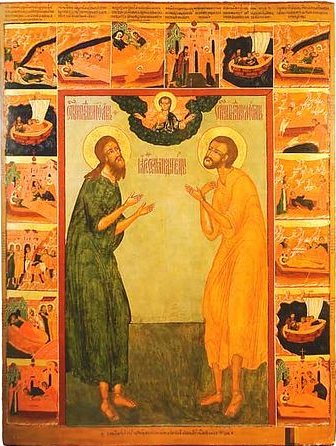
Venerable Longinus, Wonderworker of Yarenga, Solovki

Venerable Longinus, Wonderworker of Yarenga, Solovki

Saint Longinus, the wonderworker of Yarenga, is also commemorated on October 16.

Troparion - Tone 8

By a flood of tears you made the desert fertile, / and your longing for God brought forth fruits in abundance. / By the radiance of miracles you illumined the whole universe! / O our holy father Longinus, pray to Christ our God to save our souls!
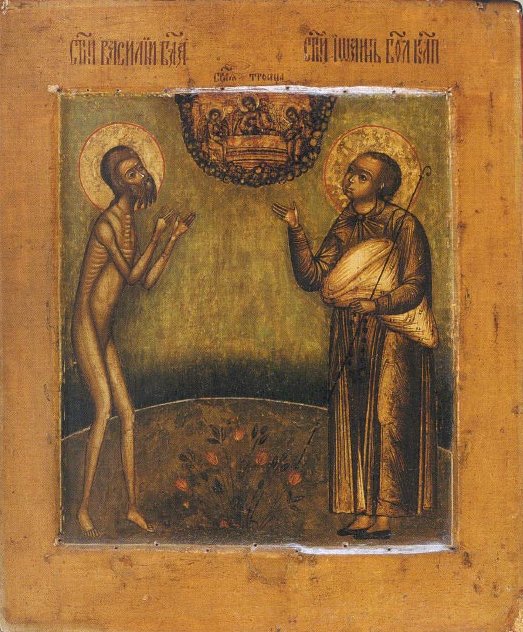
Blessed John of Moscow the Fool-For-Christ
Blessed John of Moscow the Fool-For-Christ

Blessed John, Fool-for-Christ, Wonderworker of Moscow, was born on the outskirts of Vologda. In his youth he toiled at a saltworks, where he was a water-carrier. The saint combined strict fasting and prayer with his heavy work. Later he moved on to Rostov, where he began his exploit of holy foolishness for the sake of Christ. Blessed John, Fool-for-Christ, Wonderworker of Moscow, was born on the outskirts of Vologda. In his youth he toiled at a saltworks, where he was a water-carrier. The saint combined strict fasting and prayer with his heavy work. Later he moved on to Rostov, where he began his exploit of holy foolishness for the sake of Christ. He wore chains with heavy iron crosses, and on his head was a heavy iron cap, for which they called him “John Big-Cap”. In Moscow he went barefoot and almost naked in even the most severe frost, and he foretold the great misfortunes for Russia, the Time of Troubles and the incursion of the Poles, saying that “in Moscow will be many visible and invisible devils.” He spoke the truth to everyone fearlessly, regardless of what position they might occupy. Even to Tsar Boris Godunov, he often said: “Clever mind, sort out the things of God. God waits for a long time. Yes, it hurts.” Before his death Saint John indicated the place where he wanted to be buried: at the Protection church on Rva, which was later known as the cathedral of Saint Basil the Blessed (August 2). Preparing himself for burial, he removed the chains he had worn under his clothing and poured water over himself three times. Just before his repose (? 1589), the blessed one received the gift of healing. In Moscow, he was venerated as a great wonderworker and seer. On June 12, 1672, the relics of the blessed one were found resting under a crypt in one of the chapels of the Cathedral of St. Basil the Blessed. His Service and Life were preserved in Lists of the seventeenth century.
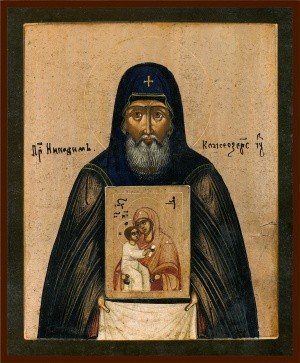
Venerable Νikόdēmos, Abbot of Kozhe Lake

Venerable Νikόdēmos, Abbot of Kozhe Lake

Saint Νikόdēmos of Kozhe Lake (in the world Nikḗtas) was born in the village of Ivankovo near Rostov into a peasant family. When he was still a young man working with his father in the fields, he heard someone call, “Νikόdēmos! Νikόdēmos!” indicating his future monastic state. After the death of his parents he learned the trade of blacksmith in Yaroslavl and then went to Moscow. One time, goin Saint Νikόdēmos of Kozhe Lake (in the world Nikḗtas) was born in the village of Ivankovo near Rostov into a peasant family. When he was still a young man working with his father in the fields, he heard someone call, “Νikόdēmos! Νikόdēmos!” indicating his future monastic state. After the death of his parents he learned the trade of blacksmith in Yaroslavl and then went to Moscow. One time, going past Kulishka, Nikḗtas stopped at the hut of the holy fool Elias, who upon seeing him cried out: “the Khuzyugsk ascetic has arrived.” These words made a strong impression upon Nikḗtas, and he perceived them as a call to the monastic life. After giving away everything he owned, he went to Archimandrite Paphnutius of the Chudov (Miracle of the Archangel Michael) monastery, asking to be accepted as one of the brethren. In this monastery he was tonsured with the name Νikόdēmos. For eleven years Saint Νikόdēmos was an example to the brethren in humility, obedience, non-covetousness and brotherly love. In 1602 the igumen of the monastery, Paphnutius, was made Metropolitan of Sarsk, and he took Νikόdēmos with him. But the saint wanted a solitary and ascetic life. A year afterwards, with the Metropolitan’s blessing, he traveled to the north and at first entered the cenobitic Kozhe Lake monastery, in which he spent a year and a half. His desire for solitude led him to the Rivulet Khuzyuga, five versts from the Kozhe Lake monastery. There in a forest thicket he built a small cell and lived in it without emerging for thirty-five years, in imitation of Saint Paul of Thebes (January 15). Saint Νikόdēmos fulfilled his Rule of prayer for the world in total quiet, far from the world. He shared with the brethren of the monastery the fruits of his labor, also the fish, which he loved to catch. Wild deer walked around his hermitage without fear. Saint Νikόdēmos spent the night in prayer, and only occasionally did he permit himself to sleep while sitting up. Through his austere efforts he attained a high degree of spiritual perfection, acquiring the gift of tears and of unceasing prayer. God also granted him clairvoyance and the power to heal the sick. Once two radiant men appeared to Saint Νikόdēmos: Saint Alexis, Metropolitan of Moscow (February 12), and Saint Dionysius, Archimandrite of the Holy Trinity Sergiev Lavra (May 12), in angelic (monastic) garb. They told him that he would depart to the Lord in forty days, on July 3, 1640. The relics of Saint Νikόdēmos rest beneath a crypt in the Theophany church of the Kozhe Lake monastery. The Life of the saint was written by his disciple, the hieromonk James.

Troparion - Tone 8

By a flood of tears you made the desert fertile, / and your longing for God brought forth fruits in abundance. / By the radiance of miracles you illumined the whole universe! / O our holy father Νikόdēmos, pray to Christ our God to save our souls!
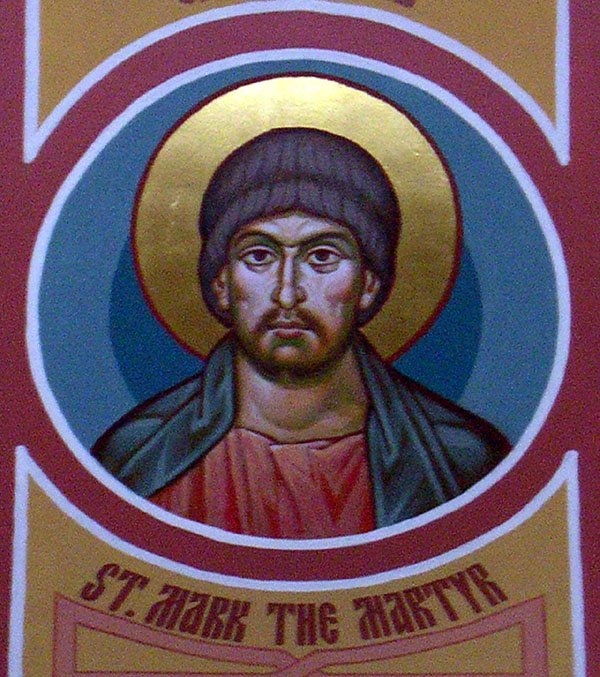
Martyrs Mark and Mocius

Martyrs Mark and Mocius

The Holy Martyrs Mocius and Mark were arrested as Christians and brought to trial by the governor Maximian. They refused to offer sacrifice to idols, for which they suffered death by beheading in the fourth century.

Troparion - Tone 4

Your holy martyrs Mark and Mocius, O Lord, / through their sufferings have received incorruptible crowns from You, our God. / For having Your strength, they laid low their adversaries, / and shattered the powerless boldness of demons. / Through their intercessions, save our souls!
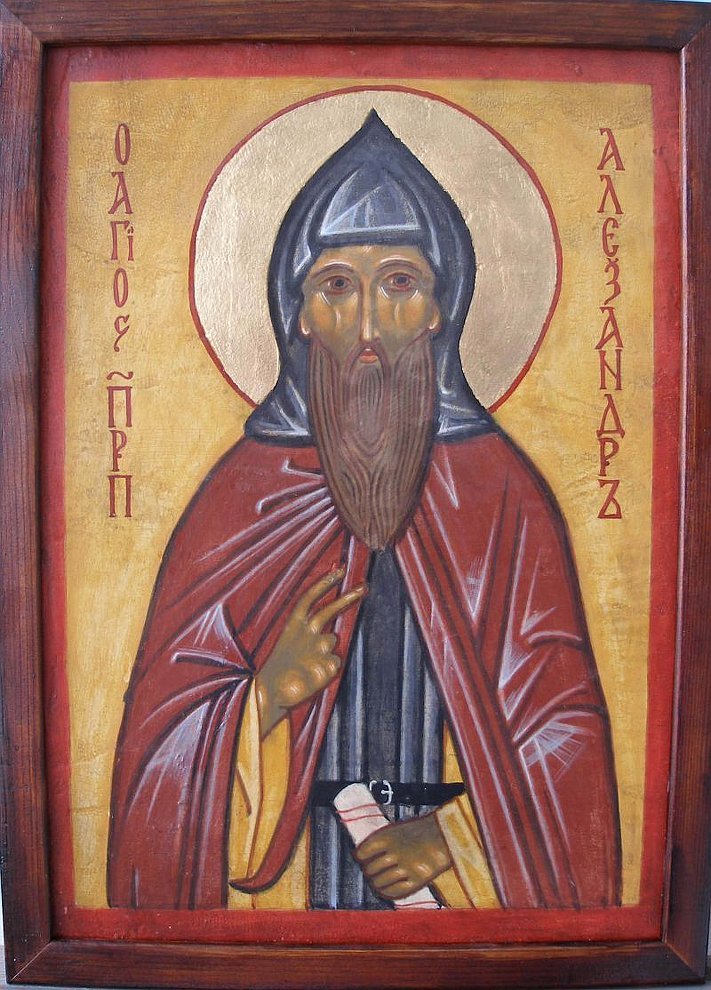
Saint Alexander, founder of the Monastery of the “Unsleeping Ones”

Saint Alexander, founder of the Monastery of the “Unsleeping Ones”

“Born in Asia and educated in Constantinople, he went into the army after completing his studies and became an officer. Reading the Holy Scriptures, he came upon the Saviour’s words: ‘If thou wilt be perfect, go and sell all thou hast, and give to the poor, and thou shalt have treasure in heaven; and come and follow Me’ (Matt. 19:21). “Born in Asia and educated in Constantinople, he went into the army after completing his studies and became an officer. Reading the Holy Scriptures, he came upon the Saviour’s words: ‘If thou wilt be perfect, go and sell all thou hast, and give to the poor, and thou shalt have treasure in heaven; and come and follow Me’ (Matt. 19:21). These words made such an impression on him that he sold and gave away all that he had, and went off to the desert. After long asceticism and striving for purification, he founded the community of the ‘Wakeful Ones’ (Acoemetae) with a special rule. According to this rule, the services in the church continued day and night in unbroken sequence. The brethren were divided into six groups, each having its appointed hours of day or night to go to church and take over the reading and singing from the previous group. He travelled a great deal over the East, bringing people to faith in Christ, disputing with heretics, working miracles by God’s grace and growing old in the service of the Lord Jesus. He finished his earthly course in Constantinople in the year 430, where his relics revealed the miraculous power and glory with which God had glorified His holy servant.” (Prologue)

Troparion - Tone 8

By a flood of tears you made the desert fertile, / and your longing for God brought forth fruits in abundance. / By the radiance of miracles you illumined the whole universe! / O our holy father Alexander, pray to Christ our God to save our souls!
Saint Anatolius, Patriarch of Constantinople

Saint Anatolius, Patriarch of Constantinople

Saint Anatolius, Patriarch of Constantinople, was born at Alexandria in the second half of the fourth century, at a time when many representatives of illustrious Byzantine families ardently strove to serve the Church of Christ armed with Greek philosophic wisdom. Having studied philosophy, Saint Anatolius was ordained a deacon by Saint Cyril of Alexandria (January 18). Saint Anatolius, Patriarch of Constantinople, was born at Alexandria in the second half of the fourth century, at a time when many representatives of illustrious Byzantine families ardently strove to serve the Church of Christ armed with Greek philosophic wisdom. Having studied philosophy, Saint Anatolius was ordained a deacon by Saint Cyril of Alexandria (January 18). Anatolius was present at the Third Ecumenical Council at Ephesus in the year 431 (September 9), at which the holy Fathers condemned the false teaching of Nestorius. Saint Anatolius remained a deacon at Alexandria after the death of Saint Cyril (+ 444), when the See of Constantinople was occupied by Dioscorus, a supporter of the heresy being spread by Eutyches, which said that the Divine nature in Christ had fully swallowed up and absorbed His human nature. This false teaching undermined the very basis of the Church’s teaching about the salvation and redemption of humankind [trans. note: Since “what is not assumed is not saved”, if Christ has only a Divine nature and not a human nature, then the salvation of humankind, and even the Incarnation of Christ would be rendered heretically docetic]. In the year 449 Dioscorus and his followers convened a heretical “Robber Council” at Ephesus, having received also the support of the emperor. The great advocate of Orthodoxy, Saint Flavian, the Patriarch of Constantinople, was deposed. Elected to the See of Constantinople, Saint Anatolius zealously set about restoring the purity of Orthodoxy. In 450, at a local Council in Constantinople, Saint Anatolius condemned the heresy of Eutyches and Dioscorus. Having died in exile, the confessor Flavian was numbered among the saints and his relics were transferred to the capital. In the following year, 451, with the active participation of Patriarch Anatolius, the Fourth Ecumenical Council was convened at Chalcedon. The Fathers of the Chalcedon Council affirmed the dogma about the worship of the Lord Jesus Christ, “perfect in divinity and perfect in humanity, true God and true man, made known in two natures without mingling, without change, indivisibly, inseparably” (Greek: “asynkhutos, atreptos, adiairetos, akhoristos”). After a life of constant struggle against heresy and for truth, Patriarch Anatolius died in the year 458. Among the canons enacted was the 28th Canon of the Fourth Ecumenical Council stating that the See of Constantinople is equal to the throne of Old Rome. The churches of Asia Minor, Greece and the Black Sea region, and all new churches that might arise in these regions were placed under the jurisdiction of the Patriarch of Constantinople, in accord with the 28th Canon. Saint Anatolius also made a large contribution to the literary treasury of the Orthodox Church. He composed liturgical hymns for Sundays, for certain Feasts of the Lord (the Nativity and the Theophany of Christ), for the martyrs ( Saint Panteleimon the Healer, Saint George the Victory-Bearer, Saint Demetrius of Thessalonica). In the service books they are designated simply as “Anatolian” verses.

Troparion - Tone 4

In truth you were revealed to your flock as a rule of faith, / an image of humility and a teacher of abstinence; / your humility exalted you; / your poverty enriched you. / Hierarch Father Anatolius, / entreat Christ our God / that our souls may be saved.
Monastic Martyr Gerasimus the New of Carpenision
Monastic Martyr Gerasimus the New of Carpenision

There was a young man from the village of Megalo Chorio at Karpenesi (Karpenḗsi) whose name was George. At the age of eleven, he went to Constantinople and lived with a relative who was a grocer. One day, he was carrying a copper tray on his head containing yogurt in clay pots. Suddenly he slipped, dropping the tray with the cans, and everything was broken. A There was a young man from the village of Megalo Chorio at Karpenesi (Karpenḗsi) whose name was George. At the age of eleven, he went to Constantinople and lived with a relative who was a grocer. One day, he was carrying a copper tray on his head containing yogurt in clay pots. Suddenly he slipped, dropping the tray with the cans, and everything was broken. As he stood crying in the street, a Moslem woman saw him from her window and brought him to her home, giving him sympathy and comfort. While George was in the house, the woman's husband was preparing his two sons for circumcision. In appreciation for their hospitality, George agreed to be circumcised as well, when the husband suggested it. The man agreed to adopt George and promised to let him visit his former home whenever he wished. So George became a Moslem and remained in that household for two years. Then the husband became suspicious of his wife's attraction to George. Therefore, he gave him to a Moslem official and George accompanied him to Bulgaria and Bosnia before returning to Constantinople. After a while, George repented of his sin of apostasy, and returned to his village of Megalo Chorio. He remained there for three years, faithfully attending Church Services. When he learned that a monk named Gerasimos (Gerásimos) was returning to the Holy Mountain, George decided to go with him. There George went to the Skete of Saint Panteleimon, where the Elder Cyril agreed to become his Spiritual Father. George's Elder taught him to pray properly, and gave him a Rule to follow, which included reading the New Martyrologion by Saint Nikodemos the Hagiorite . A year later, George was tonsured with the monastic name Gerasimos. Three years later, Father Gerasimos asked for his Elder's blessing to become a martyr. The Elder told him that his request was premature. Another three years passed, and Father Gerasimos spent his time visiting several of the Athonite monasteries. Then Gerasimos asked for the Elder's blessing to visit his mother and other relatives. This was granted. But instead of returning to Megalo Chorio, he went to Constantinople to his Moslem stepfather's home. There he confronted him, saying that when he was young and naive, he had been tricked into being circumcised. The Saint said, "Now I have come of age, and I can distinguish the light from the darkness. I confess that I was born as an Orthodox Christian, and I shall die as an Orthodox Christian." The man was astonished by these words, but he concealed his anger, flattering Gerasimos, and keeping him in his home for three days. He tried offering him wealth and other things, but Gerasimos remained steadfast in the Orthodox Faith. His Moslem stepfather told him to live somewhere else, but pretend to be a Moslem until he left the city, because otherwise his life would be in danger. "You have been my son," he said, "I feel sorry for you, and I do not want you to die." Then the Martyr declared that it was not possible for him to do that. Instead, he would proclaim his Christian Faith in public. Gerasimos was turned over to Moslem officials, who beat him with whips, but the Saint glorified God, and reviled his tormentors. The Martyr was thrown into prison, where the torments continued for several days. Saint Gerasimos was sentenced to death, and even on the way to his execution, they still tried to make him deny Christ. When they arrived at the place of execution, the Martyr knelt and deliberately faced east. The executioner noticed this and turned him around. Then Saint Gerasimos turned to the east again. The executioner became so angry that he took his sword and beheaded him on July 3, 1812 at Baba Humai in Constantinople. He was 25 years old at the time. The Saint's relics were first buried on the island of Proti. later they were transferred to the Holy Prousos Monastery, and from there in 1971 to the majestic church bearing his name in the village of Megalo Chorio. The Saint's skull and arms are located in the Monastery of Prousos in Euritania. The rest of his relics are located in the church of Megalo Chorio, Euritania. Three vertebrae are located in the cathedral church of Koutloumousiou Skete on Mount Athos.
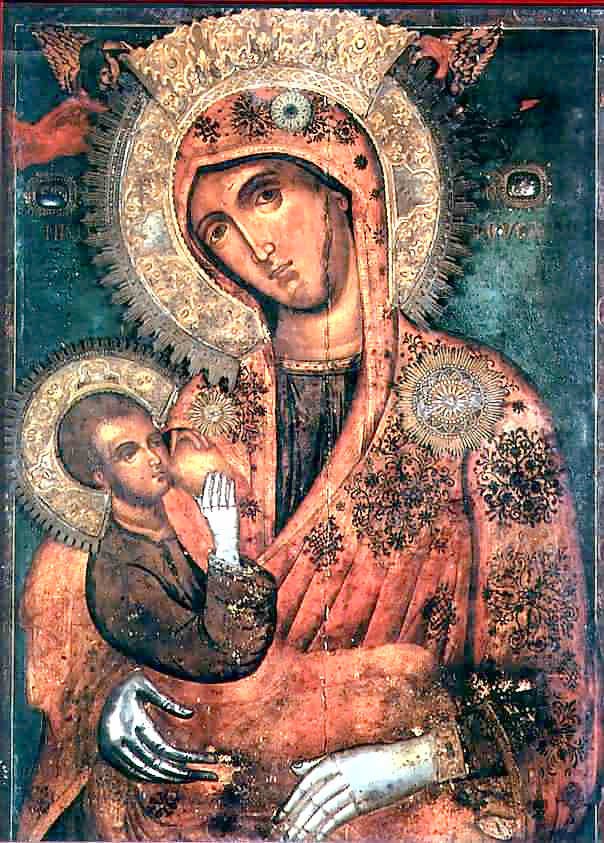
Icon of the Mother of God the “Milk-Giver” of the Hilandar Monastery on Mount Athos

Icon of the Mother of God the “Milk-Giver” of the Hilandar Monastery on Mount Athos

The “Milk-Giver” Icon of the Mother of God was originally located at the Lavra of Saint Savva the Sanctified near Jerusalem. Before his death, the holy founder of the Lavra foretold that a royal pilgrim having the same name as himself would visit the Lavra. Saint Savva told the brethren to give the wonderworking icon to that pilgrim as a blessing. In The “Milk-Giver” Icon of the Mother of God was originally located at the Lavra of Saint Savva the Sanctified near Jerusalem. Before his death, the holy founder of the Lavra foretold that a royal pilgrim having the same name as himself would visit the Lavra. Saint Savva told the brethren to give the wonderworking icon to that pilgrim as a blessing. In the thirteenth century, Saint Savva of Serbia visited the Lavra. As he approached the reliquary of Saint Savva the Sanctified, the saint’s staff fell at his feet. The brethren asked the visitor his name, and he told them he was Archbishop Savva of Serbia. Obeying the instructions of their founder, the monks gave Saint Savva his staff, the “Milk-Giver” Icon, and the Icon “Of the Three Hands” (June 28 & July 12). The holy archbishop took the icon to Hilandar on Mount Athos and put it on the right side of the iconostasis in the church of Saint Savva at the kellion of Karyes, which is attached to Hilandar. The icon was later named Typikonissa, since the Rule (Typikon) of Saint Savva was preserved there. The Hilandar “Milk-Giver” Icon is also commemorated on January 12.

Troparion - Tone 3

You conceived the Son of God without seed by the Divine Spirit, / according to the will of the Father, begotten of the Father before the ages without a mother; / and for our sake, without an earthly father, / you gave birth to Him as a Child and nourished Him with milk; / therefore, do not cease praying for the deliverance of our souls from misfortunes.

Kontakion - Tone 2

Let us hymn the only Theotokos, maternally suckling as a babe, / Him Who was born of her, nursing Christ our God; / freeing us from many dangers.
Saint George the God-Bearer

Saint George the God-Bearer

Saint George the God-bearer and Recluse labored in the Black Mountains near Antioch during a time when the churches and monasteries there flourished. Orthodox Christians from many parts of the world came to settle there, and as a result, tensions often arose between monks of different nationalities. In order to remain detached from the conflicts, Fr. Saint George the God-bearer and Recluse labored in the Black Mountains near Antioch during a time when the churches and monasteries there flourished. Orthodox Christians from many parts of the world came to settle there, and as a result, tensions often arose between monks of different nationalities. In order to remain detached from the conflicts, Fr. George found refuge in an impregnable cleft of a very high mountain. For this reason he is also called Saint George the Recluse. Nevertheless, the monks of the Black Mountains were well aware of the pious life led by George the Recluse. Venerable George of the Holy Mountain journeyed to the Black Mountains in search of a spiritual guide and, after praying in each and every monastery, finally asked Saint George the Recluse, “a man innocent as a dove,” to fill this role. George the Recluse received the young ascetic and found a home for him in the monastery. His disciple remained with him for three years, leading the strictest ascetic life, until finally George the Recluse clothed him with the schema and “perfected him in the monastic life.” Then, after sending him on a pilgrimage to Jerusalem, he blessed George to resettle at the Ivḗron Monastery on Mt. Athos and to continue the holy work of Saint Ekvtime of Mt. Athos. George returned to the Holy Mountain but, instead of translating books as his spiritual father had advised him, he performed other obediences for seven years. When Saint George the Recluse heard this, he sent his disciple Theodore to Mt. Athos to rebuke him and remind him that he was sent there to translate theological texts from the Greek to the Georgian language. This time George of the Holy Mountain humbly obeyed the will of his teacher. When he was not with George of the Holy Mountain, Saint George the Recluse confined himself to strict solitude and, like his spiritual son, dedicated much of his time to literary pursuits. He was closely acquainted with the writers of Ivḗron and other Georgian monasteries, and he encouraged his spiritual son to continue his labor of translating Orthodox theological literature. Saint George the Recluse copied Davit Mtbevari’s translations of the Life of Martha (the mother of Simeon of the Wonderful Mountain) and the Life of Saint Barlaam (of the Syro-Caucasus). When George heard that no copies of these Lives existed on Mt. Athos, he transcribed the texts and sent them to the Athonites. Saint George the God-bearer and Recluse reposed in 1068, after the death of his venerable disciple Saint George of the Holy Mountain.

Troparion - Tone 8

By a flood of tears you made the desert fertile, / and your longing for God brought forth fruits in abundance. / By the radiance of miracles you illumined the whole universe! / O our holy father George, pray to Christ our God to save our souls!

Scripture Readings

Epistle

Romans 16:1-16

1 I commend unto you Phebe our sister, which is a servant of the church which is at Cenchrea:
2 That ye receive her in the Lord, as becometh saints, and that ye assist her in whatsoever business she hath need of you: for she hath been a succourer of many, and of myself also.
3 Greet Priscilla and Aquila my helpers in Christ Jesus:
4 Who have for my life laid down their own necks: unto whom not only I give thanks, but also all the churches of the Gentiles.
5 Likewise greet the church that is in their house. Salute my wellbeloved Epenetus, who is the firstfruits of Achaia unto Christ.
6 Greet Mary, who bestowed much labour on us.
7 Salute Andronicus and Junia, my kinsmen, and my fellowprisoners, who are of note among the apostles, who also were in Christ before me.
8 Greet Amplias my beloved in the Lord.
9 Salute Urbane, our helper in Christ, and Stachys my beloved.
10 Salute Apelles approved in Christ. Salute them which are of Aristobulus’ household.
11 Salute Herodion my kinsman. Greet them that be of the household of Narcissus, which are in the Lord.
12 Salute Tryphena and Tryphosa, who labour in the Lord. Salute the beloved Persis, which laboured much in the Lord.
13 Salute Rufus chosen in the Lord, and his mother and mine.
14 Salute Asyncritus, Phlegon, Hermas, Patrobas, Hermes, and the brethren which are with them.
15 Salute Philologus, and Julia, Nereus, and his sister, and Olympas, and all the saints which are with them.
16 Salute one another with an holy kiss. The churches of Christ salute you.

Gospel

Matthew 13:3-9

3 And he spake many things unto them in parables, saying, Behold, a sower went forth to sow;
4 And when he sowed, some seeds fell by the way side, and the fowls came and devoured them up:
5 Some fell upon stony places, where they had not much earth: and forthwith they sprung up, because they had no deepness of earth:
6 And when the sun was up, they were scorched; and because they had no root, they withered away.
7 And some fell among thorns; and the thorns sprung up, and choked them:
8 But other fell into good ground, and brought forth fruit, some an hundredfold, some sixtyfold, some thirtyfold.
9 Who hath ears to hear, let him hear.

Liturgical data sourced from OCA.org and orthocal.info