Fasting Rules
 Meat
Abstain
Meat
Abstain
 Fish
Abstain
Fish
Abstain
 Dairy
Abstain
Dairy
Abstain
 Oil
Abstain
Oil
Abstain
 Wine
Abstain
Wine
Abstain
Saints & Commemorations
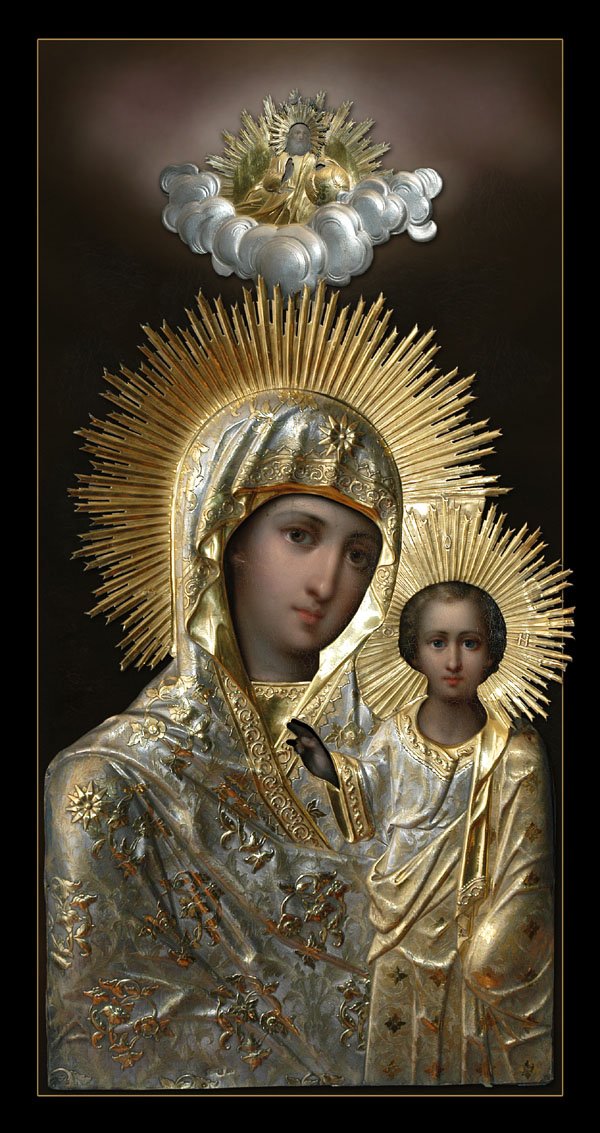
“Our Lady of Sitka” Icon of the Mother of God
Located at the Cathedral of Saint Michael the Archangel in Sitka, Alaska is one of the most revered Icons in North America: the Sitka Mother of God.
This Icon has been attributed to a famous Iconographer, Vladimir Lukich Borovikovsky (1758-1826), a protégé of the Empress Catherine II who was instructed at the Academy of Arts in Saint Petersburg, Russia. I
Located at the Cathedral of Saint Michael the Archangel in Sitka, Alaska is one of the most revered Icons in North America: the Sitka Mother of God.
This Icon has been attributed to a famous Iconographer, Vladimir Lukich Borovikovsky (1758-1826), a protégé of the Empress Catherine II who was instructed at the Academy of Arts in Saint Petersburg, Russia. In addition to being a great portrait painter, Borovikovsky also painted many of the Icons for the Cathedral of the Kazan Icon in Saint Petersburg.
Painted in the style of the Kazan Mother of God Icon, on canvas, the Sitka Mother of God Icon is 36 x 17-1/2 inches in size. An exceptionally beautiful and detailed riza of silver covers the Icon of the Theotokos and Christ child, and the Image of God the Father blessing from above.
The Cathedral received the Icon as a gift from the laborers of the Russian American Company in 1850, two years after the Cathedral was completed. Even with their meager wages, these men generously made their contribution to the Church.
Miracles have been attributed to the Sitka Mother of God Icon over the years. It is believed that the gaze of the eyes of the Theotokos have led to the restored health of those who prayed before the Icon.
Because of the peaceful gaze of the Theotokos, the Icon has been described as a “pearl of Russian ecclesiastical art of ineffable gentleness, purity and harmony....” And “...the most beautiful face of the Mother of God with the Divine Child in her arms is so delicately and artistically done that the more one looks at it the more difficult it is to tear one’s gaze away.”
Originally part of the main Iconostasis at the Cathedral of Saint Michael the Archangel in Sitka, Alaska, the Icon is now permanently located on the far left side of the Iconostasis in a special place of honor.
Troparion - Tone 4
Today, like the morning sun rising over us, / your all-honored icon enlightens the world with rays of mercy / and our land reverently receives it / as a divine gift from on high, / glorifying you, O Birthgiver of God, Our Lady of Sitka, / with joy magnifying Christ our God Who was born of you. / Pray to Him O Lady Mary, Queen and Theotokos / that all cities and lands be protected from our enemies, / and that they will be saved who in faith venerate your most pure icon / that has come to dwell with us, O Virgin Mother, / who shows us the way to Christ.
Kontakion - Tone 8
O Mother of God, chosen from all generations to be the protectress of the Christian people; / we offer you songs of thanksgiving for your wonderworking Icon that has come to Alaska. / You are a fountain of mercy and help all who seek refuge in you. / Defend us in all afflictions, necessities and tribulations that we may cry to you: / Rejoice, zealous defender of the Orthodox faithful in America.
Appearance of the "Kazan" icon of the Most Holy Theotokos (1579)
“In Kazan, in 1579, the nine-year old Matrona, whose parents’ home had burned down in a fire, had a dream in which she beheld an icon of the Theotokos and heard a voice commanding her to recover this icon from the ashes of the ruined house. The icon was found wrapped in an old piece of cloth under the stove, where it may have been hidden during the Tartar invasions. The
“In Kazan, in 1579, the nine-year old Matrona, whose parents’ home had burned down in a fire, had a dream in which she beheld an icon of the Theotokos and heard a voice commanding her to recover this icon from the ashes of the ruined house. The icon was found wrapped in an old piece of cloth under the stove, where it may have been hidden during the Tartar invasions. The icon was finally brought to the Cathedral of the Annunciation of the Theotokos, where it became renowned for the healings that the Mother of God wrought through it for the blind… The icon of Kazan is one of the most beloved icons of the Mother of God in Russia.” (Great Horologion)
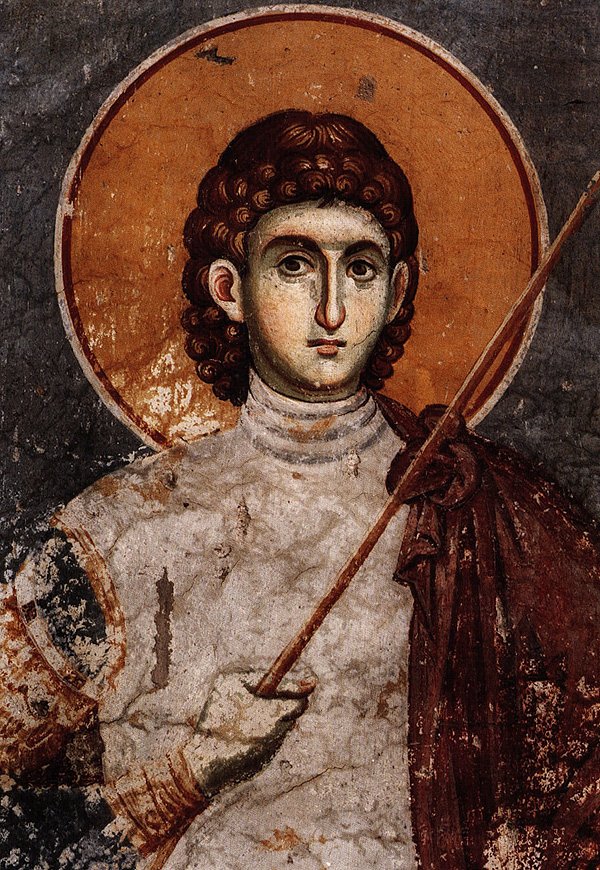
Greatmartyr Procopius of Caesarea, in Palestine
The Holy Great Martyr Procopius, in the world Neanius, a native of Jerusalem, lived and suffered during the reign of the emperor Diocletian (284-305). His father, an eminent Roman by the name of Christopher, was a Christian, but the mother of the saint, Theodosia, remained a pagan. He was early deprived of his father, and the young child was raised by his mother.
The Holy Great Martyr Procopius, in the world Neanius, a native of Jerusalem, lived and suffered during the reign of the emperor Diocletian (284-305). His father, an eminent Roman by the name of Christopher, was a Christian, but the mother of the saint, Theodosia, remained a pagan. He was early deprived of his father, and the young child was raised by his mother. Having received an excellent secular education, he was introduced to Diocletian in the very first year of the emperor’s accession to the throne, and he quickly advanced in government service. Towards the year 303, when open persecution against Christians began, Neanius was sent as a proconsul to Alexandria with orders to mercilessly persecute the Church of God.
On the way to Egypt, near the Syrian city of Apamea, Neanius had a vision of the Lord Jesus, similar to the vision of Saul on the road to Damascus. A divine voice exclaimed, “Neanius, why do you persecute Me?”
Neanius asked, “Who are you, Lord?”
“I am the crucified Jesus, the Son of God.”
At that moment a radiant Cross appeared in the air. Neanius felt an inexpressible joy and spiritual happiness in his heart and he was transformed from being a persecutor into a zealous follower of Christ. From this point in time Neanius became favorably disposed towards Christians and fought victoriously against the barbarians.
The words of the Savior came true for the saint, “A man’s foes shall be those of his own household” (Mt. 10:36). His mother, a pagan herself, went to the emperor to complain that her son did not worship the ancestral gods. Neanius was summoned to the procurator Judaeus Justus, where he was solemnly handed the decree of Diocletian. Having read through the blasphemous directive, Neanius quietly tore it up before the eyes of everyone. This was a crime, which the Romans regarded as an “insult to authority.” Neanius was held under guard and in chains sent to Caesarea of Palestine, where the Apostle Paul once languished. After terrible torments, they threw the saint into a dark prison. That night, a light shone in the prison, and the Lord Jesus Christ Himself baptized the suffering confessor, and gave him the name Procopius.
Repeatedly they led Saint Procopius to the courtroom, demanding that he renounce Christ, and they subjected him to more tortures. The stolidity of the martyr and his fiery faith brought down God’s abundant grace on those who witnessed the execution.
Inspired by the example of Procopius, many of the holy martyr’s former guards and Roman soldiers went beneath the executioner’s sword together with their tribunes Nikostrates and Antiochus. Twelve Christian women received martyr’s crowns, after they came to the gates of the Caesarea Praetorium.
Struck by the great faith and courage of the Christians, and seeing the firmness of her son in bearing terrible sufferings, Theodosia became repentant and stood in the line of confessors and was executed. Finally the new procurator, Flavian, convinced of the futility of the tortures, sentenced the holy Great Martyr Procopius to beheading by the sword. By night Christians took up his much-tortured body, and with tears and prayers, they committed it to the earth. This was the first martyrdom at Caesarea (303).
Troparion - Tone 4
Your holy martyr Procopius, O Lord, / through his suffering has received an incorruptible crown from You, our God. / For having Your strength, he laid low his adversaries, / and shattered the powerless boldness of demons. / Through his intercessions save our souls!
St Procopius, Fool for Christ (1303)
He was a prominent merchant of German origin. Visiting Novgorod on business, he was so moved by the beauty of Orthodoxy that he embraced the Orthodox faith. Seeking to follow Christ more fully, he gave away all his goods to the poor and lived as an indigent, giving his life to prayer and asceticism but feigning madness to avoid the praise of men.
He was a prominent merchant of German origin. Visiting Novgorod on business, he was so moved by the beauty of Orthodoxy that he embraced the Orthodox faith. Seeking to follow Christ more fully, he gave away all his goods to the poor and lived as an indigent, giving his life to prayer and asceticism but feigning madness to avoid the praise of men. He was granted the gifts of prescience and of insight into the hearts of others: he would often speak to those who came to him of their secret sins, and several times he predicted natural disasters. Once he stopped a deadly hailstorm in town of Ustiug through his fervent prayers before the icon of the Mother of God. He was found dead on the road, covered with snow; a church was built over his relics, which worked many wonders.
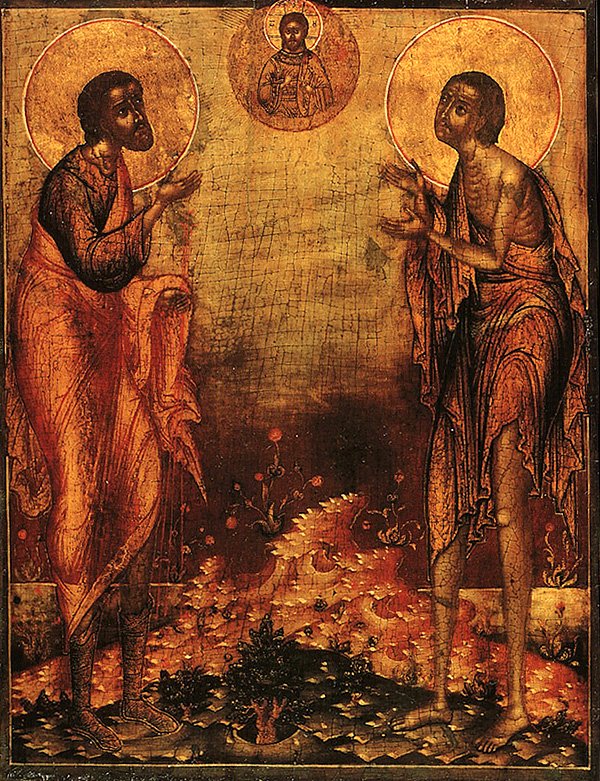
Righteous Procopius the Fool-For-Christ and Wonderworker of Ustya, Vologda
The incorrupt relics of Saint Procopius were uncovered during the eighteenth century near the Entry of the Theotokos parish church in Ustya (Vologda diocese) and placed in the church, where for two hundred years they remained in open view, a source of numerous healings. No account of the origin and life of the holy saint of God has been preserved.
The incorrupt relics of Saint Procopius were uncovered during the eighteenth century near the Entry of the Theotokos parish church in Ustya (Vologda diocese) and placed in the church, where for two hundred years they remained in open view, a source of numerous healings. No account of the origin and life of the holy saint of God has been preserved. His name became known when he himself revealed it in a vision to a pious local inhabitant named Savela.
In connection with an increase in the number of miraculous healings, the relics of Saint Procopius were examined in 1696 (or 1645) and in 1739. After this a chapel in honor of the saint was consecrated in the church where his relics rest. His icon was painted, and a service to him was composed.
In 1818 the universal celebration of the saint was established.
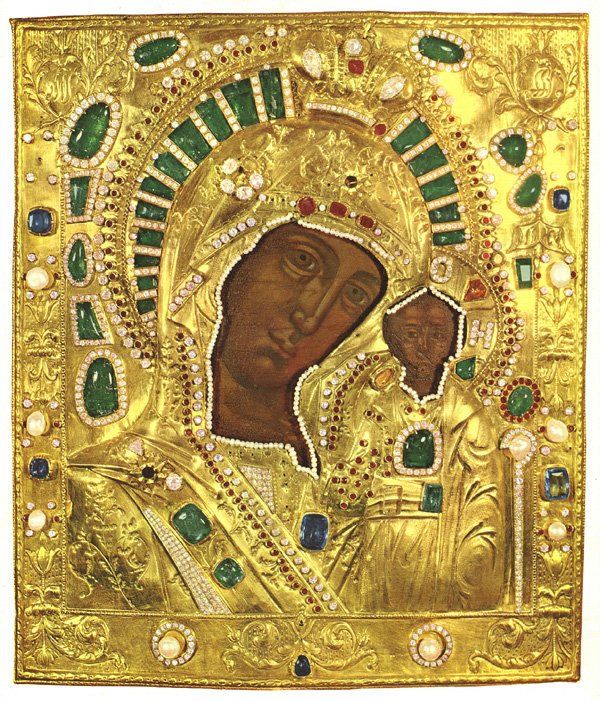
Kazan Icons of the Mother of God in Kazan, St. Petersburg, and Moscow
The wonderworking Kazan Icon has great significance for the faithful of Russia, and Russian Orthodox families treat it with unparalleled reverence. The magnificent Kazan Cathedral was built in Saint Petersburg, to house the Icon.
For the most part, it is this Icon that blesses the young to the crown, and its peaceful radiance of an unsleeping lamp illuminates the children.
The wonderworking Kazan Icon has great significance for the faithful of Russia, and Russian Orthodox families treat it with unparalleled reverence. The magnificent Kazan Cathedral was built in Saint Petersburg, to house the Icon.
For the most part, it is this Icon that blesses the young to the crown, and its peaceful radiance of an unsleeping lamp illuminates the children. The meek face of the Mother of God looks lovingly at the growing children. In Moscow, the Kazan Cathedral stands on the historic Red (Beautiful) Square, opposite the Kremlin walls, two dozen steps from the Ivḗron chapel, in view of the monument to Pozharsky towering on the square. It stands as an unshakable remembrance of the mercy of the Mother of God toward the Russian land during one of its most terrible years.
The Kazan campaign of Tsar Ivan the Terrible resembled a Cross Procession. It seemed that the goal was to bring a new flock to Christ rather than to subjugate the new kingdom to the Muscovite Tsar. Kazan fell on the Feast of the Protection of the Mother of God. An explosion from the wall and towers of Kazan was heard when, during the Liturgy in the mobile royal church, the deacon intoned the petition of the Great Litany: "That He may aid him and subdue beneath his feet every foe and adversary...."
After entering Kazan the next day, the Tsar immediately laid the foundation for a cathedral in honor of the Annunciation of the Most Holy Theotokos. At the same time, the Tsar determined a place for the construction of other churches, and the following year a Diocese was established in Kazan and Saint Guria became the first Bishop of Kazan.
Under the zealous disseminator of the light of Christ, Bishop Guria, and his successor, Saint Germanos the affirmation of the Faith in Kazan was successful, but then the Moslems made a strong resistance. At this time the Mother of God decided to strengthen Orthodoxy, and she was pleased to glorify her Icon.
In 1579, after a terrible fire that destroyed half of the Kazan Kremlin and part of the city adjacent to it, the Moslems began to say that the Christian God had no mercy for the Russians and showed His wrath by this fire. "The faith of Christ," the chronicler remarks, "has become a proverb and a desecration." Then the Lord showed His mercy.
A certain archer intended to build a new house on the site of the conflagration. In a dream, the Mother of God appeared to his nine-year-old daughter Matrona, ordering her to tell the Archbishop and the city chiefs that they would remove her Icon from the bowels of the earth, and in another dream, the Mother of God pointed out the place where the Icon was hidden on the ashes of the burnt house. The girl told her mother about her dream, but she attached no importance to her daughter's words. The vision was repeated, but the mother did not pay attention to the command of the Mother of God, transmitted through the mouth of her child. Finally, for the third time, in a dream, the girl saw the Icon itself, from which a formidable voice was heard: "If you do not reveal my words, I will appear in another place, but you will perish."
The girl woke up shocked and frightened and began to call her mother,demanding that she obey the command of the Queen of Heaven. Then, finally, she agreed and she took her daughter to the officials and to Archbishop Jeremiah. But none of them believed the girl's words.
On July 8, returning from fruitless walks, the mother stood at noon and began to dig at her daughter's direction. Others also helped her, but the Icon did not appear. Then Matrona began to dig, and near the place where she was in the burnt house, soon the treasure was found. She saw that the Icon of the Mother of God was covered with an old sleeve of cherry-red cloth. The face on the Icon was fresh, unspoiled, as if the Icon had just been painted. Those who were present at the discovery of the Icon immediately spread the news throughout the city. When the authorities learned about the event, everyone gathered at the archer's house; the Archbishop of Kazan made a Cross Procession with the clergy to the place of the apparition, and the Icon was solemnly transferred to the parish church of Saint Nicholas, whose Icon is popularly known as "of Tula." Its rector was the priest Errmogenes, later Metropolitan of Kazan, and later Patriarch of All Russia (+ February 17, 1612), who reposed during the Time of Troubles for Orthodoxy. He described the event of the appearance of the Icon.
A solemn Moleben served at the church of Saint Nicholas, and then the Icon was carried to the Annunciation Cathedral. On the way, the first miracle occurred. a man named Joseph, who had been blind for three years, was able to see. Then, in the cathedral itself, another blind man named Nikḗtas was healed. Afterward, it was noticed that many healings took place before the Kazan Icon, especially for those who suffered from afflictions of the eyes.
Soon the Archbishop and the officials sent the Tsar in Moscow a detailed report on the discovery of the Icon with an exact copy. The Tsar ordered a convent to be built for forty nuns on the site of the apparition, and to keep the Icon there. The young girl Matrona and her mother were the first to be tonsured in the new monastery. In addition to the original churches, a new stone church was soon built, with a trapeza. One hundred souls were given for the maintenance of the monastery. In 1594 a new extensive cathedral of the Dormition of the Mother of God was built and consecrated by Metropolitan Errmogenes the following year. At the same time, the number of nuns was increased to 64; rich contributions of utensils, icons, and vestments were brought to the monastery; the Icon was covered by a riza adorned with gold, precious stones and pearls.
New magnificent decorations were placed on the Icon by Empress Katherine. In 1798 she decided to build another church to replace the dilapidated temple which had stood for two hundred years. She donated 25, 000 rubles for this purpose, and the church was consecrated in 1808.
The mind of a believer is involuntarily struck by one circumstance. The appearance of the Kazan Icon signified the triumph of the Russians over the Moslem Tatars. And all the time, while the cherished shrine remained in Kazan, they considered themselves safe from the east.
On the night of June 29, 1904, several thieves broke into the cathedral church of the Kazan Monastery and after stealing it, took the miraculous Kazan icon with them. The robbers have never been found, and the Icon disappeared without a trace. Then we were defeat came from the east. There are two opinions egarding the fate of the true Kazan Icon.
Some believe that the original Icon was kept in Moscow and transferred there at the pious desire of the Tsars, But without publicity, so as not to upset the residents of Kazan. The Russian Tsars liked to concentrate these shrines in Moscow, from all places. The Hierarch Ermogenes could have brought this Icon from Kazan with him, when he moved to the patriarchal cathedral. At the transfer of the capital to St. Petersburg, supporters of this opinion say, it was this Icon that was among others, that was moved to the new capital; therefore, the real Kazan Icon was in the St. Petersburg Kazan Cathedral. Others claim that the original Kazan Icon was with Pozharsky's army and, arriving in Moscow, she stayed in the cathedral built for her by Pozharsky on Red Square. The dimensions of this Icon were much less than the missing Kazan Icon, which remained in St. Petersburg.
Be that as it may, all three Icons were great sources of the grace of the Mother of God. The St. Petersburg Kazan Icon is the most cherished and beloved shrine of St. Petersburg. The faithful always stand before her, and many businessmen with a strong religious feeling come every day to venerate the Icon, as if in the midst many activities they took a minute to go and greet their Mother.
In the Kazan Cathedral, Kutuzov rests from his immortal historical exploit. When in 1812, heeding the voice of the people, who demanded that he be placed at the head of the Russian armies, Alexander I appointed Kutuzov as commander-in-chief, the latter, before leaving for the army, stopped by to pray in the Kazan Cathedral. People harnessed the horses of his carriage and cried out: "Drive out the French!" After a Moleben, the Kazan Icon was placed on Kutuzov, who was always known for his piety, The Mother of God did not reject the hopes which the old commander entrusted to her. And the field marshal, with indescribable glory, returned in a coffin to repose in the Kazan Cathedral.
There is another memory from that time - a magnificent iconostasis was cast in silver. The silver was stolen by the Cossacks from the French after they had looted the Moscow churches, and they brought the silver as a gift to the Kazan Cathedral. Beneath the wonderworking Icon, in gold letters, there is a brief notice: "The diligent offering of the Don army."
Something wonderful blows under the highest arches of the Kazan Cathedral between the majestic granite pillars with banners attached to them, symbols of past victories. Both the Moscow Ivḗron Icon, and the St. Petersburg Kazan Icon stand in the center of noisy and lively metropolitan life. There, beyond the walls, is the world and its deeds. And here — eternity, a quiet, thoughtful eternity. After standing for at least a few minutes in this thoughtful silence, you already feel, how much further one becomes from the temporal world, and how much closer to the world of eternity. And there, before the Icon, they light their candles with fervent supplications, and from the ground tises the hymn to the Mother of God: "O fervent intercessor...."
The origin of the Icon in Moscow's Kazan Cathedral is as follows. She was sent from Kazan to Prince Pozharsky, who went to liberate Moscow with the squads of the northern cities. The Russian soldiers prayed fervently to the Mother of God, asking her to help them rescue the capital. The Poles locked themselves in Kitay-Gorod, which surrounds the Kremlin in a narrow ring. In the Kremlin the Greek Archbishop Arsenios languished as a captive of the Poles..Saint Sergius of Radonezh appeared to him and said that through the prayers of the Mother of God, the reigning city was delivered from its enemies. The news of this appearance reached the Russians and animated them. On October 22, they drove the Poles out of Kitay-Gorod, and then the Poles surrendered the Kremlin. The clergy came out to meet the Russian army with the cherished Moscow shrines, and at the head of the Russian squads was the Kazan Icon.
In remembrance of this event, another commemoration of the Kazan Icon was established on October 22, first in Moscow, and then throughout Russia.
The original Kazan Icon disappeared during the chaos of the Revolution, and thieves stole the jeweled riza from it. It has been suggested that they may have destroyed the Icon, since they were more interested in the jewels.
Troparion - Tone 4
O fervent intercessor, Mother of the Lord Most High, / you pray to your Son, Christ our God for all, and save all those who have recourse to your powerful protection. / Defend us, O Lady, Queen, and Sovereign Lady, / when we who are burdened with many sins, stand before you in misfortune, sorrow, and sickness, / praying to you with tender souls and a contrite heart, / shedding tears before this, your most pure Icon, and having steadfast hope in you who deliver us from all evils. / Grant us what is profitable for our souls and save all, O Virgin Theotokos, / for you are the Divine protection of your God-fearing servants.
Kontakion - Tone 8
Let us run to the quiet and good refuge, / and to the speedy helper, ardent and eager to save all. / Let us run to the Virgin’s protection and hasten to repentance; / for the Most Pure Theotokos grants us unfailing mercy as she comes to help all, / delivering her devout and God-fearing servants from great troubles and evils.
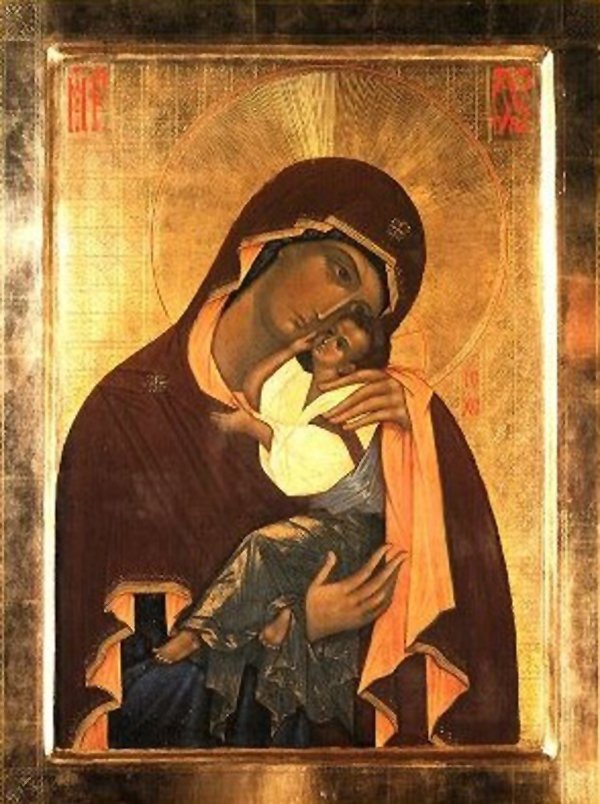
“Tenderness” Icon of the Mother of God in Novgorod
The Tenderness icon of the Mother of God belongs to the Eleousa (Umilenie) type.
On July 8, 1337 a caretaker in Holy Trinity Church in Novgorod heard a noise inside the church and went to investigate. He was astonished to see that the icon of the Mother of God from the second tier of icons above the northern door of the iconostasis had left its place and was floating in the air, and tears were flowing from the eyes of the Virgin.
The Tenderness icon of the Mother of God belongs to the Eleousa (Umilenie) type.
On July 8, 1337 a caretaker in Holy Trinity Church in Novgorod heard a noise inside the church and went to investigate. He was astonished to see that the icon of the Mother of God from the second tier of icons above the northern door of the iconostasis had left its place and was floating in the air, and tears were flowing from the eyes of the Virgin.
Archbishop Alexis was notified, and he and his clergy came to the church with a large crowd of people. A special shrine was built for the icon, and July 8 was appointed as its date of commemoration.
That same year, a plague appeared in Novgorod. People flocked to pray before the wonderworking icon, and the plague was stopped. In 1352, Archbishop Basil ordered that an annual procession be made from the church of Holy Wisdom to Holy Trinity Church.
In the summer of 1366 Holy Trinity Church burned down, and the “Tender Feeling” Icon floated in the air above the flames. Archbishop Alexis came to the church to serve a Molieben, and the icon descended into his hands. The fire went out, but a burn mark seven inches long was left on the back of the icon.
Great Prince John III took the icon to Moscow in 1397, where it remained until 1508. At that time, the Mother of God appeared to Princess Maria in a dream and ordered that the icon be returned to Novgorod.
The “Tender Feeling” Icon is of the Umilenie, or Eleousa type.
Troparion - Tone 4
Let all of us, who are burdened with sins, fall on our knees before the Theotokos, / bowing before her wonderworking Icon of Tenderness, / kissing it and crying aloud with tears: / “O Sovereign Lady, accept the prayer of your unworthy servants, / and grant to us who ask, your great mercy.”
Kontakion - Tone 6
We have no other help, we have no other hope but you, O Lady. / Help us, for in you do we hope, / and of you do we boast, for we are your servants. / Let us not be put to shame.
Monastic Martyrs Epictetus and Astion, at Halmyris
The monastic martyrs Epictetus and Astion lived in Bithynia on the southwest coast of the Black Sea during the reign of the Roman emperor Diocletian (284-305). From his youth, Saint Epictetus had dedicated his life to God, and studied to acquire knowledge of the Gospel. He entered a monastery, and later was found worthy to be ordained to the holy priesthood.
The monastic martyrs Epictetus and Astion lived in Bithynia on the southwest coast of the Black Sea during the reign of the Roman emperor Diocletian (284-305). From his youth, Saint Epictetus had dedicated his life to God, and studied to acquire knowledge of the Gospel. He entered a monastery, and later was found worthy to be ordained to the holy priesthood. Proclaiming the Gospel of Christ, the saint converted many people to Christianity. God granted Epictetus the gift of wonderworking, and he healed many people troubled by unclean spirits, or afflicted with other maladies.
One day while out for a stroll, the illustrious youth Astion met Saint Epictetus. During a long conversation Saint Epictetus enlightened Astion, sowing the seed of God’s Word in the young man’s soul. He spoke to him about the only true God, about the great value of the immortal human soul, and about fleeting worldly pleasures.
Astion came to believe in Christ and was baptized. Soon after this, he also became a monk. Since Christians were being persecuted in Bithynia, he asked Saint Epictetus if they might travel together to some distant land where they could dedicate their lives completely to God. Boarding a ship, Saints Epictetus and Astion journeyed to Scythia and settled among the pagan Slavs near the Roman outpost of Halmyris in the province of Histria south of the mouth of the Danube. The city was the site of a military fort and a base for the Roman fleet which patrolled the Danube and the Black Sea.
When they arrived at Halmyris in 273, Saint Epictetus was forty-seven years old, and Saint Astion was only eighteen. During the next seventeen years, the saints spent their lives in prayer and fasting, and performed many miracles.
The God-pleasing lives of the monks could not remain hidden from others for very long. People afflicted by various illnesses or oppressed by evil spirits came to the saints seeking relief. Even pagans asked the holy ascetics for help, and after being healed of their afflictions, they embraced Christianity.
Saint Epictetus once healed a fifteen-year-old deaf and dumb boy by praying and breathing on him three times. More than a thousand people became Christians after witnessing this miracle. Saint Astion once cured a man whose legs and toes were crushed when he fell from a building.
Latronianus, the military commander of the district, arrived in Halmyris in 290 on an official visit of inspection. The pagan priests wasted no time in complaining to him about Saints Epictetus and Astion. They denounced the two men from Bithynia, accusing them of converting people to Christianity through sorcery, and persuading them not to offer sacrifice to the pagan gods.
The saints were arrested and interrogated by Latronianus, who tried to find out their names and where they were from. Their only reply was, “We are Christians.” Latronianus had them tortured in an effort to make them abandon their Christian beliefs.
After thirty days in prison without food and water, the holy martyrs Epictetus and Astion were once again brought before Latronianus. They remained steadfast and ready to endure even more suffering for Christ. The commander declared that Epictetus and Astion were traitors, and ordered them to be tortured and beheaded.
Saints Epictetus and Astion received the crown of martyrdom on July 8, 290. At first, they were buried in an unknown spot. Later, their holy relics were transferred into the basilica built in the fourth century by Saint Constantine the Great (May 21) at Halmyris.
Archaeologists discovered the holy relics of Saints Epictetus and Astion at Halmyris in 2001. The bones were scattered about in two rooms of a burial crypt, indicating that the tomb had been vandalized, perhaps in the sixth century. Scientific tests on the bones revealed that one of the men was approximately sixty-four years old, and the other about thirty-five. This is consistent with the ages of the two saints as given in the written accounts of their martyrdom. The bones also indicate that the two had been beheaded.
The holy relics of Saints Epictetus and Astion were reburied in 2001 by Archbishop Theodosius of Tomis (Romania).
Troparion - Tone 4
O God of our Fathers, / always act with kindness towards us; / take not Your mercy from us, / but guide our lives in peace / through the prayers of the Martyrs Epictetus and Astion.
Kontakion - Tone 2
As venerable and proven ascetics, as honorable and renowned martyrs, / and as models of the desert life, O most exalted Epictetus and Astion, / we sing hymns of praise to you, / for you have trampled upon serpents.
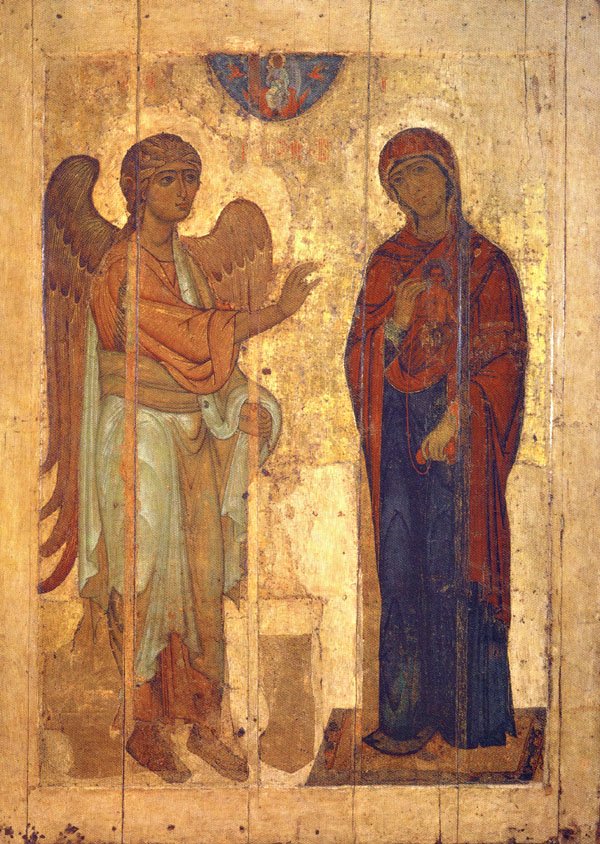
Miracle of the Annunciation Icon of the Mother of God at Ustiug
The Ustiug Annunciation Icon of the Mother of God The “Ustiug Annunciation” is a venerable icon, before which Saint Procopius, Fool-for-Christ (+ 1303) prayed with intense fervor on June 25, 1290 for the salvation of the city of Ustiug from the wrath of God.
The icon was painted by a Novgorod iconographer when the holy Prince Vsevolod-Gabriel (February 11) ruled in the city. In
The Ustiug Annunciation Icon of the Mother of God The “Ustiug Annunciation” is a venerable icon, before which Saint Procopius, Fool-for-Christ (+ 1303) prayed with intense fervor on June 25, 1290 for the salvation of the city of Ustiug from the wrath of God.
The icon was painted by a Novgorod iconographer when the holy Prince Vsevolod-Gabriel (February 11) ruled in the city. In 1567, under Metropolitan Philip (January 9), the holy icon was transferred from Great Ustiug to Moscow and placed in the Dormition cathedral. At the present time it is located in the state Tretyakov gallery.
Venerable Theophilus the Myrrhgusher of Macedonia
Saint Theophilus was from Ziki in Macedonia, and lived during the sixteenth century. He had a very good education, but more importantly he dedicated himself to God, purifying himself from every soul-destroying passion, and acquiring every virtue which filled him with the grace of the All-Holy Spirit.
Saint Theophilus was from Ziki in Macedonia, and lived during the sixteenth century. He had a very good education, but more importantly he dedicated himself to God, purifying himself from every soul-destroying passion, and acquiring every virtue which filled him with the grace of the All-Holy Spirit.
He travelled to Alexandria, at the request of Patriarch Niphon of Constantinople, in order to determine whether the stories about Patriarch Joachim being able to move mountains and to drink poison with no ill effects were true or not. After looking into the matter, he was able to verify that these stories were true.
After completing this work, Saint Theophilus went to struggle on the Holy Mountain, living first at Vatopedi, then at Ivḗron before settling at Saint Basil’s cell near Karyes. Although he did not seek the praise of men, the fame of the holy ascetic became known on Mount Athos, and in other places as well. His holy life and spiritual gifts could not be hidden, but were revealed by the Lord.
When the Archbishop of Thessalonica reposed, Saint Theophilus was nominated for this office. Out of humility, however, he declined to accept the position.
In 1548, as he felt the approach of death, Saint Theophilus told his disciple Isaac not to give him an honorable burial, but to tie a cord around his feet and drag him out of the monastery, and then to throw his body into a nearby stream.
When the saint fell asleep in the Lord on July 8, 1548, Isaac carried out the instructions of his Elder. Although he was reluctant to do this, he obeyed the saint just as he had always done when Saint Theophilus was alive.
By God’s will, the holy relics of Saint Theophilus were later found and brought to his cell. Then a fragrant myrrh began to flow from the saint’s incorrupt body, which was later enshrined at the Pantokrator Monastery.
Troparion - Tone 8
By a flood of tears you made the desert fertile, / and your longing for God brought forth fruits in abundance. / By the radiance of miracles you illumined the whole universe! / O our holy father Theophilus, pray to Christ our God to save our souls!
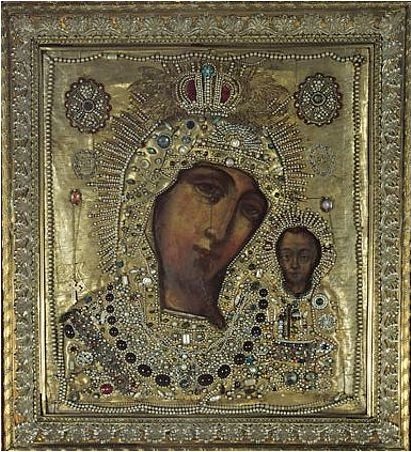
Icon of the Mother of God of Tambov
The Annals of Tambov state that the Kazan Icon of the Mother of God was in the Transfiguration Cathedral of Tambov from the first years of the city’s existence (it had been founded in 1636), and it was the main shrine in the region of Tambov. According to the Annals, “on December 6, 1695, during the All Night Vigil in the wooden cathedral church, tears flowed from the eyes of the Kazan Icon of the Mother of God.” These tears were so abundant that they moistened the cloth beneath the Icon and the analogion, as well. This
The Annals of Tambov state that the Kazan Icon of the Mother of God was in the Transfiguration Cathedral of Tambov from the first years of the city’s existence (it had been founded in 1636), and it was the main shrine in the region of Tambov. According to the Annals, “on December 6, 1695, during the All Night Vigil in the wooden cathedral church, tears flowed from the eyes of the Kazan Icon of the Mother of God.” These tears were so abundant that they moistened the cloth beneath the Icon and the analogion, as well. This was the Icon’s first miracle. Hieromonk Gabriel, the Treasurer of the bishop’s household, recorded this event.
Since then, many who prayed before the Icon began to receive healing, including Saint Pitirim the Bishop of Tambov (+ July 28, 1698) himself. Saint Pitirim had a difficult time when he was first appointed to that See. The moral character of the citizens was very low, and he had to struggle to correct them, especially those who were recent arrivals. Therefore, he placed two Icons on the main gates of the city: one of the Crucifixion, and one of the Kazan Mother of God. This may have happened soon after the appearance of the tears. Many people came to venerate the Icon, entreating the Most Holy Theotokos to help them in their afflictions.
The priests from the Cathedral of the Savior were permitted to bring the Icon from the temple into the private homes of those who were sick so that prayers for their healing could be offered. According to one historian of the nineteenth century, the Icon “visited many houses in the city and outside the city, and dried the tears of many unfortunate people.” (Khitrov, G. Historical and Statistical Description of the Tambov Diocese, Tambov, 1861).
In the middle of the XIX century, the icon was placed under glass in a wooden carved frame and it had a silver and gold-plated riza, which was studded with precious stones: turquoise, amethysts, diamonds and topaz. The Cathedral of the Savior was closed in the 1930s, and the shrine was lost.
Since the Icon is of the Kazan type, its date of commemoration is July 8. In the upper church of the cathedral is another Tambov Icon, also known as Utkinskaya, which is an Icon of the Hodēgḗtria type. Its Feast Day is April 16.
Troparion - Tone 4
O fervent intercessor, Mother of the Lord Most High, / you pray to your Son, Christ our God for all, and save all those who have recourse to your powerful protection. / Defend us, O Lady, Queen, and Sovereign Lady, / when we who are burdened with many sins, stand before you in misfortune, sorrow, and sickness, / praying to you with tender souls and a contrite heart, / shedding tears before this, your most pure Icon, and having steadfast hope in you who deliver us from all evils. / Grant us what is profitable for our souls and save all, O Virgin Theotokos, / for you are the Divine protection of your God-fearing servants.
Kontakion - Tone 8
Let us run to the quiet and good refuge, / and to the speedy helper, ardent and eager to save all. / Let us run to the Virgin’s protection and hasten to repentance; / for the Most Pure Theotokos grants us unfailing mercy as she comes to help all, / delivering her devout and God-fearing servants from great troubles and evils.
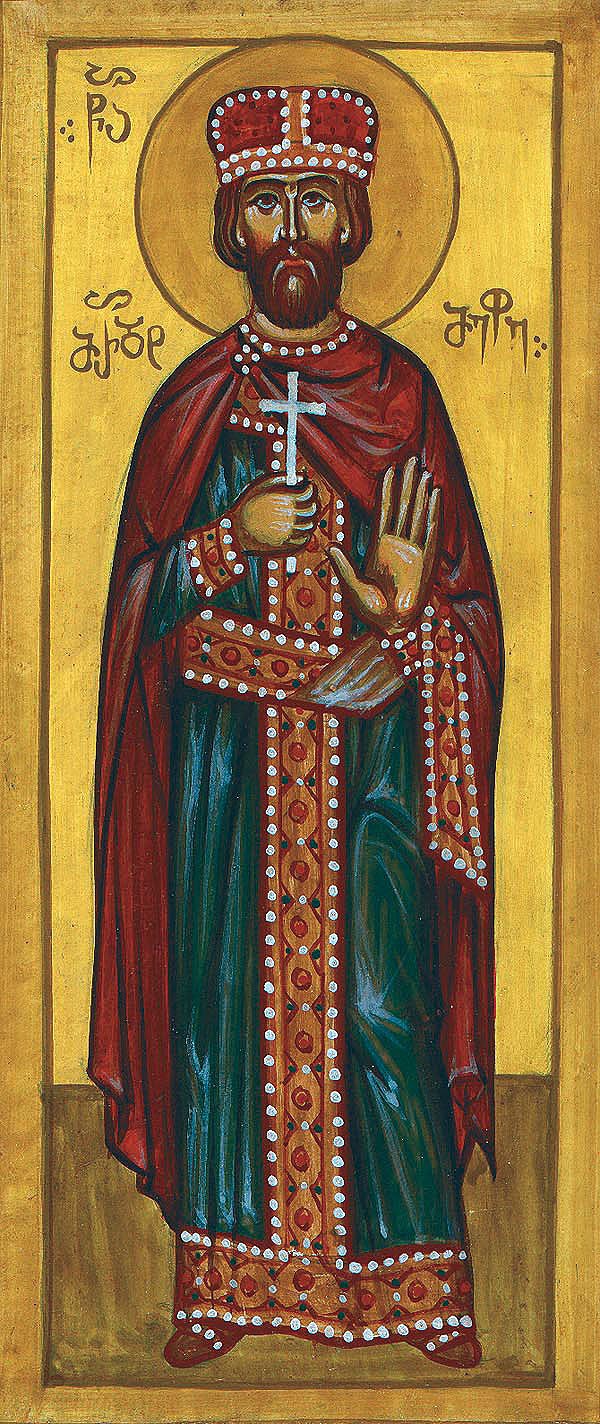
Royal Martyr Mirdat, King of Kartli
King Mirdat (408-410), the son of Varaz-Bakur, was the first martyred king of Georgia. He was raised by his maternal grandfather, King Trdat.
The faithful grandfather taught the future king to love God and his nation, and the young prince mindfully preserved his grandfather’s wisdom throughout his life. M
King Mirdat (408-410), the son of Varaz-Bakur, was the first martyred king of Georgia. He was raised by his maternal grandfather, King Trdat.
The faithful grandfather taught the future king to love God and his nation, and the young prince mindfully preserved his grandfather’s wisdom throughout his life. Mirdat was endowed with the greatest of a nobleman’s virtues: wisdom, discretion, physical prowess, fearlessness, valor, and courage. He liberated Klarjeti from the Byzantines, abolished the tribute system (by which Georgia was required to pay taxes to Persia), and prepared for war against the Persians.
The Persian king gathered an enormous army to punish the Georgian nation, and King Mirdat courageously marched toward Gardabani (in eastern Georgia) with his much smaller army. But the selflessness and bravery of the Georgian soldiers were no match for the multitude of Persian warriors. The Georgians suffered defeat, and the Persian conquerors captured the young king.
The Persian king demanded that Mirdat renounce the Christian Faith, but he was firmly rebuffed. Neither intimidation nor fear of persecution would break the will of the king. After torturing him for his love of Christ, the Persians bound him in chains, tormented him almost to death, and cast him into prison, where he gave up his soul to the Lord.
The martyrdom of King Mirdat took place at the beginning of the 5th century, in the year 410.
Troparion - Tone 3
Your holy martyr Mirdat, O Lord, / through his sufferings has received an incorruptible crown from You, our God. / For having Your strength, he laid low his adversaries, / and shattered the powerless boldness of demons. / Through his intercessions, save our souls!
Kazan-Yaroslavl Icon of the Mother of God
The Kazan-Yaroslavl Icon of the Most Holy Theotokos was found in the year 1588 by a man named Gerasimos, who had traveled to Kazan to pray before its famous Icon, because his right hand had become crippled. The Mother of God appeared to him and ordered him to go to a certain place, and then to take her Icon and bring it to the city of Romanov and place it in a church.
The Kazan-Yaroslavl Icon of the Most Holy Theotokos was found in the year 1588 by a man named Gerasimos, who had traveled to Kazan to pray before its famous Icon, because his right hand had become crippled. The Mother of God appeared to him and ordered him to go to a certain place, and then to take her Icon and bring it to the city of Romanov and place it in a church. After the man had followed these directives to the letter, his hand was healed.
The holy Kazan Icon remained at Romanov for twenty-one years, but on March 9,1609 the city was taken by the Polish-Lithuanian forces. A Lithuanian officer stole the Icon from the Kazan cathedral in Romanov. When it was learned that the holy Icon had been found in the officer's home, the citizens of Yaroslavl begged him to let their city have it. He said he would give it to them if they paid him a considerable sum of money. For a long time the officer rejected their offers, but then suddenly, on March 18, he brought it to one of Yaroslav's most honorable citizens - Basil Lytkin. The Icon was solemnly transferred to the country parish church of the "Laudation of the Virgin” Icon (Fifth Saturday of Great Lent). When the Polish-Lithuanian troops attacked Tver that year the holy Icon was taken into the city to the church of the Nativity of the Lord on the banks of the Volga. Then the Mother of God appeared twice to Deacon Eleazar, commanding him to build a new church to house the Icon.
The people of Yaroslavl placed the wonderworking Kazan Icon in that church, and many miracles occurred. They also worked most energetically to build a women's monastery for seventy-two sisters whose own monastery had been destroyed by the Polish-Lithuanian army.
In 1610, the residents of Romanov begged Tsar Basil IV Shuisky to allow the Icon to be taken from Yaroslavl and returned to Romanov. Then new healings took place before the Icon that same day. The nun Anysia, who was unable to move her hands or feet recovered, and a man named Constantine was delivered from his madness. In view of these miracles, the citizens of Yaroslavl, in their turn, asked the Tsar to let the Icon remain at Yaroslavl. From Moscow there came a request for detailed information about the Icon, and the Tsar decided that the Icon would remain at Yaroslavl. However, the people of Yaroslavl were ordered to make an exact copy of the Icon, and to adorn it with an oklad (metal cover), just like the one on the wonderworking Icon, and then send the copy to Romanov. All this was done. In 1611, the copy was taken to Romanov and it was placed in the Kazan church, where the wonderworking Icon had once stood. Every year the original wonderworking Icon was brought to the city of Romanov with great ceremony.
Troparion - Tone 4
O fervent intercessor, Mother of the Lord Most High, / you pray to your Son, Christ our God for all, and save all those who have recourse to your powerful protection. / Defend us, O Lady, Queen, and Sovereign Lady, / when we who are burdened with many sins, stand before you in misfortune, sorrow, and sickness, / praying to you with tender souls and a contrite heart, / shedding tears before this, your most pure Icon, and having steadfast hope in you who deliver us from all evils. / Grant us what is profitable for our souls and save all, O Virgin Theotokos, / for you are the Divine protection of your God-fearing servants.
Kontakion - Tone 8
Let us run to the quiet and good refuge, / and to the speedy helper, ardent and eager to save all. / Let us run to the Virgin’s protection and hasten to repentance; / for the Most Pure Theotokos grants us unfailing mercy as she comes to help all, / delivering her devout and God-fearing servants from great troubles and evils.
Scripture Readings
☩Epistle
1 Corinthians 2:9-3:8
9
But as it is written, Eye hath not seen, nor ear heard, neither have entered into the heart of man, the things which God hath prepared for them that love him.
10
But God hath revealed them unto us by his Spirit: for the Spirit searcheth all things, yea, the deep things of God.
11
For what man knoweth the things of a man, save the spirit of man which is in him? even so the things of God knoweth no man, but the Spirit of God.
12
Now we have received, not the spirit of the world, but the spirit which is of God; that we might know the things that are freely given to us of God.
13
Which things also we speak, not in the words which man’s wisdom teacheth, but which the Holy Ghost teacheth; comparing spiritual things with spiritual.
14
But the natural man receiveth not the things of the Spirit of God: for they are foolishness unto him: neither can he know them, because they are spiritually discerned.
15
But he that is spiritual judgeth all things, yet he himself is judged of no man.
16
For who hath known the mind of the Lord, that he may instruct him? But we have the mind of Christ.
1
And I, brethren, could not speak unto you as unto spiritual, but as unto carnal, even as unto babes in Christ.
2
I have fed you with milk, and not with meat: for hitherto ye were not able to bear it, neither yet now are ye able.
3
For ye are yet carnal: for whereas there is among you envying, and strife, and divisions, are ye not carnal, and walk as men?
4
For while one saith, I am of Paul; and another, I am of Apollos; are ye not carnal?
5
Who then is Paul, and who is Apollos, but ministers by whom ye believed, even as the Lord gave to every man?
6
I have planted, Apollos watered; but God gave the increase.
7
So then neither is he that planteth any thing, neither he that watereth; but God that giveth the increase.
8
Now he that planteth and he that watereth are one: and every man shall receive his own reward according to his own labour.
☩Gospel
Matthew 13:31-36
31
Another parable put he forth unto them, saying, The kingdom of heaven is like to a grain of mustard seed, which a man took, and sowed in his field:
32
Which indeed is the least of all seeds: but when it is grown, it is the greatest among herbs, and becometh a tree, so that the birds of the air come and lodge in the branches thereof.
33
Another parable spake he unto them; The kingdom of heaven is like unto leaven, which a woman took, and hid in three measures of meal, till the whole was leavened.
34
All these things spake Jesus unto the multitude in parables; and without a parable spake he not unto them:
35
That it might be fulfilled which was spoken by the prophet, saying, I will open my mouth in parables; I will utter things which have been kept secret from the foundation of the world.
36
Then Jesus sent the multitude away, and went into the house: and his disciples came unto him, saying, Declare unto us the parable of the tares of the field.
Liturgical data sourced from OCA.org and orthocal.info