Fasting Rules

Meat allowed Meat Allowed
Fish allowed Fish Allowed
Dairy allowed Dairy Allowed
Oil allowed Oil Allowed
Wine allowed Wine Allowed

Saints & Commemorations

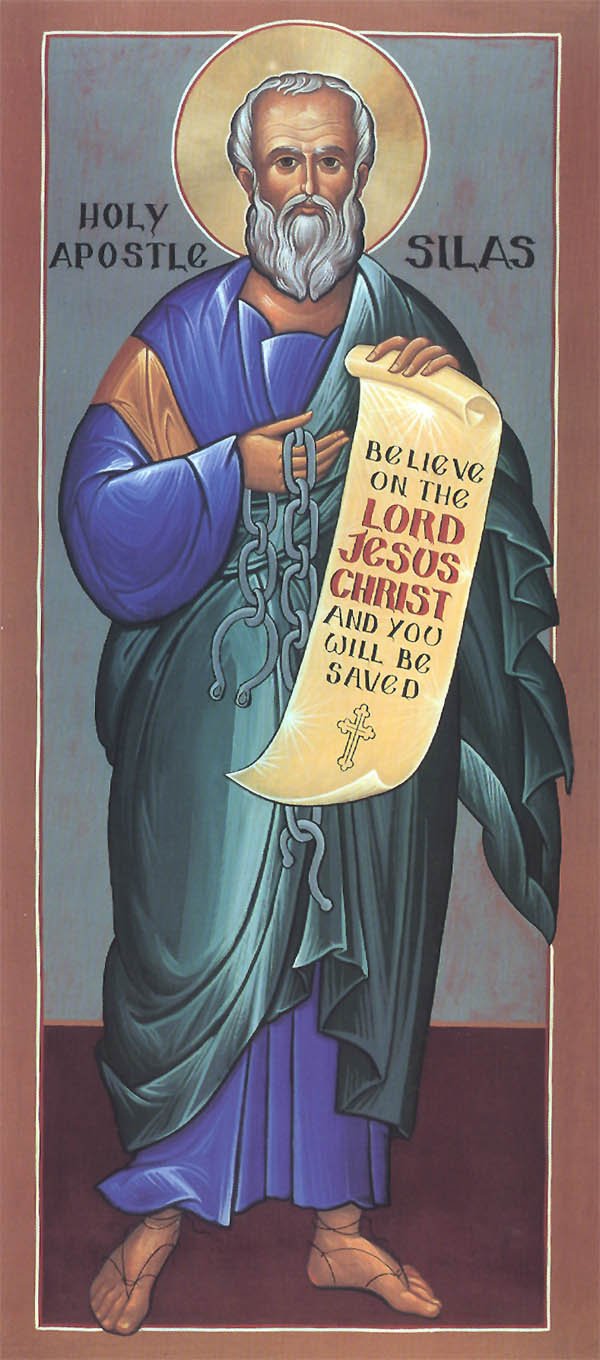
Apostle Silas of the Seventy

Apostle Silas of the Seventy

The Holy Apostle of the Seventy Silas was a disciple of the Savior. Saint Silas was a respected figure in the original Church at Jerusalem, one of the “chief men among the brethren” (Acts 15:22). The Council of the Apostles was convened at Jerusalem in the year 51 to deal with the question of whether Gentile Christian converts should be required to observe the Mosaic Law. The The Holy Apostle of the Seventy Silas was a disciple of the Savior. Saint Silas was a respected figure in the original Church at Jerusalem, one of the “chief men among the brethren” (Acts 15:22). The Council of the Apostles was convened at Jerusalem in the year 51 to deal with the question of whether Gentile Christian converts should be required to observe the Mosaic Law. The Apostles sent a message with Paul and Barnabas to the Christians of Antioch, giving the decision of the Council that Christians of Gentile origin did not have to observe the prescriptions of the Mosaic Law. Nonetheless, they were told that they must refrain from partaking of foods offered to idols, from things strangled and from blood, to refrain from fornication (Acts 15:20-29). Together with Saints Paul and Barnabas, the Council of the Apostles sent Saints Silas and Jude to explain the message in greater detail, since they both were filled with the grace of the Holy Spirit. Saint Jude was later sent back to Jerusalem, but Saint Silas remained at Antioch and zealously assisted Saint Paul, the Apostle to the Gentiles, on his missionary journeys preaching the Gospel. They visited Syria, Cilicia, and Macedonia. In the city of Philippi they were accused of inciting unrest among the people, and for this they were arrested, beaten with rods, and then thrown into prison. At midnight, when the saints were at prayer, suddenly there was a strong earthquake, their chains fell off from them and the doors of the prison opened. The prison guard, supposing that the prisoners had fled, wanted to kill himself, but was stopped by the Apostle Paul. Then, he fell down trembling at the feet of the saints, and with faith accepted their preaching about Christ. He then led them out of the prison and took them to his own home, where he washed their wounds, and was baptized together with all his household. From Philippi Saints Paul and Silas proceeded on to the cities of Amphipolis, Apollonia and Thessalonica. In each city they made new converts to Christ and built up the Church. At Corinth the holy Apostle Silas was consecrated as bishop, and worked many miracles and signs, and there he finished his life.

Troparion - Tone 3

Holy Apostles Silas and Silvanus, / entreat the merciful God / to grant our souls forgiveness of transgressions.

Kontakion - Tone 4

You were revealed to be branches of the vine of Christ, O wise ones, / bearing clusters of virtues that pour out on us the wine of salvation. / Receiving it, we are filled with gladness, / and we celebrate your most honored memory, apostles of the Lord, Silas and Silvanus. / Therefore, intercede that great mercy and remission of sins may be granted to us.
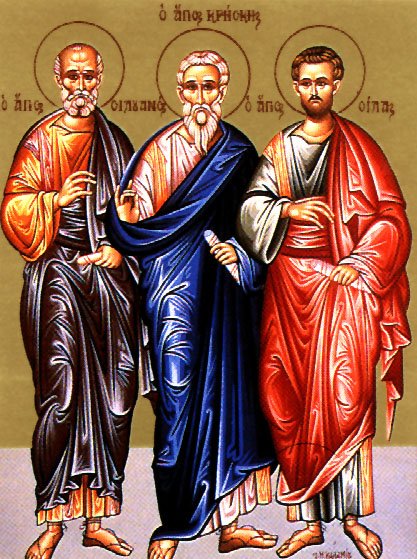
Apostle Silvanus of the Seventy

Apostle Silvanus of the Seventy

The Holy Apostle of the Seventy Silvanus was a disciple of the Savior. The Holy Apostle Silvanus preached the Word of God together with the chief Apostles Peter and Paul. In his First Epistle, the holy Apostle Peter makes mention of him: “By Silvanus, a faithful brother to you, as I suppose, I have written briefly...” (1 Peter 5:12). Sai The Holy Apostle of the Seventy Silvanus was a disciple of the Savior. The Holy Apostle Silvanus preached the Word of God together with the chief Apostles Peter and Paul. In his First Epistle, the holy Apostle Peter makes mention of him: “By Silvanus, a faithful brother to you, as I suppose, I have written briefly...” (1 Peter 5:12). Saint Silvanus was made bishop at Thessalonica and died there a martyr, having undergone many sorrows and misfortunes for the Lord’s sake.

Troparion - Tone 3

Holy Apostles Silas and Silvanus, / entreat the merciful God / to grant our souls forgiveness of transgressions.

Kontakion - Tone 4

You were revealed to be branches of the vine of Christ, O wise ones, / bearing clusters of virtues that pour out on us the wine of salvation. / Receiving it, we are filled with gladness, / and we celebrate your most honored memory, apostles of the Lord, Silas and Silvanus. / Therefore, intercede that great mercy and remission of sins may be granted to us.
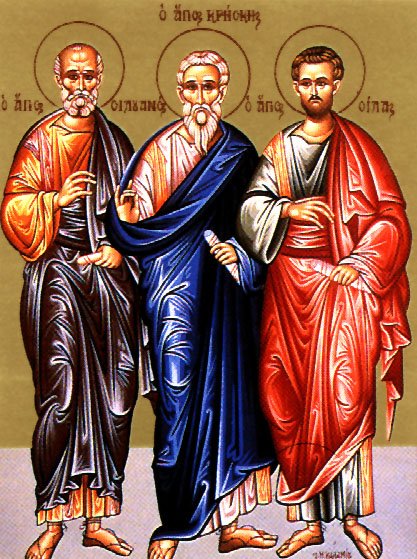
Apostle Crescens of the Seventy

Apostle Crescens of the Seventy

The Holy Apostle of the Seventy Crescens was a disciple of the Savior. The Holy Apostle Crescens is mentioned by the holy Apostle Paul (2 Tim. 4:10), saying that Crescens had gone preaching to Galatia. He was made bishop there, and afterwards he preached the Word of God in Gaul (modern-day France). In the city of Vienna (modern Austria) the holy Apostle Crescens established his student Zacharias as bishop. The Holy Apostle of the Seventy Crescens was a disciple of the Savior. The Holy Apostle Crescens is mentioned by the holy Apostle Paul (2 Tim. 4:10), saying that Crescens had gone preaching to Galatia. He was made bishop there, and afterwards he preached the Word of God in Gaul (modern-day France). In the city of Vienna (modern Austria) the holy Apostle Crescens established his student Zacharias as bishop. Having returned to Galatia, he died as a martyr under the emperor Trajan (98-117).

Troparion - Tone 3

Holy Apostle Crescens, / entreat the merciful God, / to grant our souls forgiveness of transgressions.

Apostle Epenetus of the Seventy

The Holy Apostle of the Seventy Epenetus was a disciple of the Savior. The Holy Apostle Epenetus was made bishop at Carthage. In his Epistle to the Romans, the holy Apostle Paul writes: “Greet my dear Epenetus, who is the firstfruits of Achaia unto Christ” (Rom. 16:5).

Troparion - Tone 3

Holy Apostle Epenetus, / entreat the merciful God, / to grant our souls forgiveness of transgressions.

Apostle Andronicus of the Seventy

The Holy Apostle of the Seventy Andronicus was a disciple of the Savior. The Apostle Andronicus is mentioned by Saint Paul: “Salute Andronicus and Junia, my kinsmen, ... who are of note among the Apostles, who also were in Christ, before me” (Rom. 16:7). The holy Apostle Andronicus was bishop in Pannonia (modern-day Hungary). Saints Andronicus and Junia are also commemorated on May 17.

Troparion - Tone 3

Holy Apostle Andronicus, / entreat the merciful God, / to grant our souls forgiveness of transgressions.
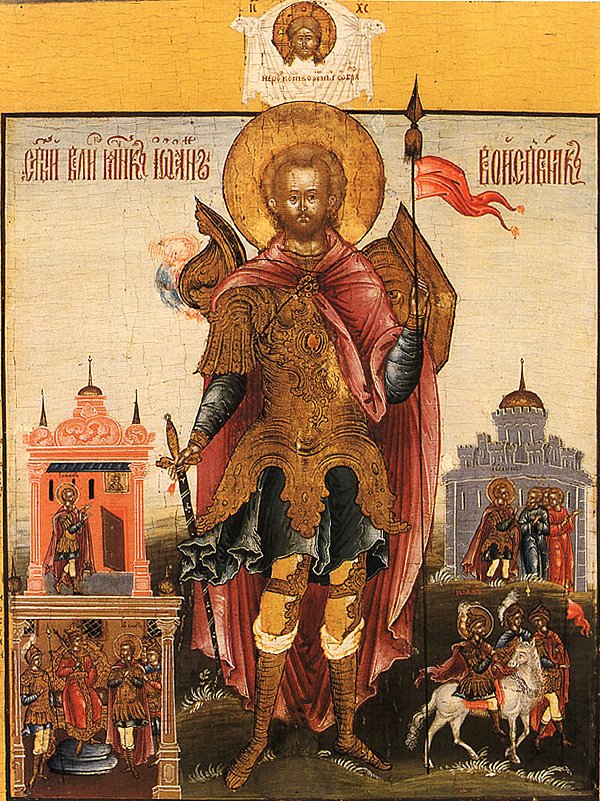
Martyr John the Soldier at Constantinople

Martyr John the Soldier at Constantinople

The Holy Martyr John the Soldier served in the Roman army during the reign of Emperor Julian the Apostate (361-363). He was sent with other soldiers to find and kill Christians. Although he seemed to persecute them, Saint John was actually a secret Christian, and provided much help to his fellow Christians. The Holy Martyr John the Soldier served in the Roman army during the reign of Emperor Julian the Apostate (361-363). He was sent with other soldiers to find and kill Christians. Although he seemed to persecute them, Saint John was actually a secret Christian, and provided much help to his fellow Christians. He freed those who had been arrested, warned others of the dangers which threatened them, and helped them to escape. When the pagan Emperor Julian learned of the Saint's activities he arrested him and sent him to a prison in Constantinople. In the year 363 the wicked Emperor who had denied Christ was killed in a war with the Persians. Saint John was released and devoted his life to serving his neighbor, and living a life of holiness and purity. He reposed at an advanced age, but the exact year of his death is not known. In time, Saint John's tomb was gradually forgotten. On a certain day he appeared to a devout woman and revealed to her the details of his life. He also showed her the location of his tomb, and this became known throughout the region. His holy relics, which had the power to heal various ailments, were transferred to the church of the Apostle John the Theologian at Constantinople. Through the prayers of Saint John the Soldier, those who suffer grief and sorrow receive comfort. In the Russian Orthodox Church, Saint John is revered as the protector of soldiers, and a great intercessor for those who experience sorrow and difficult circumstances. Saint John displayed charity not only to Christians, but to all the destitute, and to those who needed help. He visited the sick, and consoled the grieving. He is also invoked for the recovery of stolen articles. In iconography, Saint John is usually depicted as a middle-aged man with light brown (or dark) hair, a high forehead, and a short beard. He is dressed in armor and a cloak. In some icons he may hold a cross, a scroll, or military weapons, while in others he is shown in patrician clothing, wearing a cloak over a long chiton. Saint John the Soldier is commemorated on July 29 in Greek usage, and on July 30 in Slavic usage.

Troparion - Tone 4

O wonderworker John, / you became a truly faithful servant and warrior of the all-good God; / for after suffering courageously for the Faith and completing the course of your life in blessedness, / you beheld in the heavens the Lord and Creator of all most splendidly, and you help those who suffer all sorts of trials. / You strengthen soldiers in battle, / rescuing them from capture by the enemy, from wounds, from sudden death, and cruel misfortunes. / Therefore, O ever-memorable one, entreat the Master Christ, that He deal mercifully with us in every circumstance, / that He lead us not into temptations, but save our souls, / as the lover of mankind.

Kontakion - Tone 6

Loving the blessedness of the Gospel, O divinely-wise John, / you have glorified the purity of your heart with virginity. / Therefore you rejected the vanity of this world, hastening to the contemplation of God, / Who glorified you with miracles of healing, to treat various sufferers. / Therefore, we implore you: "Entreat Christ the Lord to deliver us from all sorrows, / and that we may obtain the Kingdom of Heaven."

Uncovering of the relics of Venerable Herman of Solovki

The Uncovering of the Relics of Saint Herman of Solovki took place in the year 1484. Saint Herman lived as a hermit at the River Vyg, by a chapel. It was here in the year 1429 that Saint Sabbatius of Valaam monastery came upon him while seeking a solitary place for his ascetic deeds. Herman told Sabbatius about Solovki Island, and both monks crossed the sea and settled on Solovki. The Uncovering of the Relics of Saint Herman of Solovki took place in the year 1484. Saint Herman lived as a hermit at the River Vyg, by a chapel. It was here in the year 1429 that Saint Sabbatius of Valaam monastery came upon him while seeking a solitary place for his ascetic deeds. Herman told Sabbatius about Solovki Island, and both monks crossed the sea and settled on Solovki. They built themselves a cell beneath the Sekir Heights, where they lived for six years. Upon the repose of Sabbatius (September 27, 1435), Saint Herman continued his ascetic efforts on the island together with another wilderness-dweller, Saint Zosimus (April 17). Herman lived on the island for more than 50 years. Being unlettered, but made wise by Divine Providence and wanting to preserve the memory of Saint Sabbatius to edify many others, he summoned clergy to write down his memories of Saints Sabbatius and Zosimus, and about the events which occurred during their lifetime. Saint Herman loved to listen to edifying readings, and in his final instruction to his disciples he bid them gather books at the monastery. For the domestic and other needs of the monastery the monk made dangerous sailings and prolonged journeys to the mainland into his old age. On one of these excursions to Novgorod in 1479 he died at the Antoniev monastery. They brought his body to the Solovki monastery, but because of some ruffians they had to bury him at a chapel in the village of Khavronin on the River Svira. In 1484, when it was decided to move the grave to the place where he had labored, his relics were found incorrupt.

Troparion - Tone 8

By a flood of tears you made the desert fertile, / and your longing for God brought forth fruits in abundance. / By the radiance of miracles you illumined the whole universe! / O our holy father Herman, pray to Christ our God to save our souls!

Hieromartyr Polychronius, Bishop of Babylon, and those with him

“When the Emperor Decius conquered Babylon, he arrested Polychronius, together with three priests, two deacons and two baptised princes, Eudin and Senis. Polychronius would make no reply before the Emperor, but kept silent, while St Parmenius, one of the priests, spoke for them all. The Emperor took the bishop and priests to Persia, to the city of Kordoba, and had them beheaded with an axe, but he took the princes with him to Rome, threw them first to the wild beasts and then had them slain with the sword. T “When the Emperor Decius conquered Babylon, he arrested Polychronius, together with three priests, two deacons and two baptised princes, Eudin and Senis. Polychronius would make no reply before the Emperor, but kept silent, while St Parmenius, one of the priests, spoke for them all. The Emperor took the bishop and priests to Persia, to the city of Kordoba, and had them beheaded with an axe, but he took the princes with him to Rome, threw them first to the wild beasts and then had them slain with the sword. They all suffered with honour in 251.” (Prologue)

Troparion - Tone 4

Your holy martyrs O Lord, / through their sufferings have received incorruptible crowns from You, our God. / For having Your strength, they laid low their adversaries, / and shattered the powerless boldness of demons. / Through their intercessions, save our souls!

Hieromartyr Valentine, Bishop of Interamna, Terni in Italy, and those with him

The Hieromartyr Bishop Valentine and his three disciples, Proculus, Ephebus and Apollonius, and the righteous Abundius lived during the third century. Saint Valentine was a bishop in Umbria (Italy), in the city of Interamna. He received from God the gift of healing various maladies. At this time three pagan youths, Proculus, Ephebus and Apollonius, came from Athens to Rome to study.They found a tutor named Craton, and lived in his home. The Hieromartyr Bishop Valentine and his three disciples, Proculus, Ephebus and Apollonius, and the righteous Abundius lived during the third century. Saint Valentine was a bishop in Umbria (Italy), in the city of Interamna. He received from God the gift of healing various maladies. At this time three pagan youths, Proculus, Ephebus and Apollonius, came from Athens to Rome to study.They found a tutor named Craton, and lived in his home. Craton’s son Cherimon fell grievously ill, and his spine was so contorted that his head was bent down to his knees. Craton asked Bishop Valentine to help his sick son. The holy bishop went into the sick child’s room and prayed fervently all night. When day came, the happy parents saw their son had been healed. They believed in Christ and were baptized with all their household. Craton’s students, Proculus, Ephebus and Apollonius were also baptized and became devoted disciples of Saint Valentine. The bishop’s fame quickly spread, and many were converted to Christ. Among them was the city prefect’s son, Abundius, who openly confessed himself a Christian. This was a bold thing to do, since paganism prevailed in the world, and Christianity was persecuted. The wrath of the prefect and other city leaders fell upon Bishop Valentine, the teacher of the youths. They demanded that he renounce Christ and worship the idols. After much torture they threw him into prison, where his followers visited him. Learning of this, the prefect gave orders to take Valentine out of the prison and behead him. Saint Valentine’s students Proculus, Ephebus, and Apollonius took the body of their teacher and carried it to the city of Interamnum, where they buried it. Both believers and pagans were drawn to them, and they converted many idolaters to the true Faith. When the authorities heard about this, they arrested the youths and threw them in prison. Fearing that people might break the sufferers out of prison, the executioners beheaded them by night. Abundius, learning that his friends had been locked in prison, hastened to see them, but found that they had already been executed. He buried their bodies near the grave of holy Bishop Valentine.

Troparion - Tone 4

Your holy martyrs O Lord, / through their sufferings have received incorruptible crowns from You, our God. / For having Your strength, they laid low their adversaries, / and shattered the powerless boldness of demons. / Through their intercessions, save our souls!
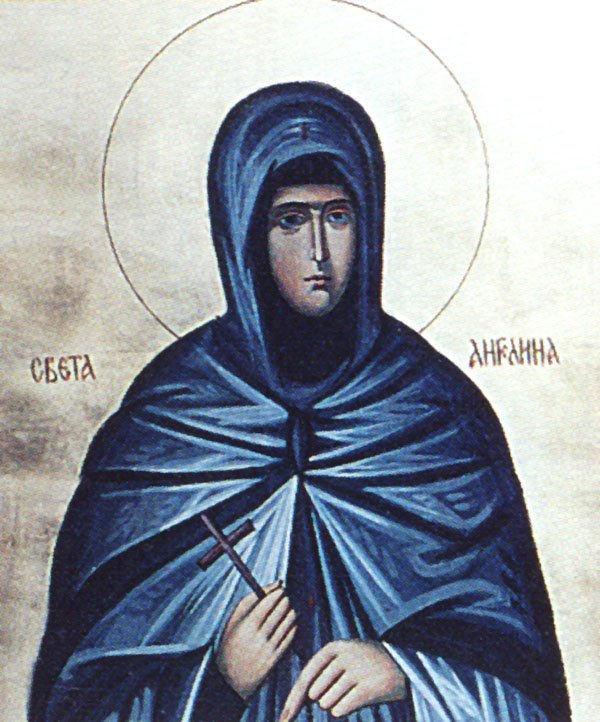
Venerable Angelina of Serbia

Venerable Angelina of Serbia

She was the daughter of Scanderbeg, Albania’s national hero. She married Stefan, Prince of Serbia, a kinsman of Scanderbeg who sought refuge in his court. Stefan, a gentle, God-fearing man, had been blinded by the Turkish Sultan. Princess Angelina, loving him despite his loss of his vision and his worldly kingdom, married him with her father’s blessing. Tog She was the daughter of Scanderbeg, Albania’s national hero. She married Stefan, Prince of Serbia, a kinsman of Scanderbeg who sought refuge in his court. Stefan, a gentle, God-fearing man, had been blinded by the Turkish Sultan. Princess Angelina, loving him despite his loss of his vision and his worldly kingdom, married him with her father’s blessing. Together they had two sons, George and John. When their sons were grown, Albania was ravaged by an invasion of the Turks. Stefan, with Angelina and their sons, fled to Italy, where they lived until his repose in 1468. The widowed Angelina buried her husband in his Serbian homeland and devoted her remaining years to good works. Her elder son George gave up his princely title and entered monastic life. John married but died without children in 1503. When Angelina had outlived her two sons as well as her husband she too entered monastic life. She was buried with her sons at Krušedol monastery in northern Serbia. There her miracle-working relics are venerated to this day, and a service is held each year in her memory. She, her husband and her two sons are all glorified as saints of the Church.

Troparion - Tone 8

The image of God was truly perserved in you, O Mother, / for you took up the Cross and followed Christ. / By so doing you taught us to disregard the flesh for it passes away, / but to care instead for the soul, since it is immortal. / Therefore your spirit, O venerable Angelina, rejoices with the angels.

Kontakion - Tone 8

Longing to be worthy of the heavenly life, you voluntarily gave up earthly food, / and distributed your wealth to the poor; for you were given heavenly riches. / You enlighten us after your repose, and you shine forth with miracles, O all-laudable Angelina. / Therefore, we honor your holy repose by singing: Hail, most praised Mother.

Icon of the Mother of God of Okonsk

There is no reliable historical information about the origin of the Okonsk Icon of the Mother of God, but it is thought that the Icon came from Georgia. According to tradition, the Okonsk Icon was received by the Georgian King Vakhtang IV from Jerusalem in the XV century, and at first it was at Gaenat Monastery in Georgia. There is no reliable historical information about the origin of the Okonsk Icon of the Mother of God, but it is thought that the Icon came from Georgia. According to tradition, the Okonsk Icon was received by the Georgian King Vakhtang IV from Jerusalem in the XV century, and at first it was at Gaenat Monastery in Georgia. The Georgian King’s son, George Alexandrovich, transferred the holy Icon to the cathedral church in the village of Lyskov, in Nizhny Novgorod province. The revered Okonsk Icon is venerated by the inhabitants as miraculous, because they often receive healing from their various bodily ailments. It is said that a peasant woman who lost her husband was consequently forced to perform all his work in order to take care of her home and family. While working in the field one day, she suddenly became ill. She felt a hardening of her fingers, and the toes of her feet. After a few days she lost the ability to control her legs and experienced unbearable pain in her hands. Initially, she treated her illness with home remedies. The Mother of God appeared to her and reprimanded her because only after the folk medicines proved ineffective did she turn to the Lord and the Most Holy Virgin. Gradually, the pain in her hands began to subside, and the ability to control her legs returned. After a week and a half, she was already back to work. The village where this miracle took place was not far from Tikhvin Monastery, and the peasant woman may have prayed before the Tikhvin Icon of the Mother of God. The Most Holy Theotokos not only grants bodily health to those who come to her wonderworking Icon with faith, but she also heals the sorrows of the heart. In many cases, souls stricken by the storm of worldly troubles have found peace before the Icon.

Venerable Anatole II of Optina

Saint Anatole the Younger (Alexander Potapov in the world) longed to be a monk from his youth. His mother would not give her blessing for this, so he entered Optina monastery only after her death. Anatole lived in the Skete for many years as cell attendant to Saint Ambrose (October 10). After his death Father Anatole functioned as an Elder, even though he was still a deacon. Saint Anatole the Younger (Alexander Potapov in the world) longed to be a monk from his youth. His mother would not give her blessing for this, so he entered Optina monastery only after her death. Anatole lived in the Skete for many years as cell attendant to Saint Ambrose (October 10). After his death Father Anatole functioned as an Elder, even though he was still a deacon. Saint Anatole received everyone with love, and there were always crowds of visitors at his cell. He got very little sleep, since the people would not leave his cell until late at night. The Elder was always very kind and ready to help anyone who came to him with problems or sorrows. One day he was visited by a man whose family had no roof over their head, and little money. No one was able to help him, so he began to drink. Then he decided to leave his wife and children and look for work in Moscow. Somehow he decided to go to Optina first and speak with Father Anatole. As he was blessing the man, Saint Anatole tapped him lightly on the head. Then the man said that he wanted to die. When questioned by the Elder, the man poured out his whole story. Father Anatole listened patiently, blessed him again and told him that he would move into a new home in three days. This indeed came to pass, and the man’s whole life changed. In the early 1920s Saint Anatole was mocked and tormented by soldiers of the Red Army. He endured much suffering, but continued to receive visitors. He was supposed to be arrested on July 22, 1922, but asked for time to prepare himself. Soldiers came the next morning and asked the Elder’s cell attendant if he was ready. Father Barnabas invited them to come in, and they found Father Anatole lying in his coffin. The Lord had taken him during the night to spare him further suffering. The Moscow Patriarchate authorized local veneration of the Optina Elders on June 13, 1996. The work of uncovering the relics of Saints Leonid, Macarius, Hilarion, Ambrose, Anatole I, Barsanuphius and Anatole II began on June 24/July 7, 1998 and was concluded the next day. However, because of the church Feasts (Nativity of Saint John the Baptist, etc.) associated with the actual dates of the uncovering of the relics, Patriarch Alexey II designated June 27/July 10 as the date for commemorating this event. The relics of the holy Elders now rest in the new church of the Vladimir Icon of the Mother of God. The Optina Elders were glorified by the Moscow Patriarchate for universal veneration on August 7, 2000.

Troparion - Tone 8

By a flood of tears you made the desert fertile, / and your longing for God brought forth fruits in abundance. / By the radiance of miracles you illumined the whole universe! / O our holy father Anatole, pray to Christ our God to save our souls!
Saint Tsotne Dadiani the Confessor

Saint Tsotne Dadiani the Confessor

Saint Tsotne Dadiani, a virtuous military leader and the prince of Egrisi, lived in the middle of the 13th century. During that time Georgia languished under the yoke of Mongol oppression. After the death of Queen Rusudan, the Mongols began to exact exorbitant fees from the Georgian princes, and they established compulsory military service for their Georgian subjects. Saint Tsotne Dadiani, a virtuous military leader and the prince of Egrisi, lived in the middle of the 13th century. During that time Georgia languished under the yoke of Mongol oppression. After the death of Queen Rusudan, the Mongols began to exact exorbitant fees from the Georgian princes, and they established compulsory military service for their Georgian subjects. The situation became unbearable, and the Georgian nobility planned a massive rebellion against the invaders. Having assembled at the peak of Mt. Kokhta (in the Meskheti region of southern Georgia), rulers from all over Georgia agreed to assemble the troops in Kartli and attack on a single front. Tsotne Dadiani and the ruler of Racha were the first to muster their armies. But there were traitors among them, and the Mongols learned of the conspiracy. They surrounded Mt. Kokhta, arrested the rebels—save for Tsotne Dadiani and the ruler of Racha—and led them away to the Mongol ruler at Anis-Shirakavan. The prisoners denied every accusation and asserted that the purpose of the gathering on Mt. Kokhta was to collect the tribute that the Mongol authorities had demanded. Infuriated at their insurgency, the Mongols stripped them bare, bound their hands and feet, smeared them with honey, threw them under the scorching sun, and interrogated them daily about the gathering on Mt. Kokhta. Having heard what had transpired, Tsotne Dadiani became deeply distressed and took upon himself the blame for this tragic turn of events. Escorted by two servants, he journeyed voluntarily to Anis to lay down his life and suffer together with his brothers. Arriving in Anis and seeing his kinsmen doomed to death, the prince promptly undressed, tied himself up, and lay down next to them under the scorching sun. The disbelieving Mongols informed their ruler about the strange man who had willingly lain down beside those who were condemned. The ruler summoned him and demanded an explanation. “We gathered with a single goal—to collect the tribute and fulfill your command. If it was for this that my countrymen were punished, I also desire to share in their lot!” answered the courageous prince. Tsotne’s chivalrous deed made a dramatic impression on the Mongols, and every one of the prisoners was set free. Tsotne Dadiani is not mentioned in accounts of the next conspiracy against the Mongols, in the year 1259. Historians believe that he had already reposed by that time. The virtues of Saint Tsotne Dadiani are known to all throughout Georgia. His heroism and integrity are an example of faith, love and devotion to every generation, and the faithful of every era have honored his holy name. Tsotne Dadiani was numbered among the saints on October 26, 1999, according to a decree of the Holy Synod of the Georgian Orthodox Church.

Troparion - Tone 8

Champion of Orthodoxy, teacher of purity and of true worship, / the enlightener of the universe and the adornment of hierarchs: / all-wise father Tsotne, your teachings have gleamed with light upon all things. / Intercede before Christ God to save our souls.

Velikorets Icon of Saint Nicholas the Wonderworker

Miraculously, the Velikorets Icon of Saint Nicholas the Wonderworker was found in the land of Vyatka in the XVI century. According to legend, a certain believer, who had left home on business, saw many burning candles near the Great River. Bewildered, he stopped, but then drove on. On his return journey, he saw the burning candles again in the same place. Miraculously, the Velikorets Icon of Saint Nicholas the Wonderworker was found in the land of Vyatka in the XVI century. According to legend, a certain believer, who had left home on business, saw many burning candles near the Great River. Bewildered, he stopped, but then drove on. On his return journey, he saw the burning candles again in the same place. When the man approached the spot, he saw an Icon of Saint Nicholas. Reverently taking the Icon, he brought it to his home, but did not tell anyone about the Icon's miraculous discovery. A twenty-year-old local resident named John had been paralyzed for several years. The Hierarch Nicholas appeared to him in a dream, commanding him to touch his Icon, which had been found by the Great River, and promised to heal him. John doubted the truth of the vision. On the following night, Saint Nicholas again commanded the paralytic to go to his Icon. Then John told his family about the Hierarch's apparitions. When the paralytic was brought to the house where the wonderworking Icon was, he saw a light emanating from the holy image, as if from a multitude of candles. After venerating the holy Icon, John became completely well. Learning about the discovery of the holy Icon and of the miracle which had taken place, the inhabitants of that area built a chapel and transferred the Icon of Saint Nicholas there. Soon news of the holy Icon of Saint Nicholas spread throughout the land of Vyatka, and many began coming to venerate the wonderworking Icon. Through the Hierarch's prayers various ailments were healed before his Icon. The Orthodox residents decided to build a temple in honor of Saint Nicholas. They chose a spot for this and began to prepare the materials. However, the harvested logs miraculously ended up in another place — on a hill in a swamp. Three times the cornerstone of the church was laid and three times the building materials were carried to the swamp by an invisible force. Then they built a church on a hill in the middle of the swamp, and by God's will the swamp soon dried up. The holy Icon of Saint Nicholas the Wonderworker was placed in the new Saint Nicholas church, where numerous miracles still occurred before it. At that time, the Vyatka lands were often attacked by the Cheremis. Repeatedly they tried to burn down the church, but when they approached it, it became invisible, or it was visible high above the ground, so that the Cheremis could not damage the church. The parishioners told the residents of the nearby city of Khlynov about this miracle, and they wanted to transfer the miraculous Velikorets Icon to their city. However, the Khlynovites could not fulfill their desire, since no one was able to move the Icon from its place. Then they began to fast and made a vow to Saint Nicholas, that after the Feast of the Transfer of the Saint's Honorable Relics from Myra in Lycia to Bari (May 9), to transfer the wonderworking Velikorets Icon to the place of its miraculous appearance on the Velikaya River. After this, in 1521, the holy Icon was easily lifted up and transferred to the church dedicated to Blessed Prokopios of Ústiug (July 8, 1303) at Khlynov. In the second half of the XVI century, during a fire in the church of Blessed Prokopios, the wonderworking Icon was damaged slightly by fire. Tsar Ivan the Terrible commanded that the wonderworking Icon be brought to Moscow, where it was restored and adorned with a new precious oklad. In Moscow, the Velikorets Icon of Saint Nicholas was renowned for its numerous miracles. A copy was made, which was placed in the Kremlin's Dormition Cathedral. Another copy of the Velikorets Icon became the temple icon in a side chapel of Saint Nicholas of the Protection church of Saint Basil the Blessed (August 2) in Moscow. According to the chronicles, Muscovites flocked to the wonderworking Velikorets Icon in great numbers and especially revered it, so that the Protection Cathedral was also called the church of Saint Nicholas of Velikorets. The side chapel was dedicated to Saint Nicholas, and was consecrated by Metropolitan Makarios of Moscow (1542-1563) on July 29, 1555. On the same day, the commemoration of the Transfer of the wonderworking Icon of Saint Nicholas from Vyatka to Moscow that date was chosen, apparently, because on July 29 the Saint's Nativity is celebrated. In the charter of Moscow's Dormition Cathedral (circa 1634) under July 29 it is said: "On the Feast of Saint Nicholas, the Wonderworker of Velikorets, there is a Cross Procession." The Velikorets Icon was returned to Khlynov about a year later, and was placed in a new church in honor of Saint Nicholas.

Troparion - Tone 4

In truth you were revealed to your flock as a rule of faith, / an image of humility and a teacher of abstinence; / your humility exalted you; / your poverty enriched you. / Hierarch Father Nicholas, / entreat Christ our God / that our souls may be saved.

Kontakion - Tone 3

You revealed yourself, O Saint, in Myra as a priest, / for you fulfilled the Gospel of Christ / by giving up your soul for your people, / and saving the innocent from death. / Therefore you are blessed as one become wise in the grace of God.

Scripture Readings

Epistle

1 Corinthians 14:6-19

6 Now, brethren, if I come unto you speaking with tongues, what shall I profit you, except I shall speak to you either by revelation, or by knowledge, or by prophesying, or by doctrine?
7 And even things without life giving sound, whether pipe or harp, except they give a distinction in the sounds, how shall it be known what is piped or harped?
8 For if the trumpet give an uncertain sound, who shall prepare himself to the battle?
9 So likewise ye, except ye utter by the tongue words easy to be understood, how shall it be known what is spoken? for ye shall speak into the air.
10 There are, it may be, so many kinds of voices in the world, and none of them is without signification.
11 Therefore if I know not the meaning of the voice, I shall be unto him that speaketh a barbarian, and he that speaketh shall be a barbarian unto me.
12 Even so ye, forasmuch as ye are zealous of spiritual gifts, seek that ye may excel to the edifying of the church.
13 Wherefore let him that speaketh in an unknown tongue pray that he may interpret.
14 For if I pray in an unknown tongue, my spirit prayeth, but my understanding is unfruitful.
15 What is it then? I will pray with the spirit, and I will pray with the understanding also: I will sing with the spirit, and I will sing with the understanding also.
16 Else when thou shalt bless with the spirit, how shall he that occupieth the room of the unlearned say Amen at thy giving of thanks, seeing he understandeth not what thou sayest?
17 For thou verily givest thanks well, but the other is not edified.
18 I thank my God, I speak with tongues more than ye all:
19 Yet in the church I had rather speak five words with my understanding, that by my voice I might teach others also, than ten thousand words in an unknown tongue.

Gospel

Matthew 20:17-28

17 And Jesus going up to Jerusalem took the twelve disciples apart in the way, and said unto them,
18 Behold, we go up to Jerusalem; and the Son of man shall be betrayed unto the chief priests and unto the scribes, and they shall condemn him to death,
19 And shall deliver him to the Gentiles to mock, and to scourge, and to crucify him: and the third day he shall rise again.
20 Then came to him the mother of Zebedee’s children with her sons, worshipping him, and desiring a certain thing of him.
21 And he said unto her, What wilt thou? She saith unto him, Grant that these my two sons may sit, the one on thy right hand, and the other on the left, in thy kingdom.
22 But Jesus answered and said, Ye know not what ye ask. Are ye able to drink of the cup that I shall drink of, and to be baptized with the baptism that I am baptized with? They say unto him, We are able.
23 And he saith unto them, Ye shall drink indeed of my cup, and be baptized with the baptism that I am baptized with: but to sit on my right hand, and on my left, is not mine to give, but it shall be given to them for whom it is prepared of my Father.
24 And when the ten heard it, they were moved with indignation against the two brethren.
25 But Jesus called them unto him, and said, Ye know that the princes of the Gentiles exercise dominion over them, and they that are great exercise authority upon them.
26 But it shall not be so among you: but whosoever will be great among you, let him be your minister;
27 And whosoever will be chief among you, let him be your servant:
28 Even as the Son of man came not to be ministered unto, but to minister, and to give his life a ransom for many.

Liturgical data sourced from OCA.org and orthocal.info