Fasting Rules

Meat not allowed Meat Abstain
Fish not allowed Fish Abstain
Dairy not allowed Dairy Abstain
Oil not allowed Oil Abstain
Wine not allowed Wine Abstain

Saints & Commemorations

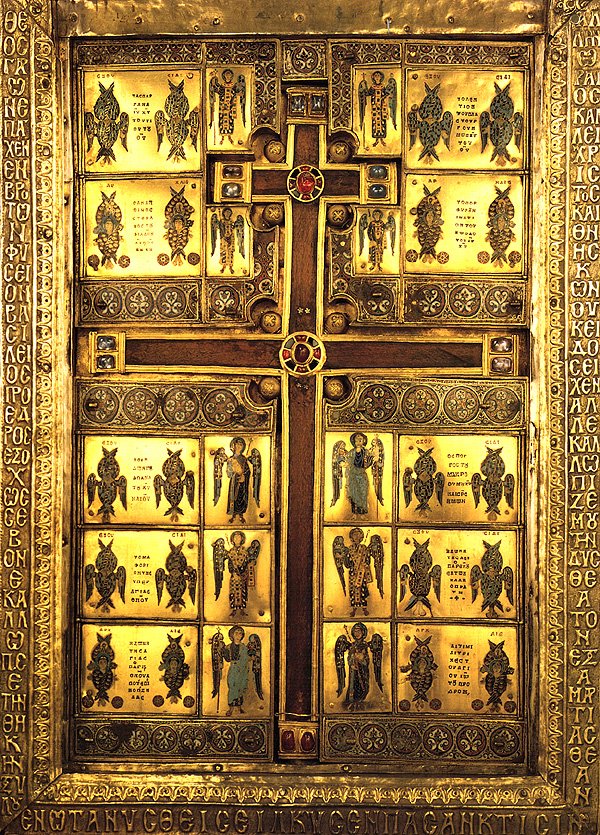
Forefeast of the Procession of the Honorable and Lifegiving Cross of the Lord

Forefeast of the Procession of the Honorable and Lifegiving Cross of the Lord

No information available at this time.

Troparion - Tone 1

O Lord, save Your people, / and bless Your inheritance! / Grant victories to the Orthodox Christians / over their adversaries. / And by virtue of the Cross, / preserve Your habitation!

Kontakion - Tone 4

As You were voluntarily crucified for our sake, / grant mercy to those who are called by Your name; / make all Orthodox Christians glad by Your power, / granting them victories over their adversaries, / by bestowing on them the invincible trophy, Your weapon of peace!
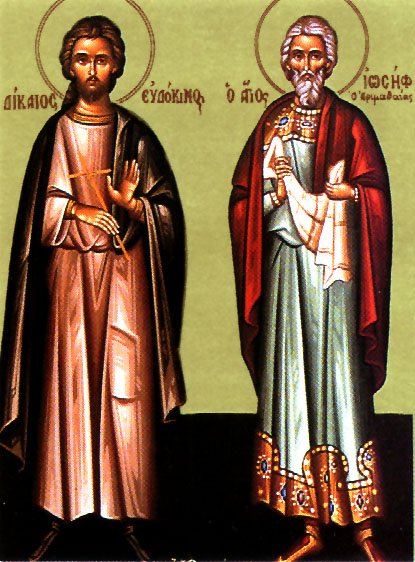
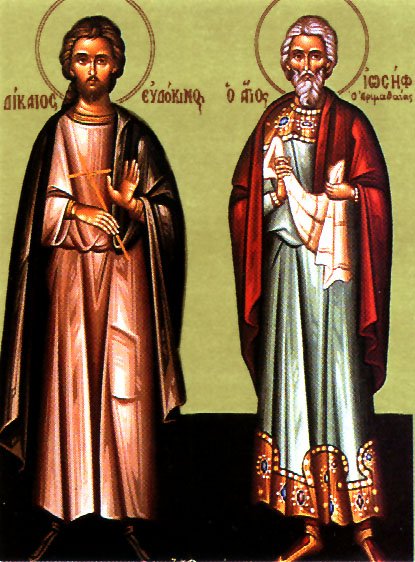
Righteous Eudocimus of Cappadocia

Righteous Eudocimus of Cappadocia

“Saint Eudocimus was from Cappadocia, the son of pious and most illustrious parents, patricians in rank. He especially cultivated chastity and mercy, the one by never meeting the gaze of a woman, the other by cheerfully providing the needs of the poor. When he was made military commander of Cappadocia, he continued in his righteous ways, showing mercy and uprightness in all his dealings. H “Saint Eudocimus was from Cappadocia, the son of pious and most illustrious parents, patricians in rank. He especially cultivated chastity and mercy, the one by never meeting the gaze of a woman, the other by cheerfully providing the needs of the poor. When he was made military commander of Cappadocia, he continued in his righteous ways, showing mercy and uprightness in all his dealings. Having so lived in piety, quietly and without ostentation, he was called from this life at the age of thirty-three, about the year 840, during the reign of the Iconoclast Theophilus. Not long after his burial, his grave became a fountain of unending miracles, as God revealed the virtue that Eudocimus had striven to hide; when his grave was later opened, his body was found incorrupt. His holy relics were translated to Constantinople.” (Great Horologion)

Troparion - Tone 4

He who called you from earth to heaven, / keeps your body unharmed after death, holy Eudocimus; / for you lived a sober and holy life / and did not defile your flesh; / so with boldness intercede with Christ that we may be saved.

Kontakion - Tone 3

Today your honored memory has assembled us at the holy shrine of your sacred relics; / all then who approach and venerate them / are rescued from the evil malice of demons / and are swiftly delivered from various diseases, blessed Eudocimus.

Martyr Julitta at Caesarea

The Holy Martyr Julitta lived at Caesarea in Cappadocia during the reign of the emperor Diocletian (284-305). A certain pagan stole all her property, and when Julitta turned for relief to the courts, her antagonist reported to the judge that she was a Christian, which placed her outside the law’s protection. The Holy Martyr Julitta lived at Caesarea in Cappadocia during the reign of the emperor Diocletian (284-305). A certain pagan stole all her property, and when Julitta turned for relief to the courts, her antagonist reported to the judge that she was a Christian, which placed her outside the law’s protection. The judge demanded that the saint renounce Christ, for which he promised to return her unlawfully taken property. Saint Julitta resolutely refused the deceitful conditions, and for this she was burned to death in the year 304 (or 305). Saint Basil the Great wrote an Encomium to Saint Julitta 70 years after her death as a martyr.

Troparion - Tone 3

Your holy martyr Julitta, O Lord, / through her sufferings has received an incorruptible crown from You, our God. / For having Your strength, she laid low her adversaries, / and shattered the powerless boldness of demons. / Through her intercessions, save our souls!

Saint Germanus, Bishop of Auxerre

Saint Germanus was born at Auxerre around 389, and studied rhetoric and law at Rome. There he practiced as a lawyer. The emperor Honorius sent him back to Gaul as a provincial governor, with his headquarters at Auxerre. He also married about this time. In 418 he was chosen to succeed Saint Amator (May 1) as Bishop of Auxerre. Saint Germanus was born at Auxerre around 389, and studied rhetoric and law at Rome. There he practiced as a lawyer. The emperor Honorius sent him back to Gaul as a provincial governor, with his headquarters at Auxerre. He also married about this time. In 418 he was chosen to succeed Saint Amator (May 1) as Bishop of Auxerre. From that time on, his faith became deeper, and his prayer more fervent. He gave away his possessions to the poor, and ate coarse barley bread only in the evening. He often fasted for several days, and dressed in simple monastic garb. Pope Celestine I sent him to Britain in 429 with Saint Lupus of Troyes (July 29) to fight the Pelagian heresy, where they defeated the teachers of this false doctrine. During one of his two trips to Britain Saint Germanus took command of an army and defeated a combined force of Saxons and Picts. When savage barbarians threatened the city of Armorica (now Brittany), Saint Germanus met their leader, seized his horse’s bridle, and turned him around. After defusing the threat, the saint traveled to Ravenna seeking pardon for the rebels from the emperor Valentian III. He was received with honor, and died there on July 31, 448. The body of Saint Germanus was brought back to Auxerre for burial. Centuries later, his holy relics were scattered by the Huguenots.

Troparion - Tone 6

Holy Bishop Germanus, our protector, honor and consolation of the church of Gaul. / You gave up glory and riches in order to follow Christ our God with humility. / You fought against heresies and caused the true Faith to triumph. / O Father of the Auxerrians, refuge of the unfortunate, pray to Christ to strengthen us in mercy.
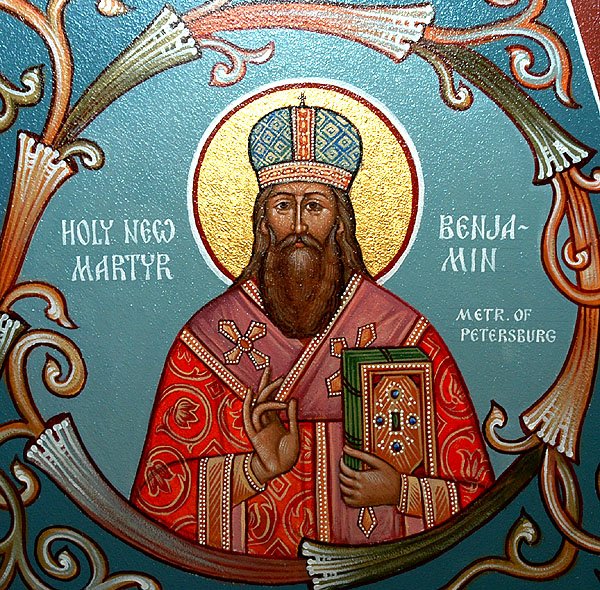
Hieromartyr Benjamin, Metropolitan of Petrograd and Gdovsk, and those with him

Hieromartyr Benjamin, Metropolitan of Petrograd and Gdovsk, and those with him

The New Hieromartyr Benjamin (Kazansky) was appointed Metropolitan of Petrograd in the summer of 1917. During those tumultuous times, he was one of the few people in Russia with no interest in politics. He was more concerned with caring for his diocese and his flock. In 1922, the Communists began confiscating Church treasures. The New Hieromartyr Benjamin (Kazansky) was appointed Metropolitan of Petrograd in the summer of 1917. During those tumultuous times, he was one of the few people in Russia with no interest in politics. He was more concerned with caring for his diocese and his flock. In 1922, the Communists began confiscating Church treasures. They professed that they wanted to sell them in order to buy food for the starving population. When the people protested, there were bloody reprisals. Metropolitan Benjamin did not resist turning over the Church’s valuables, for he believed it was his duty to help save people’s lives. He wanted this sacrifice to be voluntary, however, and not a plundering of church property by the government. On March 6, 1922 Metropolitan Benjamin met with a commission which had been formed to help the starving. They agreed to his request that the dispersal of funds from voluntary contributions should be controlled by the parishes. Newspapers of that time praised the Metropolitan and his clergy for their charitable spirit. Party leaders in Moscow did not approve of the decision made by the Communists of Petrograd allowing voluntary contributions to be administered by the parishes, and declared that the confiscation of Church property would continue. Protesters gathered in Petrograd, shouting and throwing stones at those who were stealing from the churches. On March 24, 1922 “Pravda” printed a letter from twelve priests who broke ranks with the other clergy, referring to them as “counter-revolutionaries” and blaming them for the famine. Most of these twelve would later be active in the “Living Church.” They called for unconditional surrender of all Church valuables to the Soviets. The clergy of Petrograd were outraged by the letter from the twelve. Metropolitan Benjamin, hoping to avoid confrontations between the people and the Communists, tried to calm his priests. He also asked for a meeting with the authorities. Vvedensky and Boyarsky, two of the twelve, were delegated to talk with Soviet leaders, and came to an agreement. Parishes would be permitted to keep their sacred vessels if they substituted other property of equal value. This program seemed to work well for a time. Vvedensky, Boyarsky, and others tried to wrest control of the Church from Patriarch Tikhon and the bishops. They informed Metropolitan Benjamin of the new state of affairs, declaring that Vvedensky had been appointed as the Petrograd representative of the new Church administration. The Metropolitan could not accept this threat to Church order, so he proclaimed that Vvedensky would be regarded as being outside the Church until he repented of his error. This decree was published in the newspapers, and served to enrage the Soviets. Vvedensky and the Petrograd commandant Bakaev went to see the Metropolitan and ordered him to rescind his decree. If he did not, they told him, he and others close to him would be placed on trial. They warned Metropolitan Benjamin that he and others would be put to death if he made the wrong choice. He refused to submit. The courageous archpastor began meeting with his friends in order to say farewell. He also gave instructions for the administration of the diocese. A few days later, the Metropolitan was placed under house arrest. Not long after that, he was taken to prison. As his trial began, the Metropolitan entered the courtroom with Bishop Benedict and other clergy. When everyone stood up for him, Metropolitan Benjamin blessed them. The judges tried to get the Metropolitan to renounce the idea of the parishes voluntarily contributing church valuables in order to feed the hungry, or to provide the names of those who had conceived this idea. It would suit their purposes very well if he could be made to “repent” or back away from his previous statements and submit to the authorities. The other clergy and civilians on trial with Metropolitan Benjamin did not try to ingratiate themselves with the court, and did not accuse others in order to win leniency for themselves. During the trial, Archimandrite Sergius (Shein) explained that as a monk he had renounced the world in order to dedicate himself to God. Only the flimsiest of threads still connected him with the outside world, he asserted. “Does this tribunal imagine,” he said, “that severing this thread which connects me with life could frighten me? Do your deed. I pity you, and I pray for you.” The trial lasted for two weeks, and the prosecutors presented witnesses who had been hired to bring false accusations against the defendants. Many witnesses were called, and their testimony seemed to support Metropolitan Benjamin and to weaken the government’s case against him. A certain professor of the Technological Institute named Egorov angered the court by his testimony. He was accused of being a follower of the Metropolitan, so he was arrested on the spot. In spite of all the evidence, the defendants were found guilty. Government supporters and members of the Red Army in the court broke into applause. The defense attorney addressed the court, saying that he knew that any pleas he might offer would be useless. “Political considerations come first with you, and all verdicts must favor your policy,” he declared. Even though everyone understood that the trial was a farce, the Soviet government could not afford to make a martyr out of Metropolitan Benjamin. The example of history, he pointed out, should warn them against such a course. When the defense attorney had finished, there was loud clapping. The judges tried to restore order, but found that many Communists in the audience had also joined in the applause. The defendants were given a chance to speak, and the Metropolitan stood to address the court. He said it grieved him to be called an enemy of the people, for he had always loved the people and dedicated his life to them. The rest of his comments were a defense of the others on trial with him. When the presiding judge asked him to say something about himself, he said that no matter what sentence the court decreed he would thank God by saying, “Glory to Thee, O Lord, glory to Thee for all things.” At 9:00 P.M. on July 5, the chairman of the tribunal announced that ten defendants, including the Metropolitan, were to be shot. Saint Benjamin and those with him (Archimandrite Sergius, George, and John of Petrograd) were executed on July 31, 1922. They had been shaved and dressed in rags so that the firing squad would not know that they were shooting members of the clergy. These saints are also commemorated at the Synaxis of the New Martyrs and Confessors of Russia (January 25 or the Sunday after the 25th).

Troparion - Tone 4

Your holy martyrs O Lord, / through their sufferings have received incorruptible crowns from You, our God. / For having Your strength, they laid low their adversaries, / and shattered the powerless boldness of demons. / Through their intercessions, save our souls!
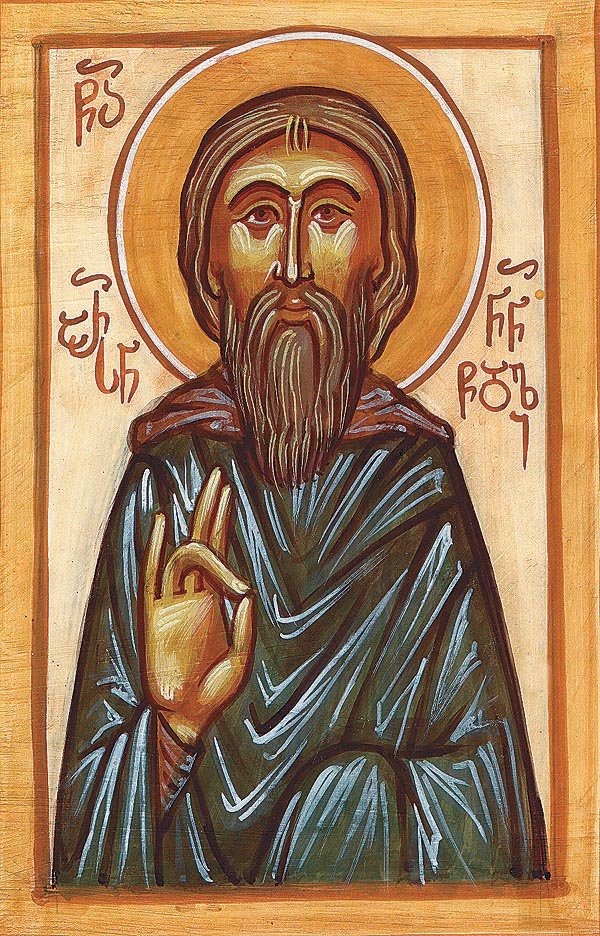
Saint Arsenius, Bishop of Ninotsminda

Saint Arsenius, Bishop of Ninotsminda

Arsenius of Ninotsminda was an ascetic who labored in the 11th century. History tells us that he was a brilliant translator, writer, calligrapher, and theologian, and indeed one of the greatest Church figures of his time. Saint Arsenius was tonsured a monk in Jerusalem, and after some time he returned to Georgia, where he was consecrated bishop of Ninotsminda. Arsenius of Ninotsminda was an ascetic who labored in the 11th century. History tells us that he was a brilliant translator, writer, calligrapher, and theologian, and indeed one of the greatest Church figures of his time. Saint Arsenius was tonsured a monk in Jerusalem, and after some time he returned to Georgia, where he was consecrated bishop of Ninotsminda. But the venerable Arsenius longed to lead a life of solitude, so he approached King Davit Kuropalates for permission to resign from the bishopric and settle at a monastery. The king honored Arsenius’s request, and the pious man set off for the monastery with John Grdzeslidze, a man of letters and another great figure in the Church. When the news of his decision reached the Ivḗron Monastery on Mt. Athos, Saints John and Ekvtime invited the fathers to Mt. Athos, and the next year Arsenius and John arrived at the Holy Mountain. There they assisted Saint Ekvtime in his translations of the Holy Scriptures and many theological books. Saint Arsenius labored fruitfully at the Ivḗron Monastery for many years and reposed peacefully at an advanced age. He was buried on Mt. Athos at the monastery’s church of Saint Simeon the Stylite. Saint George of the Holy Mountain later translated his relics to the ossuary of the monastery’s catholicon.

Troparion - Tone 4

In truth you were revealed to your flock as a rule of faith, / an image of humility and a teacher of abstinence; / your humility exalted you; / your poverty enriched you. / Hierarch Father Arsenius, / entreat Christ our God / that our souls may be saved.
Righteous Joseph of Arimathea

Righteous Joseph of Arimathea

The “noble Joseph” was a secret follower of Christ and a wealthy member of the Jewish Sanhendrin (ruling council); it was he who provided Christ’s tomb. When his faith became known he was driven from the Sanhendrin, from the synagogues, and from the Holy Land, and traveled through many lands, proclaiming the Gospel of Christ. Accor The “noble Joseph” was a secret follower of Christ and a wealthy member of the Jewish Sanhendrin (ruling council); it was he who provided Christ’s tomb. When his faith became known he was driven from the Sanhendrin, from the synagogues, and from the Holy Land, and traveled through many lands, proclaiming the Gospel of Christ. According to some accounts he eventually reached England, where he reposed in peace.

Troparion - Tone 2

The Noble Joseph, / when he had taken down Your most pure Body from the tree, / wrapped it in fine linen and anointed it with spices, / and placed it in a new tomb. / But You rose on the third day, O Lord, / granting the world great mercy.

Scripture Readings

Epistle

1 Corinthians 14:26-40

26 How is it then, brethren? when ye come together, every one of you hath a psalm, hath a doctrine, hath a tongue, hath a revelation, hath an interpretation. Let all things be done unto edifying.
27 If any man speak in an unknown tongue, let it be by two, or at the most by three, and that by course; and let one interpret.
28 But if there be no interpreter, let him keep silence in the church; and let him speak to himself, and to God.
29 Let the prophets speak two or three, and let the other judge.
30 If any thing be revealed to another that sitteth by, let the first hold his peace.
31 For ye may all prophesy one by one, that all may learn, and all may be comforted.
32 And the spirits of the prophets are subject to the prophets.
33 For God is not the author of confusion, but of peace, as in all churches of the saints.
34 Let your women keep silence in the churches: for it is not permitted unto them to speak; but they are commanded to be under obedience, as also saith the law.
35 And if they will learn any thing, let them ask their husbands at home: for it is a shame for women to speak in the church.
36 What? came the word of God out from you? or came it unto you only?
37 If any man think himself to be a prophet, or spiritual, let him acknowledge that the things that I write unto you are the commandments of the Lord.
38 But if any man be ignorant, let him be ignorant.
39 Wherefore, brethren, covet to prophesy, and forbid not to speak with tongues.
40 Let all things be done decently and in order.

Gospel

Matthew 21:12-14, 17-20

12 And Jesus went into the temple of God, and cast out all them that sold and bought in the temple, and overthrew the tables of the moneychangers, and the seats of them that sold doves,
13 And said unto them, It is written, My house shall be called the house of prayer; but ye have made it a den of thieves.
14 And the blind and the lame came to him in the temple; and he healed them.
17 And he left them, and went out of the city into Bethany; and he lodged there.
18 Now in the morning as he returned into the city, he hungered.
19 And when he saw a fig tree in the way, he came to it, and found nothing thereon, but leaves only, and said unto it, Let no fruit grow on thee henceforward for ever. And presently the fig tree withered away.
20 And when the disciples saw it, they marvelled, saying, How soon is the fig tree withered away!

Liturgical data sourced from OCA.org and orthocal.info