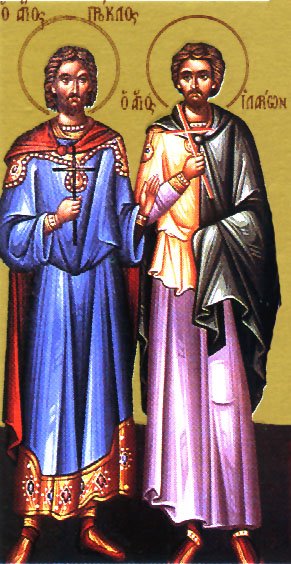
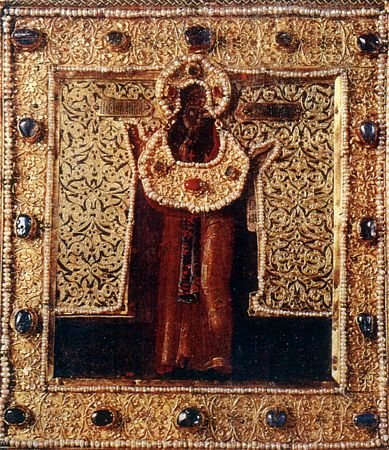
Proclus was the uncle of Hilarius; both were from Kallippi in Asia during the reign of Trajan. When Proclus was brought to be tried as a Christian, the judge asked him ‘Of what race are you?’ Proclus answered ‘I am of the race of Christ, and my hope is in my God.’ When the judge threatened to torture him, he said ‘When you are afraid to transgress the Emperor’s commands and risk falling into temporal punishment, how much more do we Christians fear to transgress against God’s commands and fall into eternal torment!’ When Proclus was given over to torture, his nephew Hilarius came forward and proclaimed ‘I too am a Christian.’ After torture, both were condemned to death; Proclus was crucified and Hilarius beheaded.
Imagine how the Ort
Proclus was the uncle of Hilarius; both were from Kallippi in Asia during the reign of Trajan. When Proclus was brought to be tried as a Christian, the judge asked him ‘Of what race are you?’ Proclus answered ‘I am of the race of Christ, and my hope is in my God.’ When the judge threatened to torture him, he said ‘When you are afraid to transgress the Emperor’s commands and risk falling into temporal punishment, how much more do we Christians fear to transgress against God’s commands and fall into eternal torment!’ When Proclus was given over to torture, his nephew Hilarius came forward and proclaimed ‘I too am a Christian.’ After torture, both were condemned to death; Proclus was crucified and Hilarius beheaded.
Imagine how the Orthodox Church would benefit if, when we were asked ‘Of what race are you?’ the first answer that came to mind was not ‘I am Greek, Russian, Serbian…’ but ‘I am of the race of Christ!’
Troparion - Tone 4
Your holy martyrs Proclus and Hilary, O Lord, / through their sufferings have received incorruptible crowns from You, our God. / For having Your strength, they laid low their adversaries, / and shattered the powerless boldness of demons. / Through their intercessions, save our souls!
Venerable Michael Maleinos
Saint Michael lived during the reign of Emperor Constantine VI (913-959) until the reign of Basil II, the Bulgar-slayer (976 - 1025). He was born in Cappadocia to devout and wealthy parents, Eudókimos and Anastasó (Ἀναστασῶ). Eustáthios, his paternal grandfather, was a patrician; and his maternal grandfather, Adrálestos, held the rank of General of the East.
Manouḗl (the
Saint Michael lived during the reign of Emperor Constantine VI (913-959) until the reign of Basil II, the Bulgar-slayer (976 - 1025). He was born in Cappadocia to devout and wealthy parents, Eudókimos and Anastasó (Ἀναστασῶ). Eustáthios, his paternal grandfather, was a patrician; and his maternal grandfather, Adrálestos, held the rank of General of the East.
Manouḗl (the Saint's name in the world) was brought up in the east, but soon he realized the futility of worldly honors and goods. Around the year 925, he fled to Mount Kyminas (Όρος Κύμινας) in Bithynia. There he met a monk named John Heladites, an Elder of great virtue, and asked him if he might stay nearby. The Elder accepted him, but after a while, his father discovered where he was, and after many entreaties, he brought him home.
After a few months, however, and with this permission of his parents, he returned to his Elder, who received him with great joy. Soon he begged Father John to allow him to live alone in a cave, and the Elder blessed him to do this. For five days of the week he devoted himself to fasting, vigil, and prayer. On Saturday and Sunday he came to the monastery to participate in the Divine Services, and to partake of the Holy Mysteries.
After three years of probation, Manouḗl was tonsured as a monk with the name Michael. Later, after Elder John had reposed, Father Michael took the great inheritance he had received from his family and gave it away to the poor and the suffering.
Saint Michael was deemed worthy of ordination to the priesthood. From the Holy Scriptures, he showed how the priesthood ought to be combined with monasticism. He attained a high degree of dispassion, and he also received the gift of clairvoyance. He was very compassionate and kind toward people. He could not bear to let those who were in need or sorrow remain without help and consolation. By his ardent prayers, he performed many miracles.
Saint Michael also founded the famous Lavra of Kyminas, where many brethren received their spiritual formation. He had organized it as a cenobitic monastery, suffusing it with fraternal love. Many great ascetics passed through this Monastery, among whom was Saint Athanasios the Athonite (July 5), the founder of the Greatest Lavra (Μεγίστη Λαύρα) on the Holy Mountain. Kyminas Monastery was also renowned for its calligraphers, and for copying spiritual books.
Once the monastery was secure, Saint Michael went to an even more remote place, where he built a new monastery. By his efforts, the whole mountain of Kyminas was covered with monastic communities, where constant prayers were offered for the entire world before the Throne of the Most High.
At an advanced age, but still vigorous in faith and in spirit, Saint Michael surrendered his holy soul to God in the year 962.
Troparion - Tone 8
The image of God was truly preserved in you, O Father, / for you took up the Cross and followed Christ. / By so doing, you taught us to disregard the flesh, for it passes away, / but to care instead for the soul, since it is immortal. / Therefore your spirit, O holy Father Michael, rejoices with the angels.
Kontakion - Tone 2
By your deeds you withered the arrogance of the flesh; / through enlightenment you gave wings to your agility of spirit. / You were revealed as a dwelling place of the Trinity, / Whom you now clearly behold. / Blessed Michael, unceasingly pray for us all.
Martyrs Theodore and his son, John, of Kiev
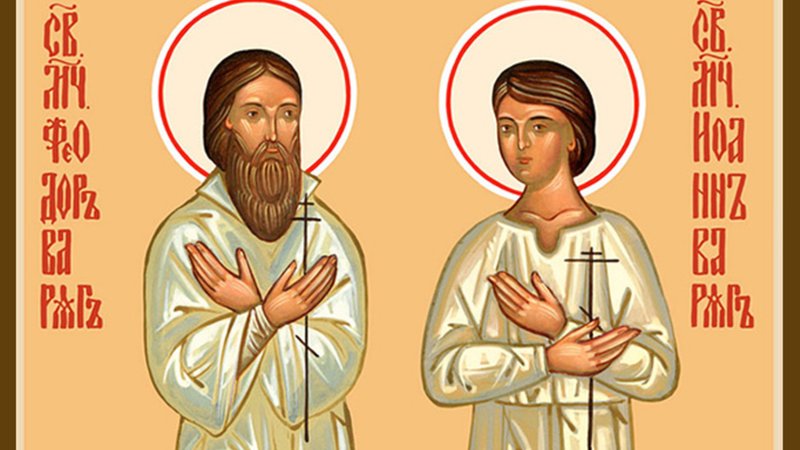
The Holy Martyrs Theodore the Varangian and his son John lived at Kiev in the tenth century, when the Varangians, ancestors of the present day Swedes and Norwegians took an active role in the governance and military life of Rus. Merchants and soldiers, they opened up new trade routes to Byzantium and to the East, they took part in campaigns against Constantinople, and they constituted a significant part of the populace of ancient Kiev and the princely mercenary retinues.
The Holy Martyrs Theodore the Varangian and his son John lived at Kiev in the tenth century, when the Varangians, ancestors of the present day Swedes and Norwegians took an active role in the governance and military life of Rus. Merchants and soldiers, they opened up new trade routes to Byzantium and to the East, they took part in campaigns against Constantinople, and they constituted a significant part of the populace of ancient Kiev and the princely mercenary retinues. The chief trade route of Rus, from the Baltic Sea to the Black Sea, was then called “the Way from the Varangians to the Greeks.”
The chieftains and organizers of the early Russian realm relied upon their Varangian retinues in their undertakings. Just like the Slavs, among whom they lived, many of the sea-faring newcomers under the influence of the Byzantine Church accepted holy Baptism. Kievan Rus stood between the pagan Scandinavians and the Orthodox Byzantines. Therefore, the spiritual life at Kiev was affected by the vivifying influence of the Christian Faith (under Saint Askold in the years 860-882, under Igor and Saint Olga in the years 940-950), and then by the destructive whirlwind of paganism, blowing down from the north from the Varangian Sea (under the reign of Oleg, killing Askold in 882; under the revolt of the Drevliani murdering Igor in 945; under Prince Svyatoslav, who refused to accept Baptism despite the insistence of his mother, Saint Olga).
When Svyatoslav was killed by the Pechenegs in 972 (other sources say in 970), the principality of Kiev was entrusted to his eldest son, Yaropolk. Oleg, the middle son, held the Drevlianian land, while Vladimir, the youngest son, held Novgorod. The reign of Yaropolk (970-978), just like that of his grandmother Olga, again became a time of predominating Christian influence in the spiritual life of Rus. Yaropolk himself, in the opinion of historians, confessed Christianity, although possibly of the Latin rite, and this did not correspond at all to the interests of the Scandinavian mercenary retinue. They were pagans, who were accustomed to consider Kiev a bulwark of their own influence in the Slavic lands. Their leaders strove to create discord between the brothers themselves. They incited a fratricidal war between Yaropolk and Oleg. After this when Oleg was killed, they supported Vladimir in a struggle against Yaropolk.
The future Baptizer of Rus started on his way as a convinced pagan and he relied upon the Varangians, especially those having come to him from over the sea, as his military force. His campaign against Kiev in 978, crowned with complete success, pursued not only military-political aims: it was also a religious campaign of Russo-Varangian paganism against the outgrowth of Kievan Christianity. On June 11, 978 Vladimir “sat on the throne of his father at Kiev,” and the hapless Yaropolk, invited by his brother for negotiations, was treacherously murdered when he arrived at the entrance hall by two Varangians who stabbed him with swords. In order to intimidate the Kievans, among whom were already many Christians both Russian and Varangian, to renew and strengthen with new idols, human sacrifices were made in the pagan sanctuary, a practice unknown to the Dniepr Slavs until then. The chronicles speak of Vladimir setting up idols: “And they brought them sacrifices, acclaiming them gods, and they brought to them their own sons and daughters, and these sacrifices went to the devils... both the Russian land and this hill were defiled with blood”.
The martyrdom of Saints Theodore and his son John may have taken place during this first period of the triumph of paganism at Kiev with Vladimir’s accession to power. In that case, the date might be July 12, 978. It is probable, however, that the exploit of the holy martyrs took place in the year 983, when the wave of pagan reaction rolled not only through Rus, but throughout all the Slavic-Germanic world. Almost simultaneously pagans rose up against Christ and the Church in Denmark, Germany, the Baltic Slavic principalities, and everywhere the unrest was accompanied by the destruction of churches, and by the killing of clergy and Christian confessors. This was the year Vladimir went on campaign against the Lithuanian tribe of the Yatvyagi, and gained victory over them. In recognition of this victory the Kievan pagan priests again decided to make a bloody sacrificial offering.
“Among the Kievans,” reports Saint Nestor the Chronicler, “lived a Varangian by the name of Theodore, who was in military service at Constantinople long before this, and was baptized there. His pagan name, preserved in the term ‘Turov pagan temple,’ was Tur (Scandinavian Thor) or Utor (Scandinavian Ottar), and this other signature is also found in the old manuscripts. Theodore had a son John, a devout and handsome youth, confessing Christianity like his father.”
“And the elders and boyars said: let us cast lots upon the boys and girls. Upon whichever one it falls, that one we shall slaughter in sacrifice to the gods.” The lots thrown by the pagan priests, evidently not by chance, fell upon the Christian John.
When the messengers told Theodore that his son “had been chosen by the gods themselves to be sacrificed to them,” the old warrior decisively answered: “This is not a god, but wood. Today it is, and tomorrow it rots. They do not eat, nor drink nor speak, but are crafted by human hands from wood. God however is One, and the Greeks serve and worship Him. He created heaven and earth, the stars and the moon, the sun and man, and foreordained him to live upon the earth. But these gods, what have they created? They themselves are made. I shall not give my son over to devils.”
This was a direct challenge by the Christian to the customs and beliefs of the pagans. An enraged crowd of pagans rushed at Theodore, smashed up his courtyard, and surrounded the house. Theodore, in the words of the chronicler, “stood at the entrance way with his son,” and with weapon in hand he bravely met the enemy. (The entrance way in old Russian houses as mentioned was set up on posts of a roofed gallery of the second storey, which was reached by a ladder). He calmly gazed upon the demon-possessed pagans and said: “If they are gods, let them send one of the gods to take my son.” Seeing that the brave and seasoned warriors Theodore and John could not be beaten in a fair fight, the besiegers knocked down the gallery posts. When they were broken, the crowd rushed upon the confessors and murdered them.
Already during the time of Saint Nestor, less than a hundred years after the confessor’s deed of the Varangians, the Russian Orthodox Church numbered them among the Saints. Theodore and John became the first martyrs for the holy Orthodox Faith in the Russian land. They were called the first “Russian citizens of the heavenly city” by the transcriber of the Kiev Caves Paterikon, the holy Bishop Simon of Suzdal (May 10). The last of the bloody pagan sacrifices at Kiev became the first holy Christian sacrifice with a co-suffering for Christ. The pathway “from the Varangians to the Greeks” became for Rus the pathway from paganism to Orthodoxy, from darkness to light.
On the place of the martyrdom of the Varangians, Saint Vladimir later built the Desyatin Church of the Dormition of the Most Holy Theotokos, consecrated on May 12, 996. The relics of Saint Olga were transferred into it in the year 1007.
Wondrous is God in His saints! Time does not spare stones and bronze, but the lower framework of the wooden house of the holy Varangrian martyrs, burned a thousand years before, has been preserved to our day. It was discovered in the year 1908 during the excavation of the altar of the Desyatin church at Kiev.
Saints Theodore and John are invoked by women who have miscarried.
Troparion - Tone 4
Your holy martyrs Theodore and John, O Lord, / through their sufferings have received incorruptible crowns from You, our God. / For having Your strength, they laid low their adversaries, / and shattered the powerless boldness of demons. / Through their intercessions, save our souls!
Venerable Arsenius of Novgorod the Fool-For-Christ
No information available at this time.
Venerable Simon, Abbot of Volomsk
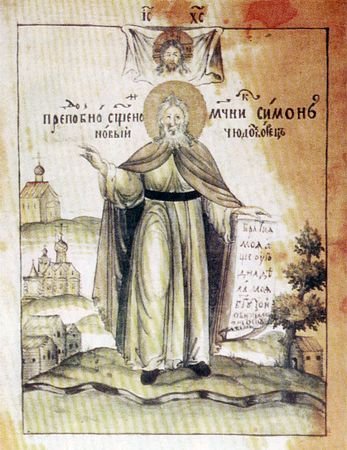
Hosiomartyr Simon of Volomsk, in the world Simon, son of the peasant Michael from the vicinity of Volokolamsk, was born in the year 1586. At 24 years of age, after long pilgrimage through Orthodox monasteries, he received monastic tonsure at the Pinegsk Makariev monastery. In the year 1613 he settled in the Volomsk forest, 80 versts to the southwest of Ustiug at the River Kichmenga.
Hosiomartyr Simon of Volomsk, in the world Simon, son of the peasant Michael from the vicinity of Volokolamsk, was born in the year 1586. At 24 years of age, after long pilgrimage through Orthodox monasteries, he received monastic tonsure at the Pinegsk Makariev monastery. In the year 1613 he settled in the Volomsk forest, 80 versts to the southwest of Ustiug at the River Kichmenga. Here he spent five years alone, away from people. He nourished himself with vegetables which he himself cultivated, and sometimes asked for bread in some settlement.
When lovers of the quiet life began to gather to him, Saint Simon, through a grant of Tsar Michael Theodoreovich and with the blessing of the Rostov Metropolitan Barlaam, built a temple in honor of the Cross of the Lord, and in 1620 was made head of the monastery he founded. A strict ascetic, serving as an example to all in virtue, love of toil, fasting and prayer, he was wickedly murdered in his own monastery on July 12, 1641. The body of the venerable Simon was buried on the left side of the church he built.
Veneration of the saint began in 1646 after grace-filled miracles at his relics were attested. His Life was written in the seventeenth century.
Troparion - Tone 8
By a flood of tears you made the desert fertile, / and your longing for God brought forth fruits in abundance. / By the radiance of miracles you illumined the whole universe! / O our holy father Simon, pray to Christ our God to save our souls!
Martyr Golinduc (in Baptism Mary), of Persia
The Holy martyr Golinduc, in Baptism Mary, lived in Persia during the reign of Chosroes I the Elder. She was the wife of the chief magician of the Persian empire. Endowed with a lucid mind, Golinduc perceived the falseness of the pagan wisdom, and she pondered much about what the true Faith might be.
The Holy martyr Golinduc, in Baptism Mary, lived in Persia during the reign of Chosroes I the Elder. She was the wife of the chief magician of the Persian empire. Endowed with a lucid mind, Golinduc perceived the falseness of the pagan wisdom, and she pondered much about what the true Faith might be. When she learned of Christianity, she very much wanted to know what it taught. Soon through the providence of God, her wish was fulfilled. In sleep an angel showed Golinduc the place of torment for sinners and the paradise in which dwell the believers in Christ, the true God. After this dream she began fervently to pray to the true God, so that He might help her become a Christian. The angel of God directed Golinduc to a Christian priest, from whom she received holy Baptism with the name Mary.
After Baptism she left her magician-husband, and he complained to the emperor Chosroes. The emperor himself, and dignitaries sent by him, and illustrious women all urged Golinduc to return to her husband. For her decisive refusal the emperor sentenced her to be imprisoned for life. In prison Saint Mary-Golinduc spent 18 years.
During the reign of Chosroes’ successor, his son Ormisdas, there arrived in Persia an ambassador of the Byzantine emperor Mauricius, named Aristobulus. Having learned that for many years Mary the Christian was languishing in prison, Aristobulus repeatedly visited her in prison with the permission of the emperor and taught her to sing the Psalms of David. After the departure of Aristobulus, Ormisdas gave orders to present Saint Mary-Golinduc before him and for a long time he tortured her, subjecting her to all sorts of beatings and torments. But in all the torments through the intercession of God the saint was preserved unharmed. When they gave her over for defilement, the Lord made her invisible to the impious and preserved her purity. Finally the emperor gave orders to cut off the martyr’s head, but the Lord sheltered her from the hand of the executioner and brought her to Christians living in concealment.
When the persecution against Christians in Persia ceased during the reign of Chosroes II, who occupied the throne with the help of the Byzantine emperor Mauricius, Saint Mary-Golinduc began openly to preach the Christian Faith.
At the end of her life Saint Mary made pilgrimage to Jerusalem, where she prayed at the tomb of the Lord and other holy places. On the return journey she died (+ 591) in the church of the holy Martyr Sergius at Nisibis.
Troparion - Tone 3
Your holy martyr Mary, O Lord, / through her sufferings has received an incorruptible crown from You, our God. / For having Your strength, she laid low her adversaries, / and shattered the powerless boldness of demons. / Through her intercessions, save our souls!
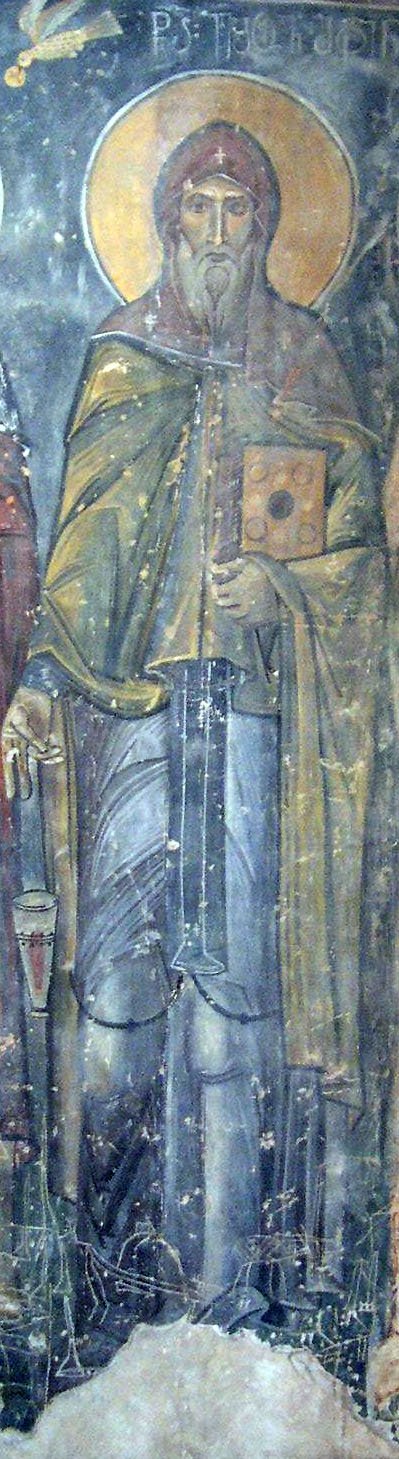
Venerable John the Georgian of Mount Athos
Saint John was born the son of a nobleman during the reign of King Davit Kuropalates.
For his love of Christ he left his family and the world to be tonsured a monk. After informing the royal court of his decision, Saint John received a blessing from his spiritual father to travel to Greece, where he settled at a monastery on Mt.
Saint John was born the son of a nobleman during the reign of King Davit Kuropalates.
For his love of Christ he left his family and the world to be tonsured a monk. After informing the royal court of his decision, Saint John received a blessing from his spiritual father to travel to Greece, where he settled at a monastery on Mt. Olympus.
At that time, as a “sign of friendship,” the Byzantine emperor returned the Georgian lands he had conquered to King Davit Kuropalates, but as a “sign of dedication,” he demanded that children of the nobility be sent as surety. Among those sent to Byzantium was Saint John’s son, Ekvtime. Saint John begged the Byzantine emperor to release his son, and when Ekvtime was finally freed, John took him back with him to the Monastery of Saint Athanasius the Athonite (the Great Lavra).
At that time the famed Georgian military commander Tornike Eristavi came to visit Saint John. Tornike was soon tonsured a monk and given the new name John (the saint is commemorated as John-Tornike), and he settled at the Monastery of Saint Athanasius the Athonite as well.
Soon the Georgian faithful began to flock to the Monastery of Saint Athanasius, and John withdrew from the monastery to a more secluded place, where he constructed a cell and a church in honor of Saint John the Theologian. Two more churches were later built in that same area in honor of the Most Holy Theotokos and Saint John the Baptist. In such a way the celebrated Ivḗron Monastery of Mt. Athos was established, with Saint John as its first abbot.
After the repose of his faithful friend and assistant Saint John-Tornike, it became difficult for Saint John to continue to labor on the Holy Mountain. He and several of his disciples planned to leave Athos, but in the end they remained at the insistence of the Byzantine emperor.
John soon fell ill with gout and was bedridden for several years. Prior to his death he summoned his son, Ekvtime, confessed to him his sins, and designated him abbot of the Ivḗron Monastery. He told his son that Saint Giorgi (later “the Builder”) should succeed him as abbot, then blessed all the brothers and “fell asleep among the ranks of the righteous in the arms of his son.”
Saint Ekvtime robed the holy relics of his fleshly and spiritual father in costly linens and later erected a church in honor of the Archangels over his grave.
Troparion - Tone 8
By a flood of tears you made the desert fertile, / and your longing for God brought forth fruits in abundance. / By the radiance of miracles you illumined the whole universe! / O our holy father John, pray to Christ our God to save our souls!
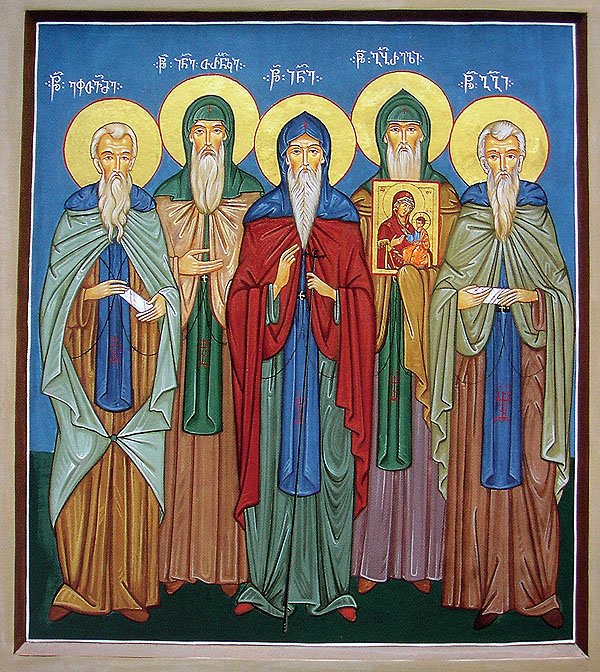
Venerable Gabriel the Georgian of Mount Athos
Saint Gabriel was a monk of the Ivḗron Monastery on Mt. Athos. In summer he would withdraw to the inaccessible cliffs, and in winter he would return to the monastery and observe a strict rule of silence. Clad in a coarse robe and eating nothing but roots and herbs, Saint Gabriel was truly a “heavenly man and an earthly angel.”
Once, at dusk, the monks of the monastery beheld a pillar of light shining forth upon the sea. The v
Saint Gabriel was a monk of the Ivḗron Monastery on Mt. Athos. In summer he would withdraw to the inaccessible cliffs, and in winter he would return to the monastery and observe a strict rule of silence. Clad in a coarse robe and eating nothing but roots and herbs, Saint Gabriel was truly a “heavenly man and an earthly angel.”
Once, at dusk, the monks of the monastery beheld a pillar of light shining forth upon the sea. The vision lasted for several days, and finally monks from every monastery on the Holy Mountain gathered and descended together to the sea.
They beheld an icon of the Mother of God shining brilliantly and floating upright upon the surface of the water. The fathers lowered a boat onto the water, hoping to bring the icon back with them to the shore, but each time their boat approached the icon, it drifted farther out to sea.
Finally the frustrated monks offered prayers and supplications to God in order to discern His will, and the Most Holy Theotokos appeared in a divine revelation and told them that the monk Gabriel alone was worthy to bring the icon bearing her image out from the sea. At the same time, she appeared to the God-fearing Gabriel and told him, “Enter onto the sea and walk out upon the waves with faith, and I will send my love and mercy upon all the monks of this monastery.”
The elders of Mt. Athos located the rocky dwelling of the hermit Gabriel not far from the Ivḗron Monastery. They brought Gabriel with them and went down to the sea with hymns and censing. Gabriel stepped out onto the water and, walking upon the waves as upon dry land, approached the icon. At the same time, the holy image drew nearer to him. Clutching the holy icon to his breast, Gabriel crossed back over the waves and delivered the icon safely to the shore. (The story of the miraculous Ivḗron Icon of the Theotokos is recounted in detail in the commemorations for February 12.)
Saint Gabriel reposed peacefully on Mt. Athos.
Troparion - Tone 8
By a flood of tears you made the desert fertile, / and your longing for God brought forth fruits in abundance. / By the radiance of miracles you illumined the whole universe! / O our holy father Gabriel, pray to Christ our God to save our souls!
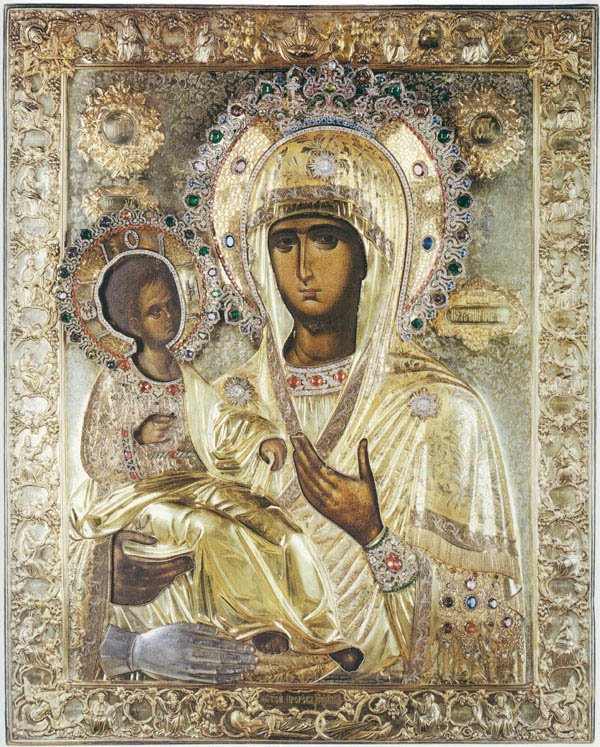
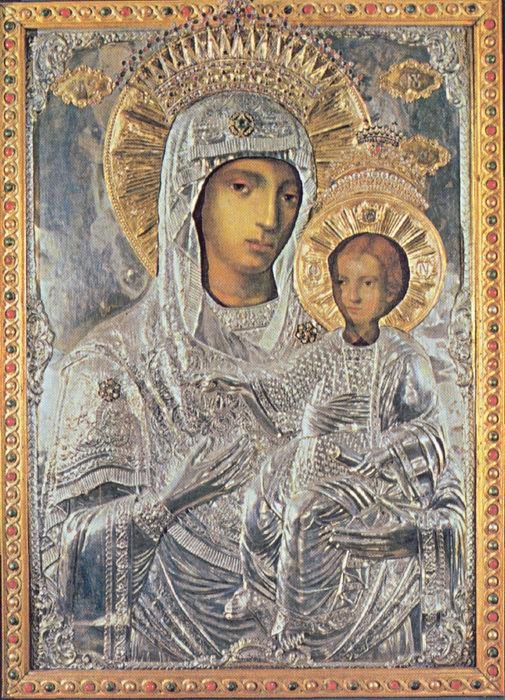
Icon of the Mother of God “of the Three Hands” on Mount Athos
The Icon of the Mother of God “Of the Three Hands”: The wonderworking icon, before which Saint John of Damascus (December 4) received healing of his amputated hand, was given by him to the Lavra of Saint Savva the Sanctified. In the thirteenth century the icon was in Serbia, and afterwards it was miraculously transported to Athos to the Hilandar monastery. A m
The Icon of the Mother of God “Of the Three Hands”: The wonderworking icon, before which Saint John of Damascus (December 4) received healing of his amputated hand, was given by him to the Lavra of Saint Savva the Sanctified. In the thirteenth century the icon was in Serbia, and afterwards it was miraculously transported to Athos to the Hilandar monastery. A more detailed account about the icon is located under June 28.
In Greek usage, this Icon is commemorated on June 28, where a more detailed account is to be found.
Troparion - Tone 4
From Palestine, the godly-minded Savva / brought us your venerable icon, O holy Bride of God, / which is known as the icon “Of the Three Hands”; / and now, since the monks of Hilandar possess it as their boast, / they send up hymns of praise and thanksgiving, / crying out in exultation: / Rejoice, O full of grace!
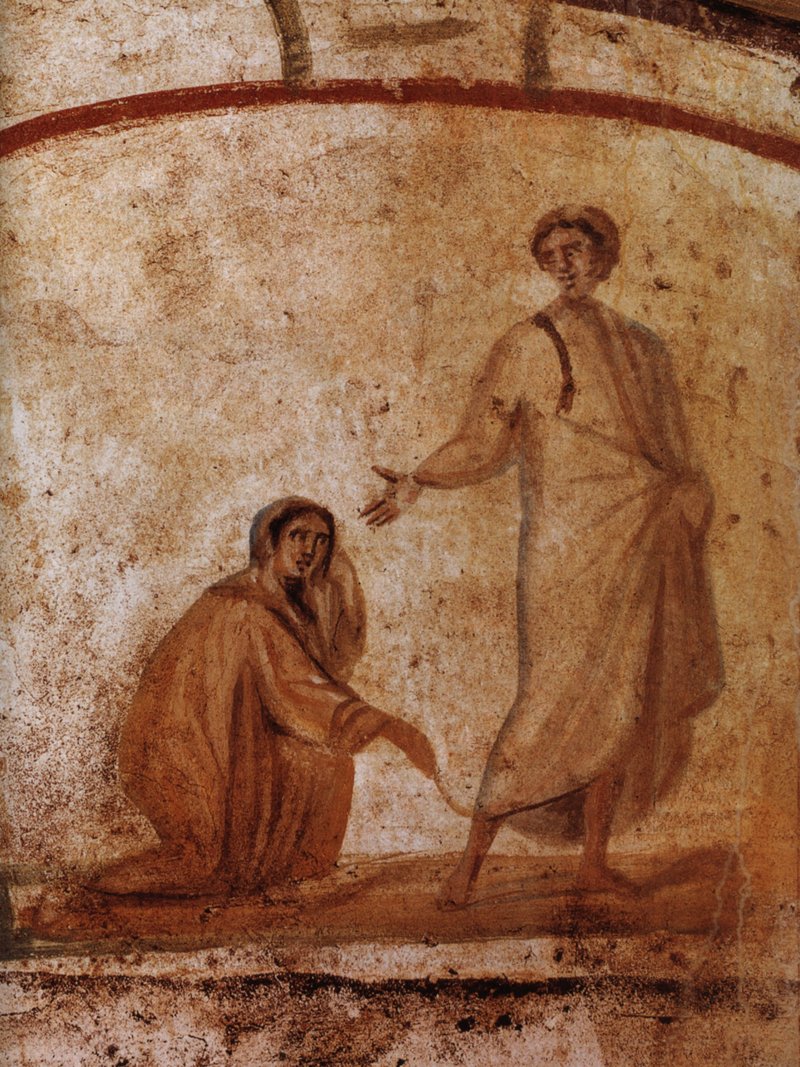
Saint Veronica (Bernice), the woman with the issue of blood
See Matthew ch. 9, Mark ch. 5, and Luke ch. 8. After the events told in the Gospel, she spent the remainder of her life as a follower of Christ and reposed in peace.
Troparion - Tone 8
The image of God was truly preserved in you, O Mother, / for you took up the Cross and followed Christ. / By so doing, you taught us to disregard the flesh, for it passes away, / but to care instead for the soul, since it is immortal. / Therefore your spirit, O Holy Mother Veronica, rejoices with the Angels!
Saint Serapion the New
Saint Serapion (Σεραπίων) lived in Alexandria during the reign of Emperor Severus (222-235). He was a devout man who did whatever was beneficial. He was arrested by the archon Aquila, and when he was asked what religion he followed, he confessed courageously that he believed in Christ and honored Him.
The ar
Saint Serapion (Σεραπίων) lived in Alexandria during the reign of Emperor Severus (222-235). He was a devout man who did whatever was beneficial. He was arrested by the archon Aquila, and when he was asked what religion he followed, he confessed courageously that he believed in Christ and honored Him.
The archon was furious when he heard the Saint's reply, and so he was thrown into a fire and was burnt alive, thereby receiving the incorruptible crown of martyrdom from the Lord.
Troparion - Tone 4
Your holy martyr Serapion, O Lord, / through his sufferings has received an incorruptible crown from You, our God. / For having Your strength, he laid low his adversaries, / and shattered the powerless boldness of demons. / Through his intercessions, save our souls!
Venerable Paisios of the Holy Mountain
‘The future Elder Paisius was born in 1924 and baptized by St. Arsenius of Cappadocia. He spent his youth as a carpenter until WW II, during which he repeatedly distinguished himself in the army by his bravery and self-sacrifice. In 1950 he went to Mt. Athos for eight years, where he was tonsured. Then he was asked to spend some time in his home village of Epirus, in order to defend the faithful against Protestant proselytism. H
‘The future Elder Paisius was born in 1924 and baptized by St. Arsenius of Cappadocia. He spent his youth as a carpenter until WW II, during which he repeatedly distinguished himself in the army by his bravery and self-sacrifice. In 1950 he went to Mt. Athos for eight years, where he was tonsured. Then he was asked to spend some time in his home village of Epirus, in order to defend the faithful against Protestant proselytism. He returned to Mt. Athos in 1964 and stayed in several monasteries, eventually settling in the Panagouda hermitage of Koutloumousiou Monastery, where he remained for fifteen years. Here his reputation as a holy elder and guide grew, and he tirelessly received those thirsting for spiritual direction, allowing himself only two or three hours of sleep each day. He reposed in 1994, one of the most well-known and beloved contemporary elders. Many of his counsels and other writings have been published.’ (St Herman Calendar, 1994)
Elder Païsios was glorified by the Church in 2015; he is commemorated on the anniversary of his repose.
Prodromitsa Icon of the Mother of God
This Icon is kept in the Moldavian Theophany (now Prodromou) 1 Skete on Mount Athos, about an hour's walk from the Lavra of St. Athanasios.
In 1863, Igoumen Niphon, accompanied by several monks, went to Moldavia on the Monastery's business. Arriving at Iași, the capital of Moldavia, the Athonite monks decided to order an icon of the Mother of God for their Monastery, and began to look for a master, who would not only know his craft well, but at the same time he would lead a good life, have the fear of God, and who would be adorned with Christian piety.
This Icon is kept in the Moldavian Theophany (now Prodromou) 1 Skete on Mount Athos, about an hour's walk from the Lavra of St. Athanasios.
In 1863, Igoumen Niphon, accompanied by several monks, went to Moldavia on the Monastery's business. Arriving at Iași, the capital of Moldavia, the Athonite monks decided to order an icon of the Mother of God for their Monastery, and began to look for a master, who would not only know his craft well, but at the same time he would lead a good life, have the fear of God, and who would be adorned with Christian piety. Soon they managed to find such a man at Iași, the aged painter, George Nikolaev (Iordache Nicolau), with whom they agreed that he should paint the icon only while fasting, before eating any food, and by himself, without the participation and assistance of others.
The old man, having agreed to these conditions, zealously set about his work. The work progressed quickly to its end: it remained only to paint the faces of the Mother of God and the Divine Child. But when the painter started to execute the last part of the work, he suffered a setback: he couldn't paint the faces correctly, despite all his efforts. He was upset and told the monks of his failure, and he even began to doubt himself, whether he had forgotten his art in his old age.
The painter increased his fasting and prayed with tears. Early one morning, after intensified fasting and fervent prayer, he entered his workroom to finish the task that had caused him so much grief and anxiety. Approaching the Icon and looking at it, he suddenly stopped, struck with amazement: from the canvas of the Icon the faces of the Mother of God and the Child looked at him, painted by an invisible hand and radiant with heavenly beauty and artistic expression. The painter was awestruck: the more he considered these faces, the more clearly he understood that a great and incomprehensible miracle of the Queen of Heaven had occurred, and that she had heard his humble and fervent prayers. Overcome with amazement, the artist did not dare to touch this Icon with his brush, but only covered it with varnish.
Rumors of this miracle quickly spread throughout the city, and many people gathered in the artist's home, so that the Athonite monks had great difficulty in moving the Icon from his house to their apartment. The miraculous event that had occurred was also made known to the local Metropolitan, His Grace Callinic (Miclescu), who at that time held the office of Metropolitan. He examined the Icon carefully and recognized the truth of the miracle. After that, a Moleben was served before the Icon, and only then were the people allowed to venerate the image of the Mother of God, which from that time began to be glorified by many miraculous signs.
A certain man had a large thorn in his eyes, and he could not see anything. He was brought in to venerate the Icon of the Mother of God and was given some Holy Water to drink, and to wash with it. He took some of it with him to his house. Three days later he received perfect sight, so that without the help of others he was able to come to give thanks to the Mother of God before her miraculous Icon for his healing.
A nobleman had a child who was unconscious for three days without any movement, so that only by the child's barely perceptible breath could one determine that a faint spark of life still remained. Despairing of saving his child from death by conventional medical means, the father turned to the Mother of God for help, praying fervently before her Icon. Taking some Holy Water to his house, he sprinkled the dying child and poured a few drops into his mouth. And a miracle occurred: the child had already died, but then he recovered.
Many other patients afflicted with various ailments received healing by praying before the Icon of the Mother of God. In view of the numerous miracles performed by the power of the Theotokos through her Holy Icon, not only did Orthodox Christians come to venerate her, but also schismatics, Armenians, and even Jews, for there was the case of a Jewish woman who received her gracious help, which was why she and her entire household were baptized.
The return of the Athonite monks with the Icon, from Iași to their Monastery on Athos, was also accompanied by many miracles.
When the monks arrived with the Icon in the city of Byrlad, the people's teacher in that city wished to receive the Holy Icon in his house, and for this purpose he sent people for it. The monks advised him to come to them if he wished to venerate the Icon, instead of bringing it to his home. But the teacher insisted on having his way. The monks decided to grant his wish. When two of them tried to lift the Icon, despite all their efforts, they could not do so. It took four monks to lift the icon, but only with great effort. When the Icon was brought to the carriage in order to put it in, a loud noise was heard, frightening everyone, both people and the horses. It turned out that the kiot containing the Icon had cracked. Then everyone knew that the Mother of God did not want to have her Icon brought to the teacher's house, and it was decided not to carry it to the teacher's home. Then a strange thing occurred: this time, two monks were able to lift the Icon without any difficulty.
A pious woman who lived outside the city of Byrlad beheld a vision in a dream telling her to go into the city to venerate the Icon. When she arrived, she recognized the very Icon that she had seen in the vision.
When the monks came to Galați there was a painter who, seeing a multitude of people flocking to venerate the Icon, began to mock it, urging people not to believe the miracle of how the faces had not been painted by any earthly artist. But when he gazed at the Icon of the Mother of God, the exression on her face seemed so fierce to him that he was struck with great horror. Then he became a zealous admirer of the wonderworking Icon.
By the time the monks arrived at their Skete on the Holy Mountain, there was a sick monk, who had not eaten any food for three weeks, nor did he speak. He was so weak that he did not move at all. Only by his breathing could anyone tell that he was still alive. When the monks arrived at the Skete, the patient seemed to awaken from a deep sleep and asked to be taken to venerate the Holy Icon. Presenting himself before the Icon, he turned to the Mother of God with this plea: "O Mother of God! You know my heart and you know my fate. If it would be good for me to live, then give me health. If, after I am healed of my illness, I do not behave better, then let me die: end my life here on earth, so that I do not suffer or endure torments there, in the grave." After praying this way, he returned to his cell, put on clean linen and his full monastic garb, and asked to partake of the Holy Mysteries of Christ. He seemed to have a clear premonition of his approaching death. And, indeed, less than an hour after receiving Communion, he departed peacefully and quietly to the Lord.
In this Skete there were even more cases of healings by the Icon of the Mother of God. The monk Sergius was healed from weakness in all his members, and from deafness, and one of the masters who worked in the same Skete was subjected to torments by an unclean spirit; as soon as he was brought to the Icon of the Mother of God, he was freed from the excruciating power of the Enemy.
In addition to the recorded accounts, many other wonderful signs took place on Mount Athos from the Moldavian Icon of the Mother of God, which continues to work miracles up to the present day.
1 The Romanian Skete of Saint John the Forerunner on Mount Athos.
Scripture Readings
☩Epistle
Romans 12:6-14
6
Having then gifts differing according to the grace that is given to us, whether prophecy, let us prophesy according to the proportion of faith;
7
Or ministry, let us wait on our ministering: or he that teacheth, on teaching;
8
Or he that exhorteth, on exhortation: he that giveth, let him do it with simplicity; he that ruleth, with diligence; he that sheweth mercy, with cheerfulness.
9
Let love be without dissimulation. Abhor that which is evil; cleave to that which is good.
10
Be kindly affectioned one to another with brotherly love; in honour preferring one another;
11
Not slothful in business; fervent in spirit; serving the Lord;
12
Rejoicing in hope; patient in tribulation; continuing instant in prayer;
13
Distributing to the necessity of saints; given to hospitality.
14
Bless them which persecute you: bless, and curse not.
☩Gospel
Matthew 9:1-8
1
And he entered into a ship, and passed over, and came into his own city.
2
And, behold, they brought to him a man sick of the palsy, lying on a bed: and Jesus seeing their faith said unto the sick of the palsy; Son, be of good cheer; thy sins be forgiven thee.
3
And, behold, certain of the scribes said within themselves, This man blasphemeth.
4
And Jesus knowing their thoughts said, Wherefore think ye evil in your hearts?
5
For whether is easier, to say, Thy sins be forgiven thee; or to say, Arise, and walk?
6
But that ye may know that the Son of man hath power on earth to forgive sins, (then saith he to the sick of the palsy,) Arise, take up thy bed, and go unto thine house.
7
And he arose, and departed to his house.
8
But when the multitudes saw it, they marvelled, and glorified God, which had given such power unto men.
 Meat
Allowed
Meat
Allowed
 Fish
Allowed
Fish
Allowed
 Dairy
Allowed
Dairy
Allowed
 Oil
Allowed
Oil
Allowed
 Wine
Allowed
Wine
Allowed